


Summary
- A roadside mechanical failure on high-traffic freight routes like I-5, SR-99, or I-90 demands fast, structured safety steps to protect the driver, cargo, and oncoming traffic.
- Sourcing a dedicated seattle mobile truck repair service eliminates the excessive costs, hub damage, and scheduling delays associated with heavy-duty towing.
- Experienced mobile field mechanics arrive equipped to handle critical issues on-site, including air line leaks, tire blowouts, high-pressure fuel faults, and emissions system derates.
- Having a clear operational plan minimizes idle freight time, prevents missed warehouse receiving windows, and keeps commercial shipping operations moving smoothly.
- Commercial operators across the Pacific Northwest rely on Williams Diesel LLC for prompt, dependable, and transparent roadside assistance throughout Seattle and neighboring Washington corridors.
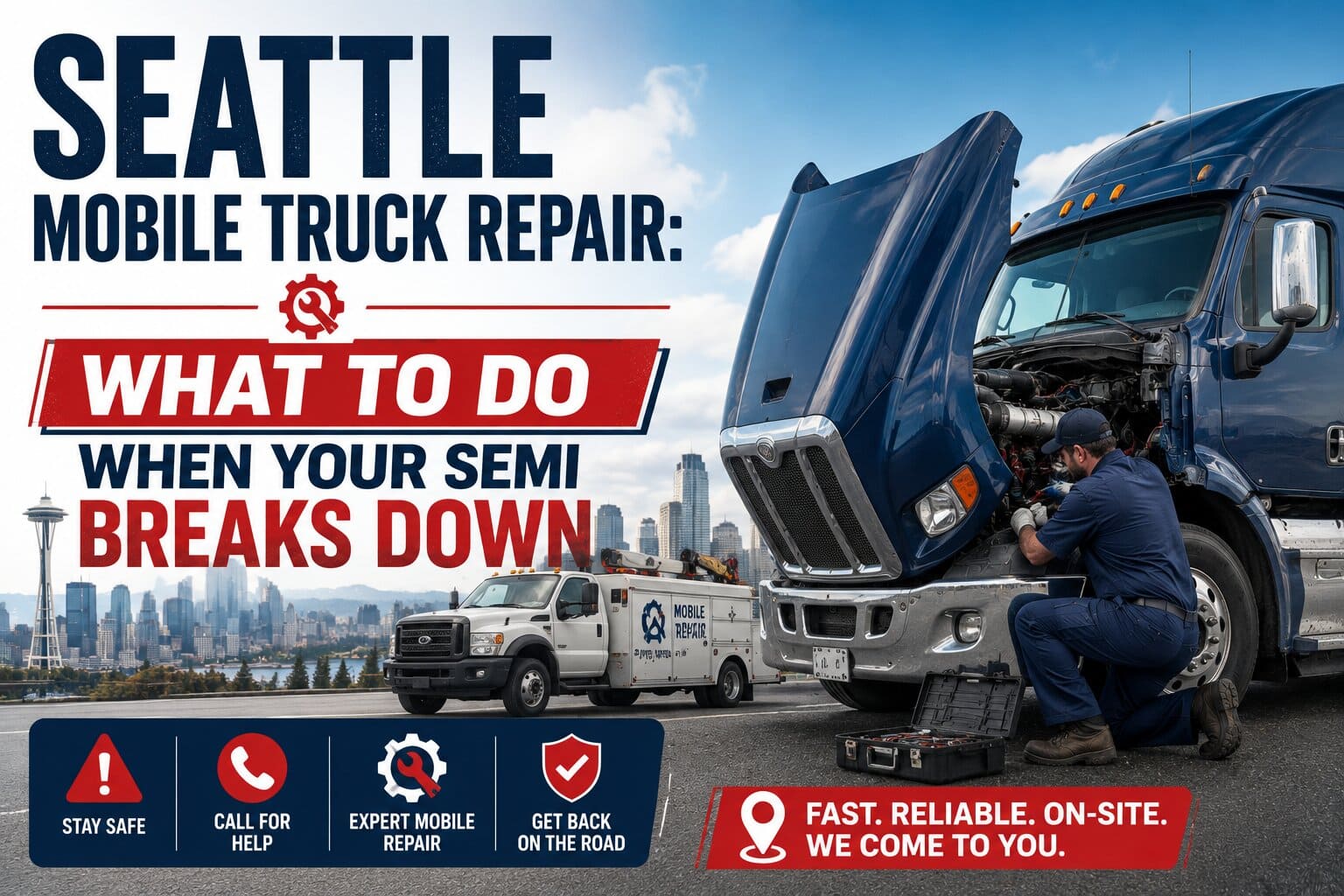
Hauling freight through the Pacific Northwest means navigating tight delivery windows, steep elevation changes, wet weather, and notoriously heavy traffic. When your rig suddenly loses oil pressure, blows an air brake line, or throws a critical engine code while navigating the Seattle corridor, everything comes to an abrupt halt. A breakdown on Interstate 5, State Route 99, or the ramps near the Port of Seattle is more than an inconvenience; it is a major safety hazard that threatens your cargo, your schedule, and your bottom line.
Knowing the immediate steps to take and having access to a dependable seattle mobile truck repair provider makes the difference between a multi-day logistical disaster and an efficient, roadside turnaround. Commercial operators across the region count on Williams Diesel LLC to deliver rapid, professional roadside response that keeps drivers safe and puts rigs back in service quickly.
Immediate Safety Protocol: Your First 5 Minutes on the Shoulder
When a commercial rig fails, panic is your worst enemy. Heavy truck traffic and narrow highway shoulders mean your immediate focus must be safety and visibility before you even think about diagnosing the engine.
1. Maneuver to the Safest Available Ground
If the truck still has roll momentum or minimal engine power, steer toward the widest right-hand shoulder available. Avoid stopping on blind curves, narrow bridges, or directly underneath elevated viaducts where visibility is restricted. If you are near an off-ramp or a weigh station turnout, coast off the active highway entirely.
2. Maximize Visual Warning Signals
Engage your hazard four-way flashers immediately. Keep your low-beam headlights and marker clearance lights turned on to alert approaching traffic, particularly in heavy rain or maritime fog. Set your parking brakes firmly once stopped.
3. Deploy Emergency Warning Devices
Federal Motor Carrier Safety Regulations require warning triangles or flares to be placed within ten minutes of stopping on a highway shoulder:
- Place one reflective triangle on the traffic side four paces (ten feet) behind the vehicle.
- Place a second triangle forty paces (one hundred feet) directly behind the rig.
- Place the third triangle approximately one hundred to one hundred thirty paces (up to three hundred feet) back to provide ample stopping distance for fast-moving traffic.
4. Stay Protected Inside or Clear of the Guardrail
If the shoulder is tight, never stand on the driver side next to active traffic lanes. Exit through the passenger door if necessary, step over the roadside guardrail, and stand well upstream of your truck while arranging assistance.
Assessing the Breakdown: What Information Your Dispatch Needs
Before you call for road assistance, gather critical mechanical details. A clear report allows the roadside technician to bring the exact parts, seals, and tools needed on the initial run.
When you contact a provider for mobile truck repair Seattle services, be ready to provide:
- Precise GPS Location: Note highway mile markers, cross streets, nearest exits, or prominent landmarks.
- Tractor and Trailer Specs: Year, make, model, engine family (e.g., Cummins X15, Detroit DD15, PACCAR MX-13), and trailer type.
- Exact Symptoms: Did you hear a loud bang, smell burning friction material, or experience sudden loss of boost? Is the rig dumping coolant, dripping diesel, or blowing air?
- Dashboard Codes: Read out active Diagnostic Trouble Codes (DTCs), warning symbols, or speed derate countdown timers displayed on your instrument cluster.
Why Mobile Roadside Service Beats Heavy-Duty Towing
Historically, a disabled semi meant an immediate call to a heavy wrecker. However, commercial operators increasingly choose on-site roadside repair over towing for several key reasons.
Massive Financial Savings
A heavy-duty tow across King County can easily cost between $1,500 and $3,500 just for the hookup and transit, before any actual repairs take place. A fully equipped service vehicle solves problems on-site, saving thousands in unnecessary towing bills.
Eliminating Tow-Induced Damage
Towing a loaded 80,000-pound combination requires pulling drive axle shafts or dropping the driveshaft. Inexperienced tow operators can easily damage air fairings, bumper plastics, transmission seals, or differential pinions during transit.
Drastic Downtime Reduction
Dealership service bays in major metropolitan areas routinely suffer backlogs lasting three to seven business days before an initial triage scan. Choosing emergency truck repair Seattle gets a technician directly to your stranded vehicle within hours, resolving faults on the spot and keeping your wheels turning.
Common Roadside Failures Handled by Mobile Units
Modern commercial road service units are essentially workshops on wheels, carrying onboard compressors, generator units, diagnostic scanners, oxy-acetylene torches, and common hardware.
Common Roadside Failures & Mobile Fixes
Air System Leaks: Replacing cracked gladhand seals, chafed air lines, or failed tractor protection valves.
Emissions Faults: Running forced DPF regenerations and resolving DEF sensor communications on-site.
Fuel Starvation: Priming clogged filters, replacing lift pumps, or addressing fuel-water separator leaks.
Tire Failures: Demounting shredded tires and mounting fresh commercial casings on the shoulder.
Charging Issues: Testing dual-battery banks, replacing alternators, or jump-starting high-torque starters.
1. Air Brake System Failures
If air tanks drop below 60 PSI, spring brakes activate automatically, locking the drive wheels and pinning the rig in place. Roadside technicians carry DOT-approved push-to-connect brass fittings, heavy air tubing, and replacement brake chambers to trace and repair leaks quickly.
2. High-Pressure Fuel and Starting Issues
Fuel filter saturation, air intrusion into low-pressure lines, or frozen water separators will starve common-rail systems of fuel. A certified mechanic can purge trapped air, swap spin-on fuel filters, and test rail pressures right on the highway shoulder.
3. Cooling System Ruptures
Elevated engine loads on steep mountain corridors stress aged coolant hoses, radiator plastic tanks, and silicone clamps. Mobile techs carry universal hoses, constant-tension clamps, and heavy-duty extended-life coolant to patch leaks and refill systems cleanly.
4. Emissions Derates and Electrical Faults
When an SCR or DPF sensor triggers an engine derate, technicians plug advanced scan tools into the diagnostic port to clear false codes, run active stationary regenerations, and get rigs out of limp mode without a dealership visit.
5. Roadside Wheel and Tire Emergencies
Road debris, hot pavement, and heavy cargo cause sudden tire blowouts. Specialized road service trucks arrive with hydraulic bead breakers, heavy air impacts, and commercial drive or steer tires to perform rapid wheel changes on-site.
Navigating Seattle’s Unique Commercial Trucking Bottlenecks
Operating a heavy transport rig in Western Washington introduces specific mechanical stressors rarely seen on flat Midwestern interstates. The region’s damp maritime air accelerates corrosion across battery terminals, ground studs, and trailer wiring connectors.
When climbing steep mountain corridors or hauling freight through Seattle’s dense urban core, engine temperatures and exhaust backpressures climb rapidly. If your truck experiences a mechanical issue or an electrical fault mid-transit, accessing responsive roadside diesel repair prevents a minor problem from cascading into an expensive, multi-component engine failure.
Traffic bottlenecks around the Port of Seattle, the Alaskan Way tunnel bypass, and the West Seattle Bridge leave virtually no room for error. A breakdown in these high-density choke points demands a swift response before municipal transportation departments dispatch contract wreckers to tow the truck at owner expense.
Bridging Operational Cracks with Equipment Rental
A catastrophic mechanical breakdown—such as an engine bearing seizure, broken transmission input shaft, or cracked cylinder head—cannot always be resolved on the roadside. When an essential haul vehicle requires several days of comprehensive shop work, project deadlines and delivery commitments remain active.
Forward-thinking logistics companies, freight contractors, and commercial builders turn to flexible equipment rental solutions to bridge these gaps. Renting heavy-duty transport trucks, flatbeds, or utility haulers allows businesses to shift loads and complete critical jobs on schedule while the primary rig undergoes repairs. Rental machinery prevents costly contract breach penalties and keeps local drivers productive while major repairs take place.
Choosing the Right Roadside Service Partner
Not all mobile services offer the same capabilities. Some only carry basic tools, leaving drivers stranded when complex diagnostic work is required.
When evaluating a partner for a semi truck breakdown, look for:
- Fully equipped, self-contained service vehicles carrying onboard air, torches, and heavy tools.
- OEM-level computerized diagnostic software capable of reading Cummins, Detroit, PACCAR, Volvo, and Mack engine controllers.
- Skilled technicians with deep commercial diesel experience rather than light-duty passenger car mechanics.
- Comprehensive service range, from mechanical troubleshooting to commercial tire replacements.
Local experience matters. Working with a proven provider for williams diesel repair ensures that your rig receives expert care from technicians who understand regional trucking routes and severe-duty conditions.
Whether you need a full-service mobile repair truck dispatched to your warehouse loading dock, complete seattle truck repair at a regional terminal, or prompt truck repair mobile units sent out to an I-5 rest area, choosing a reliable partner protects your fleet’s efficiency. Established providers like Williams Diesel LLC deliver dedicated mobile truck service designed to resolve challenging mechanical failures quickly and affordably.
Finding Trusted Mobile Help in Seattle and Washington
When you are stranded on the shoulder, you need fast, local support without unnecessary delays. Knowing which reliable mobile diesel mechanics near me can handle high-tonnage repairs prevents wasted calls to passenger-car towing outfits.
If your trailer blows a tire in heavy traffic or your rig stalls at a distribution bay, having a dedicated provider for mobile semi truck repair near me on speed dial provides immediate peace of mind. For sudden tire shredding, connecting with responsive technicians specializing in mobile truck tire repair near me gets your wheel assembly swapped out safely so you can hit your delivery window.
Frequently Asked Questions
How fast can a mobile service truck arrive at my breakdown location in Seattle?
Average response times across the greater Seattle area typically range from 60 to 90 minutes. Actual arrival times depend on current freeway traffic conditions, weather, and whether the breakdown occurs on a major interstate or a rural access road.
What types of repairs can be completed safely on the side of the highway?
Mobile mechanics can handle roughly 75% of common commercial roadside breakdowns on-site. This includes repairing air brake leaks, swapping fuel filters, fixing coolant lines, replacing alternators and starters, clearing computer derate codes, and replacing blown tires. Major internal engine overhauls or transmission replacements must be performed in a dedicated shop.
Can mobile technicians clear DEF or DPF engine derate codes on the shoulder?
Yes. Professional mobile service trucks carry advanced diagnostic computers capable of connecting to your truck’s J1939 data port. Technicians can read fault codes, troubleshoot NOx sensors or dosing injectors, perform forced static DPF regenerations, and reset derate countdown timers on location.
What geographic areas around Seattle are covered by Williams Diesel LLC?
Williams Diesel LLC provides roadside assistance and mobile repair services throughout Seattle, Tacoma, King County, Pierce County, Snohomish County, and major freight arteries connecting Western Washington to the Cascade passes.
Do I need to be present with the truck while the mobile technician works?
Yes. It is strongly recommended that the driver or an authorized company representative remains with the truck to approve repair estimates, verify vehicle key access, and sign off on completed work orders once the vehicle is road-tested.
Conclusion and Final Thoughts
A commercial truck breakdown on a busy Pacific Northwest highway tests any driver’s patience and any fleet manager’s budget. However, experiencing a sudden mechanical failure does not have to result in expensive towing fees, days of lost revenue, or missed delivery deadlines. By following immediate safety steps, securing your perimeter, and diagnosing symptoms accurately, you take control of the situation right from the shoulder.
When unexpected mechanical trouble strikes, partnering with a dependable, professional provider for seattle mobile truck repair ensures your commercial equipment receives the expert attention it needs. Williams Diesel LLC remains committed to delivering prompt, affordable, and high-caliber roadside diesel service throughout Seattle and Western Washington. Keep their dispatch number saved in your cab—because when your semi breaks down, having skilled diesel technicians ready to roll keeps your freight moving safely.
Do not let a roadside breakdown derail your business. Contact Williams Diesel LLC for immediate mobile dispatch, emergency truck repair, or on-site fleet maintenance.


Comments are closed