


Summary
- Learn how daily vs weekly equipment rental pricing is structured, and why the lower daily number isn’t always the cheaper deal.
- Use a simple break-even example to see when a weekly rate beats paying by the day.
- Get a practical way to estimate your project timeline so you rent for the right length of time.
- Spot the extra charges (fuel, delivery, damage waivers) that change your final bill.
- Pick up a few budget-friendly habits that work for homeowners and contractors alike.
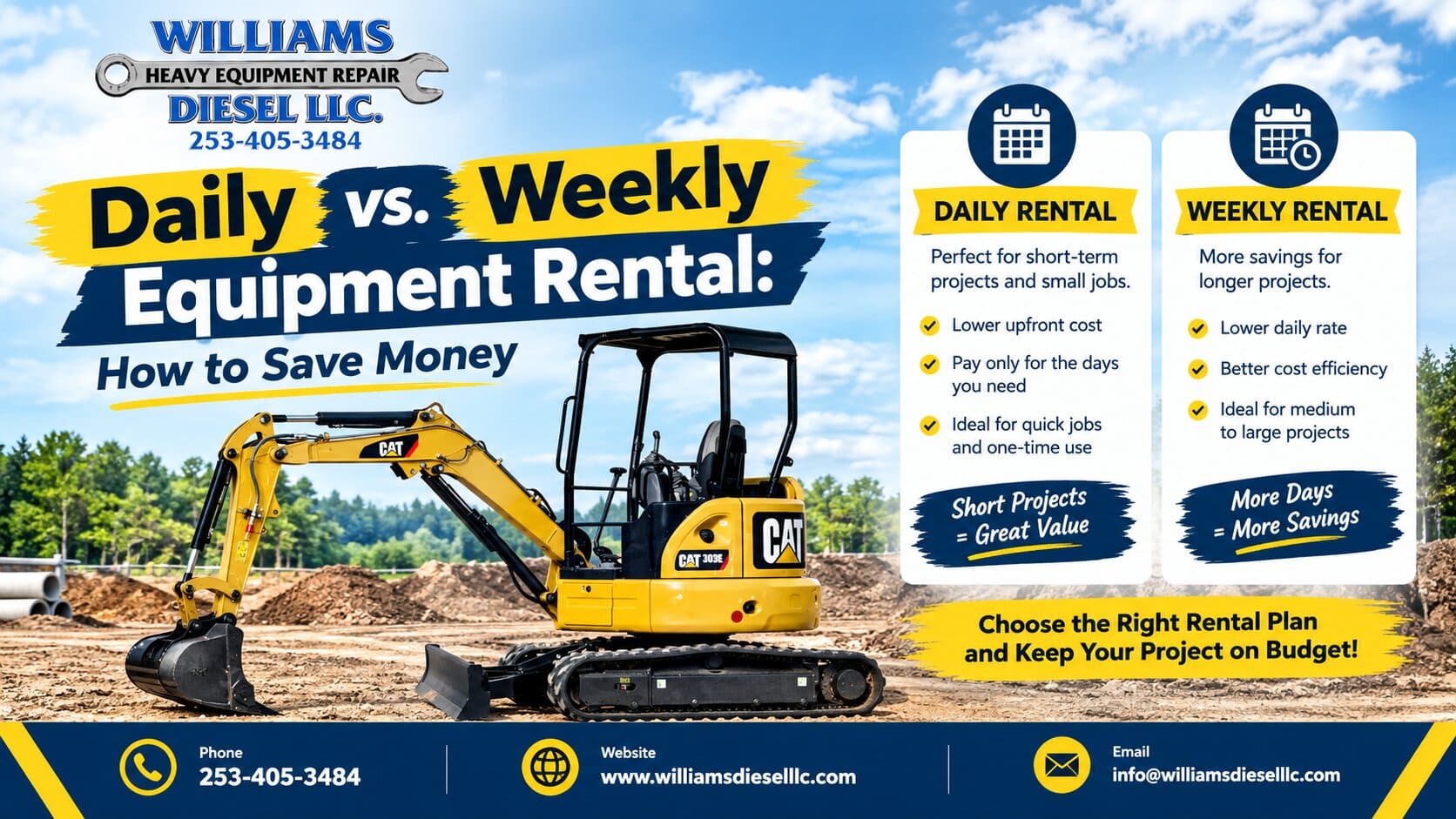
Most rental budgets don’t get blown by the machine. They get blown by the calendar. A job that looked like a two-day push stretches into five, and the daily rate you were happy about becomes the most expensive way to finish. Understanding daily vs weekly equipment rental before you sign anything is one of the easiest ways to protect your budget, whether you’re digging a trench for a water line or clearing a lot for a build.
At Williams Diesel LLC, we work with homeowners, contractors, and small crews across Seattle, Washington and the surrounding areas, and this question comes up almost every week. This guide walks through how it works so you can decide with confidence.
Save more on your next job. Tap below to chat with our Eatonville rental team on WhatsApp and get fast daily and weekly rates!
What Equipment Rental Really Means
Equipment rental lets you use professional-grade machinery for as long as the job needs, without buying it. That matters more than it sounds. Owning a mini excavator, plate compactor, or dump trailer means paying for storage, insurance, maintenance, repairs, and depreciation, whether the machine is working or sitting in the yard.
Renting flips that. You pay for the machine only while you’re using it, the shop handles upkeep, and you can choose the right tool for each job instead of making one machine do everything. For a one-time project like a drainage fix, stump removal, or a driveway regrade, renting almost always beats buying. For crews that use a machine constantly, renting still helps with flexibility and with trying a model before you commit to it.
How Equipment Rental Pricing Works
Most rental shops price on a sliding scale: a daily rate, a weekly rate, and often a monthly rate. Equipment rental rates usually fall per day as the rental period gets longer, because a machine that stays out steadily earns more for the shop than one that bounces back after a day.
The number on the price list is only part of the picture, though. Your real equipment rental cost is the base rate plus delivery and pickup, fuel, damage waiver or insurance, taxes, and any cleaning or late fees. Two shops with the same daily rate can land far apart once those are added. Always ask for the full, out-the-door number.
When a Daily Rental Makes Sense
A daily rental is the right call when the work is short, well defined, and unlikely to slip. Typical examples:
- Digging post holes for a fence in one afternoon
- Compacting gravel for a small patio or walkway
- A single lift for hanging a sign or trimming a tall tree
- A one-day demolition or cleanup task
Daily rentals often come with an hour limit, commonly around eight hours of machine use, with an extra charge past that. If you think you’ll run long, ask how overage is handled before you book. A daily rate gives you flexibility, but it also means every unexpected delay costs you another full day.
When a Weekly Rental Pays Off
If the job will take more than a couple of days, it’s time to look at the weekly rate. Many shops set it at roughly three to four times the daily price, though it varies by machine and season. Think of it as a built-in weekly equipment rental discount: you get several extra days of use for the price of a few.
There’s a second benefit people overlook. When you rent equipment by the week, you’re covered for the delays that always show up. Rain in western Washington, a surprise root ball, a late material delivery, or a day when your helper can’t make it won’t push you into another daily charge. You also avoid the daily stress of watching the clock. For most multi-day projects, the weekly rate is both cheaper and calmer.
A Simple Cost Comparison
When you run the numbers on daily vs weekly equipment rental, the break-even point usually shows up sooner than people expect. Here’s an example using made-up figures (not our actual pricing):
- Daily rate: $300
- Weekly rate: $900
Three days at the daily rate costs $900, exactly the same as the weekly rate. On day four you’d pay $1,200 by the day, while the weekly rental stays at $900 and still gives you three more days to use. In this example, the weekly rate wins the moment you need the machine for more than three days, and it protects you if the job runs long.
The rule of thumb: divide the weekly rate by the daily rate. If the answer is 3.5, and you think you’ll need the machine for four or more days, go weekly. If you’re right on the edge, go weekly anyway, since schedule slips almost never run in your favor.
Estimating Your Project Timeline
The trick to getting this decision right is being honest about the schedule. When people ask how long to rent equipment for, the best answer comes from breaking the job into steps instead of guessing a total.
- List each task. Trenching, backfilling, grading, and compacting all take separate time.
- Account for site conditions. Clay, rock, roots, and wet ground slow everything down.
- Add a buffer. Padding your estimate by 20 to 30 percent is realistic, especially in rainy months.
- Plan for day one. If you’re new to the machine, expect a slower first few hours.
- Check utilities and permits. Waiting on a locate or inspection can idle a rented machine.
Once you have a realistic number of working days, compare it to your break-even point and the decision usually makes itself.
Hidden Costs to Watch For
The rate isn’t the only thing that changes your total. Before you commit, ask about:
- Fuel policy: Do you return it full, or get charged for refueling?
- Delivery and pickup: Fees often depend on distance and machine size.
- Damage waiver or insurance: Know what’s covered and what isn’t.
- Hour limits: Overage charges can add up on busy days.
- Cleaning and late fees: Returning a machine caked in mud or a few hours late can cost extra.
None of these is unreasonable on its own. They just belong in your math from the start.
Equipment Rental Tips to Stretch Your Budget
A few habits will keep your costs down without cutting corners.
Ask for both rates up front. Even if you’re leaning daily, hearing the weekly price helps you see your options.
Right-size the machine. Bigger isn’t better if it costs more and can’t fit through your gate. Mini excavator rental is often the sweet spot for trenching, stump removal, and small grading jobs, with lower rates and easier transport than full-size machines.
Watch for value, not just price. Plenty of shops advertise affordable equipment rentals, but what matters is the condition of the fleet. A cheap excavator rental that breaks down mid-job costs you far more in lost time than it ever saved at the counter. Well-maintained machines are worth a few dollars extra.
Rent attachments together. If you need a bucket, auger, or thumb, add them to the same rental instead of making a second trip.
Prep the site first. Clear access, mark utilities, and call 811 before you dig, so the machine works from the moment it arrives.
Return it properly. Fueled, cleaned, and on time avoids surprise charges.
Finding Rental Equipment Near You
When you search for equipment rental near me, mini excavator rental near me, or heavy equipment rental near me, you’ll get a long list of results. A few questions help narrow it down:
- Does the shop maintain its own machines, or just rent them out?
- Is delivery available to your address, and what does it cost?
- Can you speak to someone who knows the equipment and can match it to your job?
- Are the rates and terms clear before you commit?
If you’ve searched for Williams equipment rental, you probably want straight answers and a machine that works. That’s what we aim to provide, and a quick phone call is usually the fastest way to confirm availability for your dates.
Frequently Asked Questions
-
Do you offer equipment rental in Seattle and nearby areas?
Yes. Williams Diesel LLC is based in Eatonville, and we serve customers in Seattle, Washington and surrounding communities. Availability depends on the machine and the dates, so it’s best to call and confirm before planning your project. -
How quickly can equipment be delivered to my site?
Response time depends on machine availability, your distance from our location, and our schedule that week. Rather than promising a number, we’ll give you a realistic timeline when you call. Booking a few days ahead gives you the best chance of getting the machine when you need it. -
What areas do you cover?
We serve Pierce County, the Tacoma and Puyallup area, and the greater Seattle region. If you’re not sure your address is within range, ask us. We’ll tell you plainly whether we can reach you and what delivery would involve. -
Is a weekly rental always cheaper than renting by the day?
Not always. If you only need a machine for one or two days, the daily rate is usually less. Once you pass the break-even point, typically around three days, the weekly rate becomes the better deal. -
What happens if I finish early or need more time?
Policies differ from shop to shop, so ask before you book. In general, extending a rental is easier than returning early for a refund, which is another reason to plan your timeline carefully.
Final Thoughts
Choosing between daily vs weekly equipment rental comes down to honest planning. Know your real timeline, add a buffer, compare the break-even point, and look at the full cost instead of just the headline rate. Do that, and you’ll avoid the most common ways rental budgets go sideways.
If you’d like a second opinion on which option fits your job, the team at Williams Diesel LLC is happy to talk it through. We’re a dependable, customer-focused partner for rentals in Seattle, Washington and nearby areas, and we’d rather help you choose the right setup than sell you more than you need.

Comments are closed