


Summary
- Financial Impact of Downtime: Learn how unplanned highway breakdowns drain commercial fleet budgets through missed delivery windows and heavy towing charges.
- On-Site Emergency Fixes: Discover how mobile service units resolve air brake leaks, fuel starvation, and electrical faults right on the shoulder.
- Proactive Fleet Management: Understand how blending field response with routine maintenance keeps long-haul and vocational trucks DOT-compliant.
- Rapid Regional Support: Learn why fleet managers trust asap diesel repair & roadside solutions from local specialists to keep their operations moving seamlessly across major freight corridors.
Running a commercial fleet demands continuous movement, precise scheduling, and absolute mechanical dependability. When a heavy-duty rig pulls a full load along busy interstate corridors like Interstate 5 or Interstate 90, any sudden mechanical failure instantly halts revenue generation while costs rapidly escalate. Towing a fully loaded tractor-trailer off a highway shoulder can cost thousands of dollars before a technician even touches a wrench.
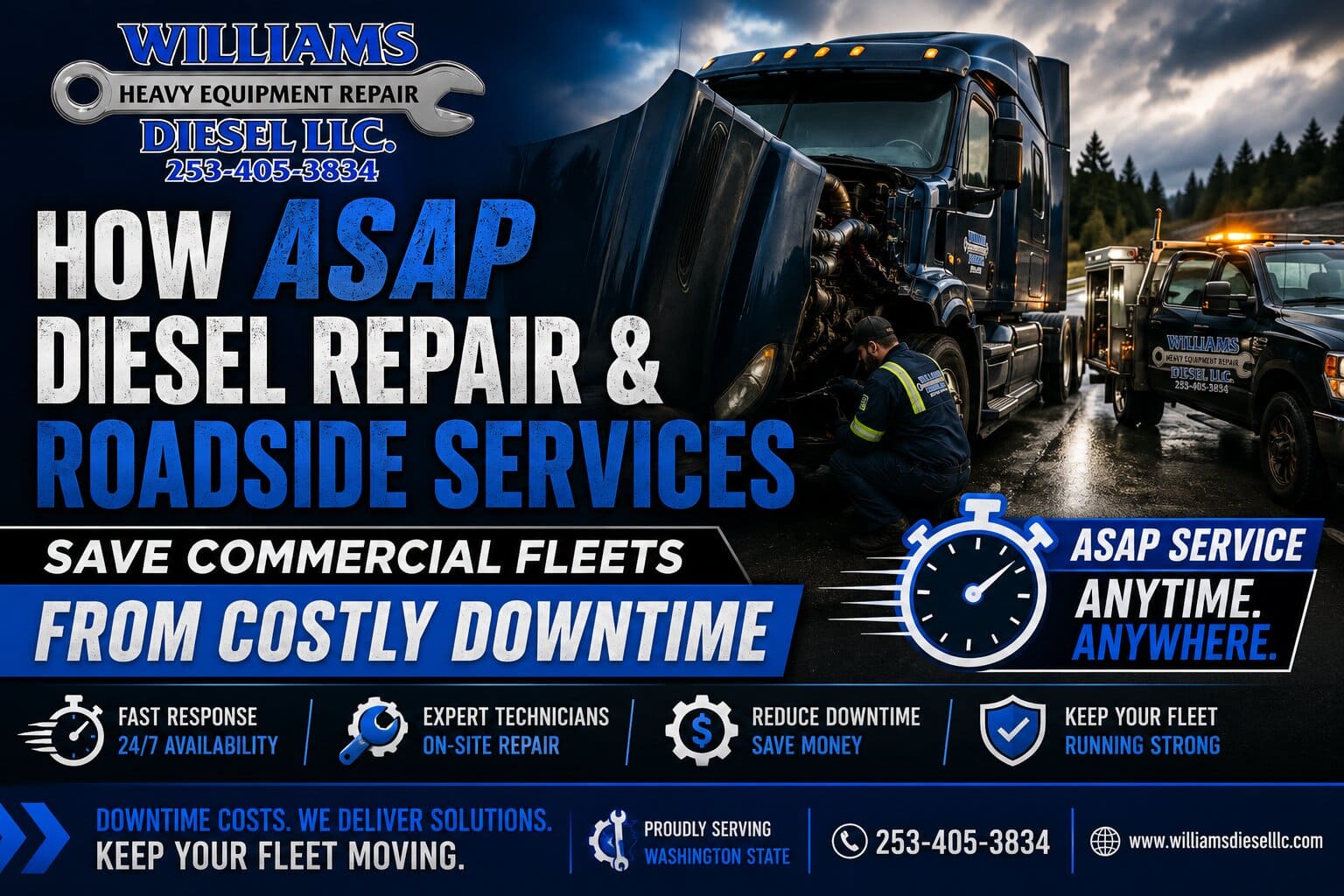
To minimize non-productive idle time and avoid astronomical towing charges, fleet operators depend heavily on rapid mobile dispatch. Securing reliable asap diesel repair & roadside assistance is the most effective operational strategy for safeguarding your schedule and bottom line. In Seattle, Washington, and the surrounding Pacific Northwest regions, fleet managers frequently turn to Williams Diesel LLC for prompt, professional, and trustworthy field support when mechanical trouble strikes on the road.
Start a WhatsApp chat and grab your free quote today :
The High Cost of Unplanned Commercial Truck Downtime
When a commercial vehicle breaks down, the financial loss extends far beyond the price of the mechanical fix itself. Fleet managers must evaluate both direct costs and cascading operational losses.
Missed Delivery Windows and Customer Penalties
Modern supply chains rely heavily on just-in-time delivery models. A delay of just two hours can result in missed offload appointments, rejected perishable loads, and severe contractual financial penalties. Consistently missing delivery schedules damages a carrier’s reputation and jeopardizes long-term freight contracts.
Driver Hours-of-Service Disruptions
Federal regulations strictly govern commercial driver hours of service. When a truck sits idle on the shoulder waiting for service, the driver’s allowable driving window continues to tick away. A breakdown that takes hours to resolve can force a driver into mandatory rest periods before reaching their destination, effectively stranding the load for an additional day.
Heavy-Duty Towing Expenses
Towing a Class 8 commercial truck requires specialized heavy wrecker equipment. Rates for heavy towing are exceptionally high, especially for highway recoveries or during peak traffic hours. Dispatching a mobile technician who can resolve the issue right where the truck stands eliminates the towing step entirely, saving thousands of dollars per incident.
Common Highway Failures Resolved on the Shoulder
Modern heavy trucks endure immense structural, thermal, and mechanical strain. Fortunately, a significant percentage of roadside breakdowns stem from issues that can be diagnosed and repaired in the field by an experienced technician equipped with a fully stocked service truck.
Air Brake System Leaks and Lockups
Air brake systems rely on continuous pneumatic pressure to keep wheel ends operating safely. A blown air line hose, a ruptured brake chamber diaphragm, or a failing governor will cause air pressure to drop, automatically engaging the emergency spring brakes and locking the wheels. Mobile technicians carry pneumatic fittings, replacement air lines, and chambers to restore pressure and release locked wheels safely on site.
Fuel System Starvation and Contamination
Diesel engines require a steady stream of clean fuel at precise pressures. Contaminated fuel, water in the fuel separator, or paraffin wax buildup during freezing weather will quickly choke fuel delivery. A driver may experience sudden surging, severe power loss, or a total engine stall. Carrying out mobile roadside diesel repair allows technicians to drain contaminated water bowls, clear lines, and change clogged fuel filters on the spot to restore full power.
Electrical and Sensor Glitches
Modern computer-controlled diesel engines utilize dozens of sensors to regulate boost, fuel delivery, and emissions parameters. A corroded ground strap, a blown main fuse, or a failed sensor can trick the engine control unit into entering forced limp mode. Technicians utilizing portable laptop diagnostic software can pinpoint fault codes, reset software glitches, and replace faulty wiring harnesses on the highway shoulder.
Core Systems Serviced by Field Mechanics
Mobile mechanics operating specialized service vehicles possess the tooling, hydraulic jacks, and diagnostic computers necessary to perform complex field interventions that rival traditional shop repairs.
Turbochargers and Air Intake Piping
High-pressure charge air cooler hoses can blow off under heavy load, causing an immediate loss of boost and heavy black smoke from the tailpipe. Re-attaching or replacing heavy silicone boots, tightening T-bolt clamps, and adjusting turbo boost actuators are standard field procedures executed by a skilled mobile diesel truck repair specialist.
Charging and Starting Systems
Extreme ambient temperatures place heavy demands on commercial truck battery banks and high-output alternators. If an alternator fails, battery voltage drops rapidly, shutting down electronic control units. Field technicians can perform load tests, swap dead battery banks, and replace burnt alternators directly at a rest area or weight station.
Cooling System Hose Ruptures
Operating heavy loads up steep mountain passes generates massive thermal energy. Older coolant hoses can burst under heat and pressure, spraying hot coolant across the engine bay and causing immediate engine overheating warnings. Replacing split radiator hoses, replacing worn drive belts, and refilling fresh coolant on location prevents severe thermal warping of cylinder heads.
Bridging the Gap: Field Response vs. Shop Repairs
While mobile units can resolve a wide range of highway emergencies, fleet managers must recognize when a truck requires a physical shop bay for complex structural or mechanical overhauls.
When Field Service Is the Ideal Choice
Opting for an emergency diesel repair unit makes sense for minor mechanical failures, electrical troubleshooting, fluid leaks, wheel end service, or air system faults. It gets the driver moving in the shortest time possible while avoiding tow truck wait times and garage queue delays.
When to Direct Vehicles to a Stationary Shop
For major internal mechanical overhauls—such as dropping a transmission, pulling cylinder heads, pressing out seized kingpins, or performing full structural frame work—the controlled environment of a full-service facility is required. Having a trusted diesel repair shop partner ensures that when a truck cannot be fixed on the shoulder, it is towed directly to a bay equipped with overhead cranes and heavy hydraulic equipment.
Preventing Roadside Emergencies Through Proactive Maintenance
The single most effective way to handle roadside emergencies is to prevent them from occurring in the first place. Incorporating field inspections into routine fleet management drastically reduces the frequency of unexpected highway stalls.
Preventative Maintenance Checkpoints
Daily Driver Pre-Trip: Drain air tanks, inspect tire pressures, visually check serpentine belts, inspect hydraulic and fuel lines for rub marks.
Every 10,000 Miles: Perform full fluid analysis, greasing of all chassis grease fittings, check slack adjuster play, inspect brake lining thickness.
Every 25,000 Miles: Replace primary and secondary fuel filters, service air dryer cartridge, inspect charge air cooler hoses, run computer diagnostics for pending fault codes.
Investing time into routine maintenance on diesel engines ensures small wear items like chaffing air lines or weeping water pump seals are discovered and fixed in the yard before they become expensive highway failures.
Platform-Specific Engine Knowledge Matters
Commercial and vocational fleets run on diverse diesel engine platforms, each with distinct mechanical quirks that require specialized diagnostic experience.
- Ford Powerstroke Platforms: Popular in medium-duty service trucks and dump vehicles, these engines often require specialized powerstroke repair strategies to address high-pressure oil leaks, EGR cooler issues, or turbo VGT actuator stickiness.
- Cummins and Detroit Diesel Engines: Widely used in Class 8 long-haul tractors, these platforms demand deep familiarity with high-pressure common rail fuel delivery, overhead valve adjustments, and complex exhaust aftertreatment systems.
- Duramax Platforms: Common in light-to-medium utility fleets, requiring precise diagnostic tools for fuel injector balance rates and glow plug control module faults.
A technician who understands these technical nuances can diagnose issues in minutes rather than hours, reducing labor charges and expediting driver turnaround times.
Fleet Strategy: Combining Scheduled Upkeep with Roadside Readiness
Managing a high-mileage commercial fleet requires a balanced maintenance framework. Relying solely on reactive repairs leads to skyrocketing operational expenses and driver burnout. Conversely, attempting to run a fleet without a designated emergency roadside strategy leaves your business vulnerable when unpredictable part failures happen en route.
By pairing routine yard maintenance—such as knowing when to change diesel fuel filter units and adjust brake linkages—with a dedicated emergency response partner, fleet managers gain complete control over their asset availability.
For operators transporting goods through Washington, establishing a relationship with dependable roadside diesel mechanics near me provides total peace of mind. Knowing that an experienced technician is ready to respond ensures that unexpected mechanical issues remain brief bumps in the road rather than business-threatening disasters.
Whether you oversee an interstate logistics fleet, a regional distribution system, or a local construction outfit, having immediate access to professional diesel roadside repair and comprehensive diesel truck repair support ensures your drivers remain safe and your cargo arrives on schedule.
FAQs
What should a commercial driver do immediately after breaking down on the highway?
The driver should safely pull as far off the travel lane as possible onto the shoulder, activate hazard lights, set up reflective warning triangles or flares at proper distances behind the vehicle, and contact fleet dispatch to report their exact location and symptoms.
What information is needed when calling for emergency roadside diesel service?
Provide the vehicle’s precise GPS location or highway mile marker, truck year/make/model, engine type, current load status, a detailed description of the problem, and any specific fault codes displaying on the dashboard display.
What is the average response time for Williams Diesel LLC mobile repair in Seattle?
Williams Diesel LLC prioritizes commercial emergency calls throughout Seattle and nearby Washington regions, striving to dispatch field mechanics quickly with typical local arrival times ranging between 1 and 2 hours depending on traffic and location.
What geographic areas does Williams Diesel LLC cover for mobile support?
Williams Diesel LLC covers the greater Seattle area, King County, and surrounding highway routes in Washington, delivering comprehensive mobile services directly to job sites, weight stations, rest areas, and highway shoulders.
Can mobile technicians perform routine scheduled servicing at our fleet yard?
Yes. Professional mobile diesel units can perform fleet yard services during off-hours, including oil changes, fuel filter replacements, brake adjustments, and DOT safety inspections, keeping your fleet active during business hours.
Conclusion and Final Thoughts
Unplanned vehicle breakdowns are an unfortunate reality of the commercial transport industry, but they do not have to disrupt your bottom line. By partnering with a dedicated field service provider, you eliminate expensive towing bills, protect your drivers’ hours of service, and keep your delivery promises to customers.
For commercial fleet operators and independent owner-operators navigating traffic across the Pacific Northwest, having access to rapid asap diesel repair & roadside assistance makes all the difference. Williams Diesel LLC is committed to providing affordable, reliable, and expert mobile diesel services in Seattle, Washington. Trust their experienced team to keep your fleet operational, safe, and earning revenue on every mile.
Don’t wait for a roadside emergency to find a reliable repair partner. Contact Williams Diesel LLC today to establish a priority roadside support plan for your fleet.


Comments are closed