


Quick Summary
- Late-Summer Freight Pressures: Learn how late-summer freight surges, agricultural hauls, and high ambient temperatures strain commercial diesel fleets across Washington.
- Margin Protection: Discover how securing reliable affordable diesel repair prevents unexpected highway breakdowns that eat into tight operating margins.
- Essential System Inspections: Explore vital preventive maintenance priorities, including cooling system flushes, turbocharger checks, and fuel filtration care.
- Fleet Cost Management: Understand how transparent pricing, regular diagnostics, and timely servicing minimize long-term capital losses for owner-operators.
- Trusted Regional Support: Learn why transportation companies throughout the Pacific Northwest depend on Williams Diesel LLC for dependable, cost-effective service in Seattle and surrounding areas.
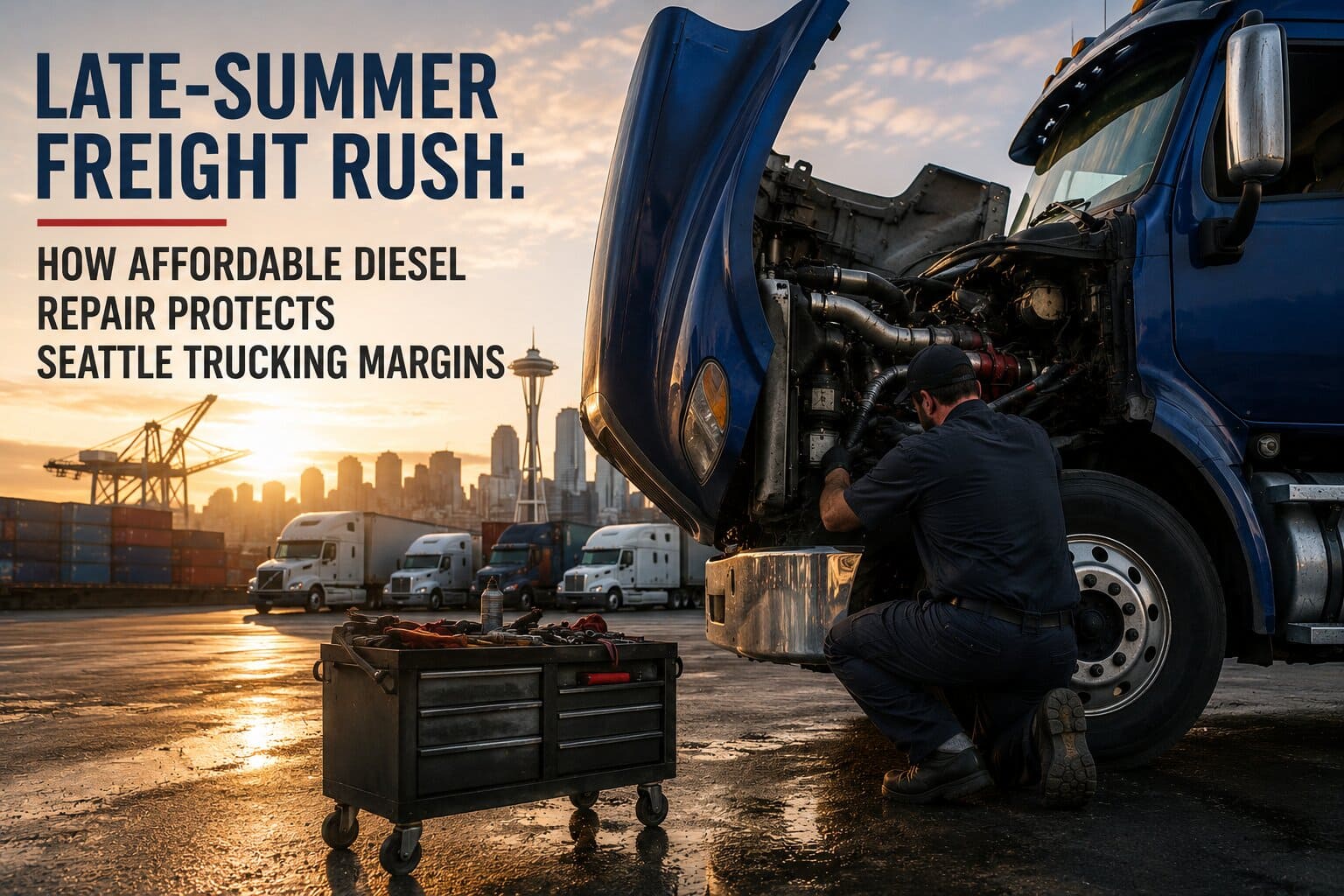
Late summer across the Pacific Northwest is one of the busiest times of the year for commercial transportation. Between seasonal agricultural harvests moving across the state, retail restocking ahead of autumn, and steady port traffic flowing through Puget Sound terminals, commercial rigs face intense operating schedules. However, heavy payloads combined with late-summer heat waves place severe mechanical stress on engines, transmissions, and cooling systems. For owner-operators and commercial fleet managers navigating the I-5 and I-90 corridors, unexpected downtime can instantly turn a profitable haul into a financial loss. Securing dependable affordable diesel repair is essential to keeping trucks running smoothly without draining operating budgets.
Transportation companies and independent haulers across Seattle and Western Washington regularly count on Williams Diesel LLC to provide reliable, budget-conscious maintenance and repair services that safeguard commercial uptime during the most demanding shipping weeks of the year.
Start a WhatsApp chat and grab your free quote today :
The Financial Reality of the Late-Summer Freight Rush
The shipping window between August and early autumn offers substantial revenue opportunities for freight carriers. Regional haulers transport everything from Eastern Washington produce to intermodal shipping containers arriving at Seattle and Tacoma maritime hubs. Yet, maximizing revenue requires keeping every truck on the road and out of emergency repair bays.
Tight Freight Margins and Operational Overhead
Trucking operates on notoriously thin profit margins. Fuel costs, driver wages, commercial insurance premiums, and permit fees account for the vast majority of gross revenue. When a rig experiences a mechanical breakdown on route, the financial impact extends far beyond the mechanic’s invoice:
- Missed Delivery Penalties: Late deliveries often result in detention fees, missed delivery appointments, and damaged broker relationships.
- Emergency Towing Expenses: Heavy-duty towing from mountain passes or congested freeways can cost thousands of dollars before repairs even begin.
- Perishable Cargo Losses: In refrigerated transport, prolonged engine failures put temperature-sensitive freight at direct risk of spoilage.
Relying on proactive, cost-effective maintenance allows fleet owners to manage operational risk, ensuring that unexpected equipment failures do not erase hard-earned haul profits.
Late-Summer Thermal Load on Diesel Systems
While Western Washington is famous for cool, rainy weather, late summer brings sustained temperature spikes. Heavy-duty diesel engines operate under high thermal loads under normal conditions, but climbing steep grades like Snoqualmie Pass in 85-degree weather pushes cooling and oil systems to their absolute limits. Without proper thermal management and regular maintenance, high ambient temperatures accelerate wear across water pumps, fan clutches, radiators, and oil coolers.
Critical Mechanical Vulnerabilities During Peak Hauling Season
To maintain vehicle reliability during the freight rush, operators must understand which engine components are most prone to failure under sustained summer loads.
Cooling System Integrity and Radiator Health
Overheating is the leading cause of roadside engine shutdowns during the summer months. Diesel cooling systems must continuously dissipate immense amounts of heat generated by combustion and turbocharging.
- Coolant Breakdown: Over time, engine coolant loses its corrosion inhibitors and anti-cavitation properties, leading to cylinder liner pitting and radiator scale buildup.
- Fan Clutch Malfunctions: A failing fan clutch cannot engage the cooling fan properly, causing rapid temperature spikes during low-speed maneuvers or steep uphill pulls.
- Thermostat Failures: Sticky thermostats prevent coolant from circulating freely through the radiator core, triggering high-temperature warnings on the dashboard.
Conducting a thorough cooling system flush and pressure test before tackling heavy summer loads prevents severe head gasket failures and warped cylinder heads.
Turbocharger Performance and Air Intake Quality
Turbochargers provide the high-pressure air charge needed to achieve complete diesel combustion and heavy load-pulling power. During hot weather, ambient air is less dense, forcing the turbocharger to spin faster to maintain boost levels.
- Oil Lubrication: Turbos spin at speeds exceeding 100,000 RPM and rely on engine oil for cooling and lubrication. Degraded oil or clogged oil feed lines quickly lead to bearing failure.
- Air Filter Restriction: Dry summer conditions increase airborne dust and agricultural chaff on rural routes. Saturated air filters choke the engine, driving up exhaust gas temperatures (EGTs) and cutting fuel efficiency.
Scheduling an affordable diesel engine repair inspection ensures that boost leaks are detected and fixed before they cause turbocharger wheel scoring or engine power derates.
Fuel Injection and Fuel-Water Separation
High-pressure common rail (HPCR) fuel injection systems operate at extreme tolerances. Hot summer fuel tends to thin out, reducing its natural lubricating qualities. Furthermore, condensation buildup in fuel storage tanks introduces moisture into the fuel supply.
- Injector Wear: Water droplets passing through fuel filters create micro-corrosion on injector needles, causing rough idling, black smoke, and power loss.
- Fuel Pump Stress: Clean, moisture-free fuel is required to lubricate high-pressure fuel pumps. Replacing fuel filters and draining water separators regularly protects expensive injection components from premature failure.
Balancing Repair Costs: How Fleet Managers Keep Maintenance Affordable
Finding cost-effective service does not mean cutting corners or using substandard parts. True affordability comes from precise diagnostics, preventive care, and transparent service practices.
The Problem with Cheap Shortcuts vs. True Value
Opting for questionable, unqualified labor often leads to recurring breakdowns and costlier secondary repairs. When managing a commercial vehicle, finding a qualified low cost diesel mechanic means finding a certified technician who delivers honest pricing, uses OEM-quality replacement parts, and accurately diagnoses the root cause of an issue on the first visit.
A structured approach to budget diesel truck repair focuses on identifying component wear early during scheduled preventive maintenance intervals, eliminating the need for emergency roadside overhauls later on.
Comprehensive Diagnostic Capabilities
Modern heavy-duty diesel engines rely on sophisticated electronic control modules (ECMs) and sensor networks. Misdiagnosing a fault can result in hundreds of dollars spent on unnecessary part replacements. Utilizing advanced computerized diagnostic scan tools allows technicians to read live sensor data, test actuator responsiveness, and isolate mechanical faults quickly, keeping labor hours minimal and repair bills fair.
Integrating Equipment Rentals and Fleet Mobility
During peak freight and earthmoving seasons, keeping operations moving sometimes requires supplemental equipment or temporary machine replacements while primary units undergo maintenance.
Managing Project Timelines with Supplemental Machinery
When an engine overhaul requires a vehicle to stay in the shop for several days, businesses cannot afford to turn down lucrative contracts. Sourcing reliable rental machinery or utilizing specialized logistics resources such as a pacific rim rental allows contractors and haulers to maintain project schedules without interruption.
Whether replacing a vocational haul truck or sourcing compact earthmovers for regional job sites, access to versatile equipment options keeps business operations active and profitable.
Specialized Commercial Truck Care in the Puget Sound
Navigating city streets and freight terminals in Western Washington requires specialized vehicle maintenance. Sourcing professional truck repair seattle services ensures that commercial trucks comply with local safety requirements and state environmental regulations.
For complete driveline, engine, and electrical solutions, working with established professionals like williams diesel guarantees that repairs are completed with high technical standards and clear cost estimates.
When managing route operations throughout King County and nearby freight hubs, having a reliable diesel mechanic seattle wa on call gives drivers peace of mind when hauling heavy loads across the state.
Preventive Maintenance Checklist for Late-Summer Freight
Implementing a consistent maintenance routine before embarking on high-mileage freight runs protects equipment and stabilizes operational budgets.
For major tractor-trailer platforms, securing affordable semi truck repair solutions ensures that commercial rigs pass roadside commercial vehicle inspections without citations or out-of-service orders. When troubleshooting engine problems, working with an experienced semi truck mechanic ensures that repairs are performed safely and correctly.
When unexpected mechanical troubles arise on the road, knowing where to find a trusted local diesel repair shop near me ensures that your rig receives prompt attention without excessive towing delays.
FAQs
Why do diesel engines overheat more frequently in late summer?
High ambient temperatures reduce the efficiency of the radiator in cooling engine fluid. When combined with heavy cargo loads, mountain climbs, and clogged radiator fins, the engine cooling system can quickly become overwhelmed.
How often should fuel-water separators be drained during heavy hauling seasons?
Fuel-water separators should be checked and drained daily during pre-trip inspections. Draining accumulated moisture prevents water from entering high-pressure fuel pumps and damaging precision fuel injectors.
How quickly can Williams Diesel LLC respond to service requests in Seattle?
Williams Diesel LLC prioritizes rapid support for commercial transport clients in Seattle and surrounding Washington regions. Typical response times for local service inquiries and field dispatches range between 1 and 2 hours depending on location and traffic conditions.
What coverage areas does Williams Diesel LLC service across Washington?
Their service coverage includes greater Seattle, Tacoma, King County, Pierce County, and major freight corridors across Western Washington, supporting both mobile field assistance and comprehensive shop repairs.
How does preventive maintenance lower overall repair costs for freight carriers?
Preventive maintenance identifies minor issues—such as worn belts, small coolant leaks, or dirty air filters—before they cause catastrophic engine failures. This avoids expensive roadside towing bills, driver downtime, and major part replacements.
Conclusion and Final Thoughts
The late-summer freight rush offers tremendous earning potential for commercial haulers across the Pacific Northwest, but staying profitable requires keeping mechanical breakdowns to an absolute minimum. Saturated air filters, cooling system leaks, and fuel contamination can quickly derail tight delivery schedules and diminish profit margins. By investing in proactive vehicle inspections, thermal system testing, and routine maintenance, fleet owners can protect their investments and ensure consistent road performance.
For owner-operators and commercial fleet managers throughout Seattle and Western Washington, having a dependable repair partner makes all the difference during peak shipping seasons. Williams Diesel LLC remains dedicated to providing trustworthy, professional, and affordable diesel repair services that keep your trucks running reliably across every mile. Whether you need a pre-trip cooling system check, diagnostic troubleshooting, or comprehensive engine servicing, partnering with experienced local diesel specialists ensures your business stays productive and profitable through late summer and beyond.


Comments are closed