


Quick Summary
- Pacific Northwest Weather Impact: Learn how Seattle’s persistent rainfall and humidity accelerate electrical corrosion, brake degradation, and fuel system moisture issues.
- Essential Wet-Weather Fleet Care: Discover critical maintenance steps to protect turbochargers, air intake systems, and hydraulic lines from water intrusion.
- Routine Maintenance Value: Understand how professional diesel trucks service prevents costly highway breakdowns and keeps commercial fleets compliant during heavy rain seasons.
- Preventative Solutions: Explore diagnostic techniques, seal inspections, and brake testing methods tailored specifically for Western Washington driving conditions.
- Local Fleet Expertise: Learn how Williams Diesel LLC provides trustworthy, responsive field support and shop repairs for fleet operators across the Puget Sound region.
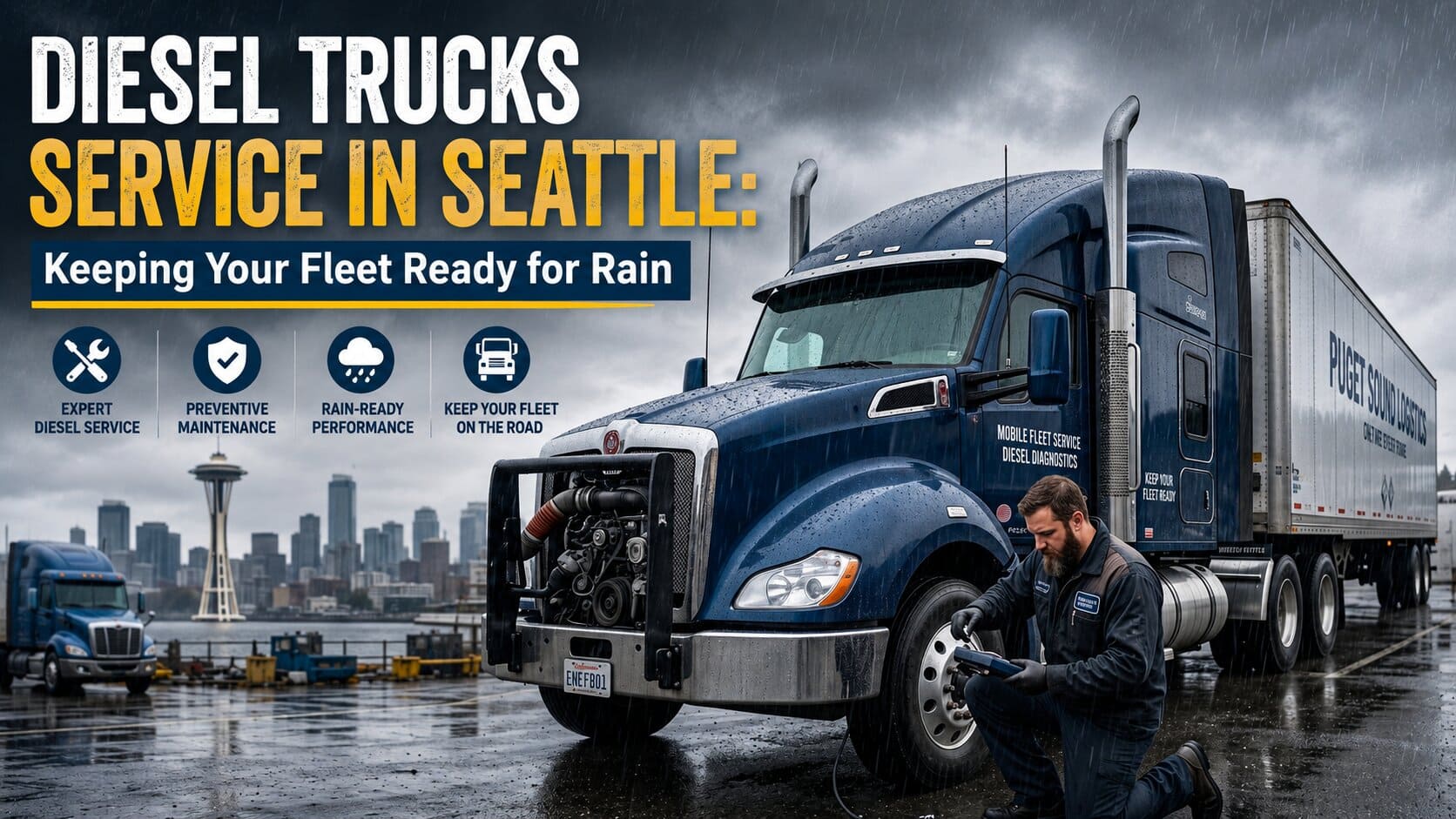
Operating commercial vehicles across the Pacific Northwest presents unique operational challenges. Between persistent atmospheric rivers, slick highways, and high humidity, heavy-duty commercial rigs endure constant environmental stress. Rain does more than just reduce road visibility; it actively accelerates component wear, creates electrical shorts, and introduces unwanted moisture into fuel and air intake systems. For fleet managers and independent owner-operators navigating Western Washington, securing proactive diesel trucks service is the key to maintaining uptime, protecting cargo, and keeping vehicles safe on wet roads.
Local fleet operators across the Puget Sound region frequently rely on Williams Diesel LLC to perform comprehensive wet-weather inspections, routine servicing, and heavy-duty repairs tailored to local climate conditions. Taking a preventive approach ensures your equipment remains dependable no matter how heavy the downpour gets.
Get in touch on WhatsApp and request your free quote :
The Physical Toll of Seattle Rain on CommercialRigs
Rainfall in Western Washington is rarely a single storm event; it is a months-long season of continuous dampness. Heavy commercial vehicles running daily routes along I-5, I-90, and coastal ports face distinct mechanical vulnerabilities caused by constant exposure to water.
Moisture Intrusion in Electrical and Sensor Networks
Modern heavy-duty vehicles depend heavily on complex electronic control modules (ECMs), wiring harnesses, and wheel-speed sensors. Rain mixed with road grime, oil residue, and de-icing chemicals creates a highly corrosive slurry.
When wire loom insulation degrades or weather-pack connectors harden with age, moisture creeps into sensitive pins. This causes voltage drops, erratic sensor readings, and phantom fault codes that can force an engine into derate mode unexpectedly. Keeping connections sealed and coated with dielectric grease is essential for year-round reliability.
Air Intake Systems and Water Ingestion
A diesel engine requires massive volumes of clean air to achieve complete fuel combustion. Heavy splashing from highway traffic and driving through deep standing water can saturate air filters if intake ducting is cracked or misaligned.
- Saturated Air Filters: A soaked paper air filter restricts airflow, causing rich fuel mixtures, high exhaust gas temperatures (EGTs), and reduced fuel economy.
- Turbocharger Damage: In extreme cases, water pulled past a compromised filter can strike the fast-spinning compressor wheel of a turbocharger, causing blade erosion or catastrophic wheel failure.
Key Components to Inspect Before the Rainy Season
Preparing a commercial vehicle for wet driving conditions requires examining key mechanical assemblies where water exposure creates the highest risk of failure.
Brake System Maintenance and Hydroplaning Prevention
Stopping a fully loaded tractor-trailer on wet pavement requires maximum friction and perfect brake balance. Moisture and road spray can infiltrate drum brake linings and air brake mechanisms if maintenance schedules are neglected.
During routine inspections, mechanics verify lining thickness, adjust automatic slack adjusters, and ensure S-cams rotate freely. Additionally, checking tire tread depth and maintaining proper inflation pressure are critical steps to prevent hydroplaning when hauling heavy loads on saturated highways.
Air Dryer Systems and Moisture Contamination
Air brake systems rely on clean, dry compressed air to operate safety valves and brake chambers. The air dryer unit removes atmospheric water vapor before it reaches storage tanks.
In humid climates, air dryer desiccant cartridges fill with moisture rapidly. If the desiccant becomes saturated, water passes directly into air lines, causing internal rust in brake valves, freezing issues during sudden winter drops, and air leaks that fail roadside commercial inspections.
Fuel System Water Separators
Diesel fuel naturally holds small amounts of entrained water, but rainy weather increases the rate of condensation inside saddle tanks. As temperatures fluctuate, moist air inside empty spaces in fuel tanks condenses into liquid water that settles at the bottom.
- Water-in-Fuel (WIF) Sensors: Mechanics verify that primary fuel filters and water separators are drained routinely and that WIF sensors trigger dash alerts properly.
- Injector Protection: Allowing water past the separator can destroy precision fuel injectors. High-pressure common rail (HPCR) systems operate at pressures exceeding 30,000 PSI, where water causes instant metal scoring, galling, and tip erosion.
Hydraulic and Driveline Protection for Wet Conditions
Heavy equipment and vocational trucks equipped with hydraulic hoists, liftgates, or PTO units face additional environmental hazards when working in continuous rain.
Preventing Hydraulic Fluid Emulsification
Hydraulic reservoirs breathe in ambient air as cylinders cycle. In wet conditions, damp air is drawn inside, where it condenses into water. When water mixes with hydraulic oil under high pressure, it creates a milky fluid emulsion.
This emulsified oil loses its lubrication strength, leading to pump cavitation, valve spool sticking, and internal cylinder corrosion. Flushing contaminated fluid, replacing breathers with desiccant caps, and conducting routine fluid analysis protect critical hydraulic systems from premature failure.
Driveline and Universal Joint Lubrication
Water and fine grit washed up from road surfaces strip grease away from exposed driveline components. Universal joints, slip shafts, and steering linkage pins require frequent grease applications during wet months. Fresh grease pushes out trapped water and road grit, preventing needle bearings from rusting and locking up under load.
Partnering with a dedicated shop offering specialized williams diesel repair solutions ensures that chassis grease points, drivelines, and hydraulic systems are serviced thoroughly to handle damp operational environments.
Fleet Efficiency and Preventive Maintenance Protocols
Managing a commercial fleet efficiently means shifting from reactive repairs to structured, calendar-based preventive care. Unplanned roadside breakdowns cost significantly more in towing fees, lost transit time, and customer penalties than scheduled shop service.
Wet-Weather Fleet Maintenance Checklist
Daily Driver Inspection: Drain primary fuel water separators and check air tank drain valves for water accumulation.
Weekly Walkaround: Inspect wiper blades, windshield washer sprayers, and all exterior LED clearance lights for moisture sealing.
Monthly Shop Check: Test air dryer heater elements, check tire tread depth across all axles, and inspect brake lining thickness.
Quarterly Service: Perform computer diagnostics for stored fault codes, grease driveline components, and inspect air intake ducting.
When managing diverse vehicle fleets, having access to a comprehensive diesel trucks mechanic who understands local driving challenges ensures that minor mechanical wear is caught before it turns into a major highway breakdown.
Emergency Support and Field Service Solutions
Even with rigorous preventive maintenance, mechanical failures can happen during severe weather events. Heavy rain, standing road water, and reduced visibility increase the likelihood of electrical failures or tire blowouts on active routes.
Mobile Service and Field Repairs
When a commercial rig experiences a sudden breakdown, moving the vehicle to a repair shop is not always possible. Utilizing a mobile service truck equipped with diagnostic software, air compressors, and core replacement parts allows technicians to resolve many issues directly on the shoulder or at a loading dock.
For complex engine issues, sourcing a team skilled in semi engine repair guarantees that heavy-duty diesels receive accurate troubleshooting, whether the issue involves EGR valve sticking, turbo actuator fault, or fuel delivery failure.
Whether managing a box truck fleet or heavy vocational haulers, relying on a full-service provider capable of handling commercial truck repair keeps your drivers safe and your delivery schedules intact across Western Washington.
Finding Reliable Local Repair Services
When a breakdown occurs away from your main shop, having access to fast, local mechanical support is critical. Operators managing regional routes often depend on specialized providers offering diesel seattle field support to resolve unexpected mechanical failures quickly.
Whether you manage an independent delivery truck or an entire commercial fleet, working with a established facility like the shop diesel and auto repair centers or heavy-duty specialist shops guarantees high-quality workmanship.
Furthermore, full-service businesses like diesel engine service llc providers help maintain vehicle compliance with federal safety standards. When urgent roadside issues arise, having a trusted contact for the cheapest mobile diesel mechanic near me helps get your truck back on the road without excessive towing fees or extended downtime.
FAQs
How does heavy rain affect diesel truck fuel systems?
Rain increases humidity and condensation inside fuel tanks. If water enters the fuel supply and bypasses the water separator, it can cause severe corrosion inside high-pressure fuel pumps and ruin precision fuel injectors.
How often should air brake tanks be drained during the rainy season?
Air brake tanks should be checked and drained daily during wet weather. Draining the tanks removes accumulated moisture and prevents water from traveling into brake valves and actuators.
How fast can Williams Diesel LLC respond to mobile service requests in Seattle?
Williams Diesel LLC prioritizes commercial breakdown requests throughout Seattle and surrounding Washington areas. Typical local dispatch response times range between 1 and 2 hours depending on traffic conditions and location.
What coverage areas are serviced for commercial truck repairs?
Service coverage includes the greater Seattle metropolitan area, King County, Pierce County, and major highway corridors throughout Western Washington, supporting both mobile field service and shop repairs.
What causes electrical fault codes to appear during heavy rain?
Heavy rain causes moisture to enter worn wiring looms and loose electrical connectors. Moisture creates short circuits or high resistance paths, triggering false sensor readings and illumination of check engine lights.
Conclusion and Final Thoughts
Keeping commercial fleets operating smoothly through Seattle’s wet season requires a proactive approach to maintenance. Rain, humidity, and standing water create continuous stress on electrical networks, brake systems, air intakes, and hydraulic components. By addressing small issues during routine inspections—such as replacing air dryer cartridges, draining fuel water separators, and greasing driveline points—fleet owners can prevent costly roadside delays and keep drivers safe.
For fleet managers and owner-operators throughout Western Washington, having a dependable partner for scheduled fleet care and emergency support makes all the difference. Williams Diesel LLC remains committed to providing trusted, professional, and affordable services for your entire fleet in Seattle and nearby regions. When you need high-quality diesel trucks service, relying on experienced local mechanics ensures your vehicles remain safe, efficient, and ready for any weather condition.
Don’t wait for a rainy day breakdown to inspect your commercial vehicles. Contact Williams Diesel LLC today to schedule a comprehensive fleet check or wet-weather maintenance service.


Comments are closed