


Summary
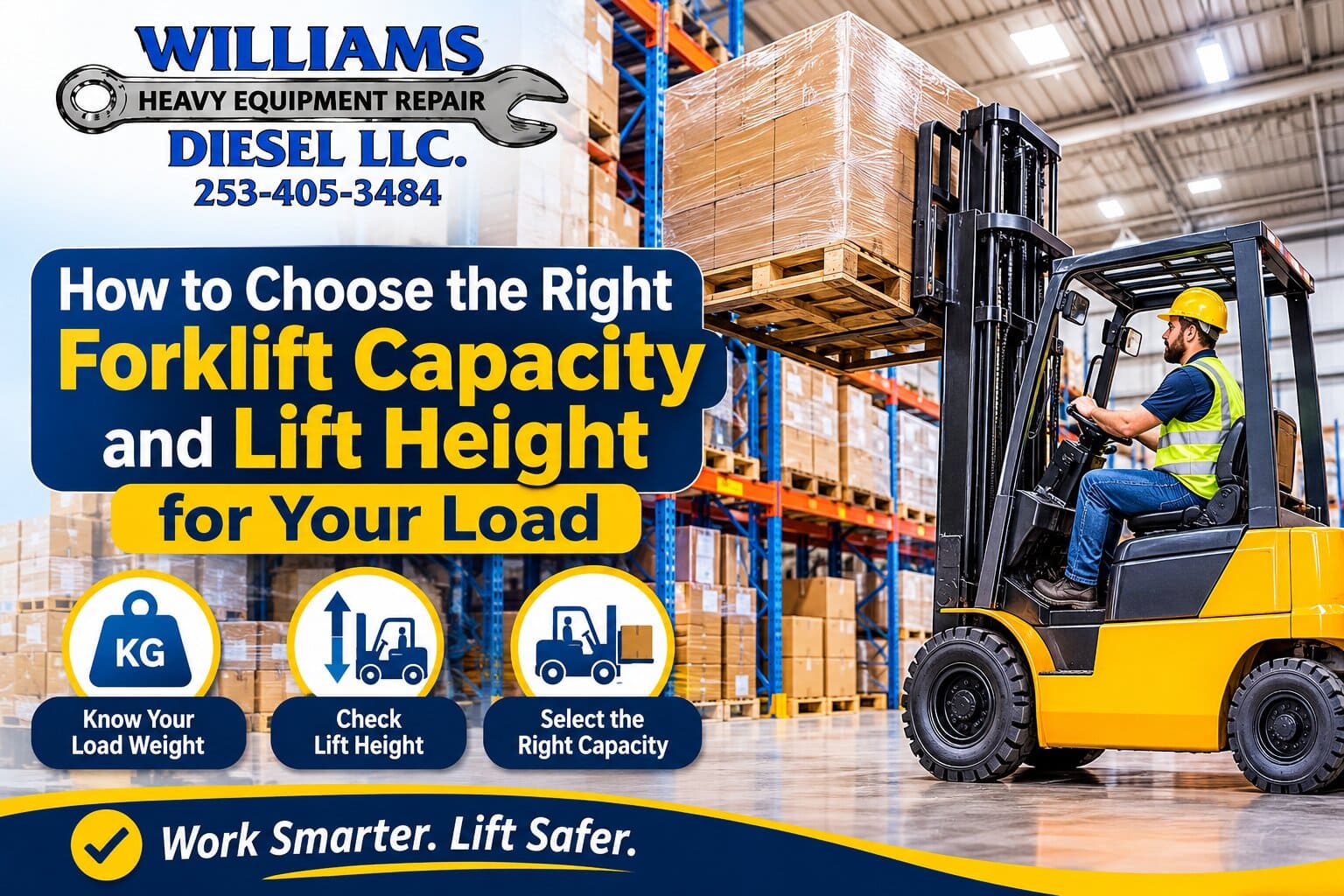
- Selecting the right forklift capacity and vertical reach protects your crew, prevents tip-overs, and keeps material handling efficient on any jobsite.
- Standard lifting ratings assume a 24-inch load center; oversized pallets, long lumber, or attachments shift weight forward and reduce safe lifting limits.
- Raising heavy materials to upper warehouse racking or scaffolding lowers net lifting strength, making load chart verification essential before hoisting.
- Measuring overhead door clearances alongside maximum shelf elevations prevents costly delivery mismatches and mast collisions.
- Partnering with a knowledgeable regional rental supplier ensures access to properly sized lifts, transparent pricing, and fast jobsite support.
Selecting a material handler that matches your exact weight and vertical reach requirements is one of the most important safety and productivity decisions on any warehouse floor or active construction site. When coordinating commercial builds or yard logistics in the Pacific Northwest, working with an experienced fleet partner like Williams Diesel LLC—widely trusted in Seattle, Washington and neighboring communities for affordable equipment rentals and responsive excavator rental services—helps contractors and facility managers avoid under-sizing their forklift capacity or miscalculating overhead clearances. Choosing a machine based solely on a sticker rating without accounting for load dimensions, mast extension, and ground conditions frequently leads to hydraulic strain, damaged pallets, or dangerous forward tip-overs.
Whether you are unloading flatbed deliveries of structural steel, stacking bulk inventory onto multi-tier warehouse racking, or moving palletized masonry across a gravel yard, understanding how lifting physics work in real-world conditions allows you to pick the ideal machine the first time.
Understanding Rated Lifting Strength and Load Centers
Every lift truck carries an OSHA-mandated data plate mounted near the operator compartment. That nameplate states the maximum weight the machine can safely hoist under specific, standardized test conditions—not every conceivable load shape.
Why the 24-Inch Load Center Standard Matters
Most standard counterbalanced lifts are rated at a 24-inch forklift load center, which represents the horizontal distance from the vertical face of the forks to the center of gravity of a uniformly distributed 48-inch by 48-inch pallet. Think of a lift truck like a seesaw: the front drive axle acts as the fulcrum, the rear counterweight balances the machine, and your pallet sits on the forward lever arm.
When you pick up a standard 48-inch pallet weighing 4,000 pounds, its center of gravity sits right at 24 inches from the fork heels. However, if you lift an 8-foot bundle of drywall, long piping, or an oversized machinery crate, the center of gravity shifts out to 36 or 48 inches. That extra forward leverage multiplies downward torque on the front axle, drastically cutting the maximum weight the machine can safely handle without lifting its rear wheels off the ground.
How Attachments Change Your Safe Weight Limit
Adding specialized tools—such as side-shifters, fork positioners, rotators, or slip-on fork extensions—affects lifting dynamics in two ways:
- Added Front Weight: The attachment itself consumes part of the machine’s lifting allowance before you even touch a pallet.
- Shifted Load Center: Forward-mounted carriages push the pallet two to six inches farther away from the fulcrum, further reducing allowable payload.
Always verify that your machine’s data plate has been updated to reflect any installed hydraulic attachment rather than relying on the base chassis rating alone.
How to Read a Load Chart Before Hoisting Heavy Materials
A forklift load chart translates complex physics into a clear, readable matrix showing exactly how much weight a lift can safely support at varying heights and load centers. Before moving heavy or awkward cargo, operators should check three critical variables on the chart:
- Maximum Rated Weight at Base Height: The peak tonnage allowed when the mast is tilted slightly back and the load sits low to the ground during travel.
- Derated Weight at Full Extension: As the mast stages telescope upward, slight forward deflection and shifting center-of-gravity geometry reduce stability. A machine rated for 5,000 pounds at 12 feet may only safely hold 3,800 pounds at 20 feet.
- Extended Load Center Columns: Many charts include secondary columns showing reduced weight limits when handling 30-inch, 36-inch, or 48-inch load centers.
Understanding residual capacity—the actual net weight a specific machine can safely lift at your target elevation with your exact attachment and pallet dimensions—is the golden rule of safe material handling. If your heaviest pallet weighs 4,200 pounds and needs to reach a 16-foot mezzanine, choosing a 5,000-pound base-rated lift might leave you short once height derating is factored in. Stepping up to a 6,000-pound class machine provides a vital safety margin.
Calculating Vertical Reach: Mast Types and Lift Heights
Picking the right forklift lift height requires measuring both your highest target shelf or truck bed and the lowest doorway or overhead obstruction along your travel path.
Measuring Target Elevation vs. Collapsed Height
Start by measuring from the floor to the top surface of your highest storage rack beam, flatbed deck, or scaffolding platform, then add at least 6 to 12 inches of clearance so operators can raise pallets cleanly above the beam without scraping. Next, measure the lowest roll-up door, sprinkler pipe, or canopy the machine must pass beneath. A triple-stage mast can reach 180 to 240 inches high while still collapsing low enough to clear standard 84-inch commercial doorways.
Understanding Free Lift for Low-Clearance Spaces
If your crew works inside shipping containers, semi-trailers, or parking garages with low ceilings, look for a full free-lift mast configuration. Free lift allows the forks to rise smoothly to the top of the inner mast channel before the mast rails themselves begin extending upward—preventing overhead collisions while double-stacking pallets inside enclosed spaces.
Matching Machine Type and Tires to Your Jobsite Terrain
Even a properly sized forklift will struggle—or become unsafe—if its chassis and tire design do not match your operating surface.
Warehouse Cushion Tires vs. Outdoor Pneumatic Tires
Smooth cushion tires pressed onto steel bands offer a tight turning radius and low center of gravity, making them ideal for smooth indoor concrete warehouses and loading docks. However, taking a cushion-tire unit onto gravel, wet asphalt, or uneven dirt quickly leads to traction loss and chassis bottoming out. For outdoor lumber yards, paved laydown areas, and mixed indoor-outdoor facilities, air-filled or solid pneumatic tires absorb surface bumps and provide dependable grip.
Conquering Mud, Slopes, and Gravel with Rough Terrain Lifts
When working on active construction sites in Western Washington—where rain-softened soil, steep grades, and unimproved gravel pads are everyday realities—standard industrial lifts simply cannot operate safely. Deploying a rough terrain forklift equipped with high ground clearance, deep-lugged off-road tires, and four-wheel drive ensures steady traction and balanced forklift capacity across uneven ground. These rugged machines excel at unloading framing lumber, masonry blocks, and roofing bundles directly beside building foundations where delivery semi-trucks cannot reach.
Coordinating Multi-Machine Earthmoving and Material Handling
On busy commercial and residential construction projects, material handling rarely happens in isolation. Contractors often pair vertical lifting equipment with dedicated earthmoving iron to keep site logistics moving smoothly from excavation through framing.
For instance, crews preparing utility trenches or building pads frequently rely on a rental excavator to dig foundations and backfill trenches while using a rough-terrain lift to stage pipe, concrete forms, and palletized materials across the lot. Sourcing multiple machines from a single regional fleet partner streamlines delivery scheduling, consolidates billing, and ensures every piece of diesel or hydraulic equipment arrives job-ready.
Smart Fleet Strategy: How Equipment Rental Saves Capital and Boosts Flexibility
Purchasing and maintaining specialized lifting equipment requires substantial upfront capital, ongoing hydraulic inspections, battery or diesel maintenance, and dedicated storage space. Leveraging modern Equipment Rental solutions allows businesses to scale their lifting capabilities dynamically based on seasonal demand and unique project specs.
Instead of forcing an undersized owned lift to handle an unusually heavy delivery—or letting an expensive high-reach machine sit idle between projects—booking a tailored forklift rental gives you the exact tonnage, mast height, and tire package required for the job at hand. Comparing transparent equipment rental rates across daily, weekly, and monthly tiers also helps project managers forecast job costs accurately while avoiding unexpected repair bills.
Finding Dependable Lifts Across Seattle and Western Washington
Whether you are managing warehouse inventory surges in South Seattle, unloading building materials on a sloped lot in Eatonville, or coordinating commercial deliveries across Tacoma and Puyallup, responsive local support makes all the difference. Facility managers and builders across King and Pierce counties frequently search for reliable equipment rental near me when tight delivery schedules leave no room for mechanical delays or mismatched equipment.
If you are comparing options for a dependable forklift rental near me with verified load ratings, clean maintenance records, and prompt tilt-deck delivery, working with an experienced Washington equipment provider ensures your crew gets the right machine delivered directly to your dock or jobsite on schedule.
Frequently Asked Questions
1. What happens if I exceed a forklift’s rated load capacity?
Exceeding safe lifting limits compromises rear-axle counterweight balance, risking a dangerous forward tip-over, bent forks, hydraulic cylinder failure, or severe mast damage. Always verify total pallet weight and load center distance before lifting.
2. How much extra lift height should I add above my highest shelf?
Add at least 6 to 12 inches above your highest rack beam or truck bed height. This extra clearance allows the operator to raise the pallet smoothly off the support surface and tilt the mast slightly back before backing away.
3. How quickly can rental equipment be delivered in Seattle and Eatonville?
Most local deliveries across Seattle, Eatonville, Tacoma, and surrounding Puget Sound communities are scheduled within 24 to 48 hours, with same-day dispatch frequently available depending on current fleet availability.
4. Which areas do you serve for equipment rentals and jobsite support?
Service coverage includes Seattle, Eatonville, Tacoma, Puyallup, Auburn, Kent, Graham, and neighboring King and Pierce county communities, supporting both indoor warehouses and outdoor construction sites.
5. Do I need different tires for gravel yards versus indoor concrete floors?
Yes. Smooth cushion tires are designed strictly for flat indoor concrete, whereas pneumatic tires or four-wheel-drive rough-terrain lifts are required for gravel yards, uneven asphalt, and muddy construction jobsites.
Final Thoughts
Choosing the right lift comes down to measuring three essential factors before placing your order: total load weight, load center distance, and maximum lift height minus any overhead clearance limits. Accounting for height derating, attachment weight, and ground conditions ensures safe, efficient material handling from your first pallet unload to your final stack.
When your upcoming warehouse project or construction build requires verified forklift capacity and dependable local fleet support in Seattle, Eatonville, or surrounding Washington communities, connect with Williams Diesel LLC for honest equipment guidance, competitive rates, and prompt delivery right to your site.

Comments are closed