


Quick Summary
- Crucial Maintenance Insights: Learn the technical indicators of wear in commercial dump truck brakes, steering, and suspension systems.
- Safety and Compliance: Understand how proactive mechanical interventions keep your fleet DOT-compliant and safe on high-intensity jobsites.
- Actionable Troubleshooting: Discover practical diagnostics that fleet operators can perform before calling a specialist.
- Expert Support: Discover why having a dedicated dump truck mechanic on call protects your business from costly, unplanned downtime.
When you operate heavy-duty haulers, you are managing massive, high-inertia machines that routinely carry tens of thousands of pounds over uneven, unforgiving terrain. Every single component is pushed to its absolute physical limits. Whether you are transporting gravel, asphalt, or construction debris, the stress placed on your vehicle’s mechanical infrastructure is immense. To keep these workhorses moving safely, partnering with a knowledgeable, certified dump truck mechanic is one of the most critical business decisions you can make.
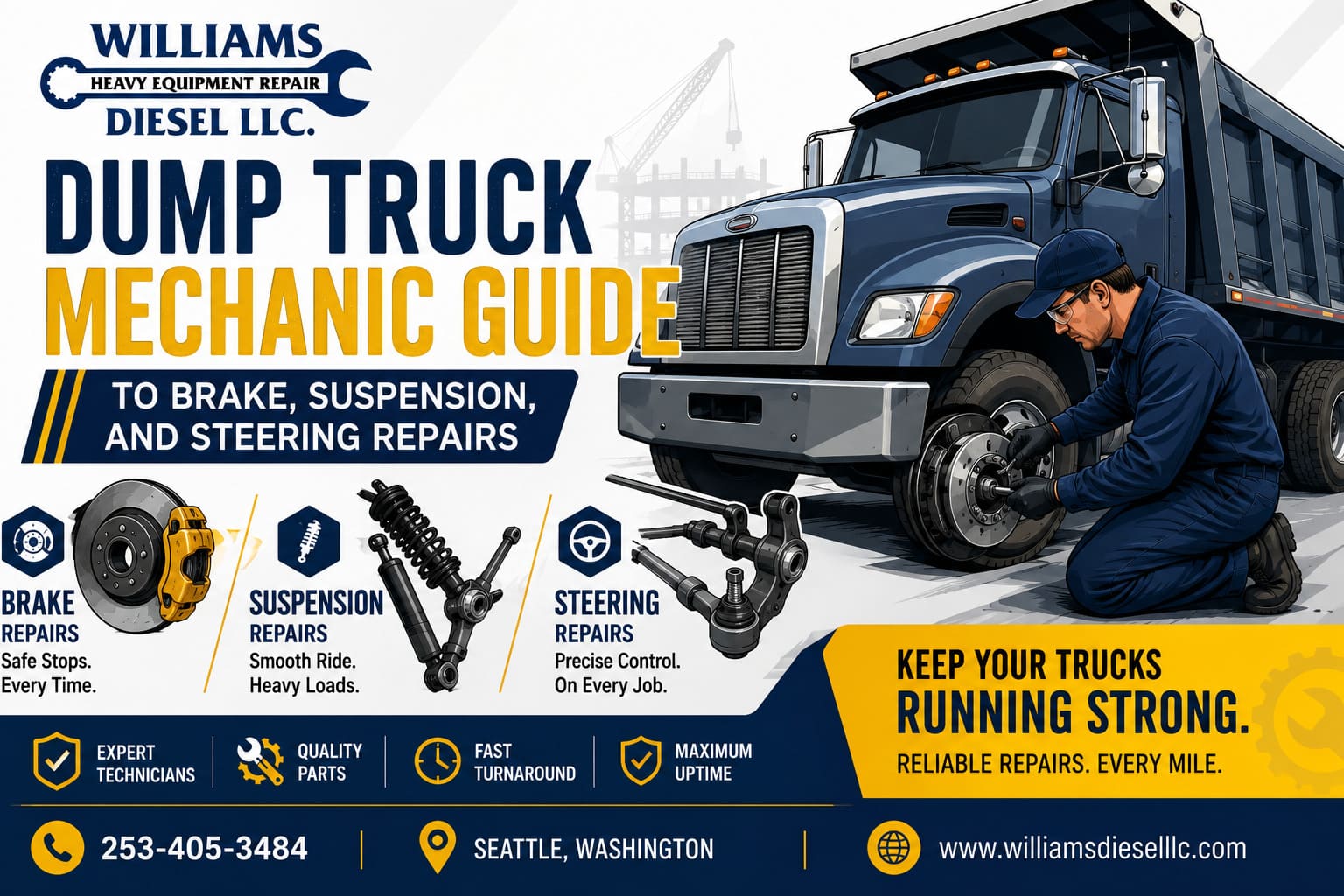
In Seattle, Washington, and the surrounding Pacific Northwest areas, fleet owners regularly rely on the experienced team at Williams Diesel LLC to deliver top-tier maintenance and prompt emergency solutions. This comprehensive guide breaks down the essential maintenance, diagnostics, and repairs required for your truck’s three most critical safety systems: brakes, suspension, and steering.
Start a WhatsApp chat and grab your free quote today :
The Foundation of Stopping Power: Dump Truck Brake Systems
Operating a vehicle with a gross vehicle weight rating that easily exceeds 50,000 pounds means your braking system is your primary line of defense. Unlike passenger vehicles, heavy-duty dump trucks rely on complex S-cam air brake systems to halt massive loads. Understanding how these systems work and when they are failing is paramount to road safety.
Air Brake System Anatomy and Failure Points
Air brake systems use compressed air to force a piston into a brake chamber, which turns a slack adjuster. This slack adjuster rotates the brake camshaft, forcing the brake shoes outward against the drum. Because this system relies entirely on air pressure, even the smallest leak can compromise your stopping distance.
- Air Compressor and Dryer Failures: The air compressor is the heart of the system. If it fails to maintain the standard 100 to 120 PSI, your brakes will not function correctly. Furthermore, moisture is the ultimate enemy of air lines. If the air dryer is saturated or neglected, water can seep into the valves, leading to corrosion and frozen lines during cold Washington winters.
- S-Cam and Bushing Wear: Over time, the S-cam shaft and its supporting bushings wear down. This causes play in the camshaft, preventing the brake shoes from applying even pressure to the drums. The result is uneven braking, pulling to one side, or premature shoe wear.
- Brake Chamber Ruptures: The rubber diaphragms inside service and parking brake chambers can dry rot or split. When this happens, air escapes during brake application, resulting in a sudden drop in pressure and heavily compromised stopping capability.
Signs Your Brakes Need Immediate Attention
Identifying brake issues before they cause an accident requires vigilant pre-trip inspections. Drivers should always listen for audible air leaks when the brakes are applied and released. Additionally, any pulling to one side, screeching, or a delayed response when pressing the pedal suggests a mechanical imbalance or worn brake lining.
If you experience brake fade—where the brakes become progressively less effective during steep descents—it is a sign that the brake drum and lining are overheating. Overheated drum brakes can crack, glazed linings lose their friction coefficient, and the overall stopping power of the truck drops to dangerous levels.
Heavy-Duty Suspension: Balancing Extreme Payloads
A dump truck’s suspension system must perform a difficult double duty. It has to cushion the ride when empty to prevent structural damage from vibrations, and it must support tens of thousands of pounds of payload without sagging, swaying, or bottoming out. When the suspension degrades, your truck becomes unstable, making tipping during dumping cycles a very real hazard.
Leaf Springs and Equalizer Beams
Most traditional heavy haulers utilize multi-leaf spring configurations. These heavy steel plates are designed to flex under pressure. However, constant exposure to shock loads from loading shovels can cause individual leaves to crack or snap.
Equally important are the equalizer beams used on tandem axle suspensions. These beams distribute the weight evenly between the dual rear axles. The center and end bushings of these beams undergo intense torsional stress. Once these rubber or bronze bushings disintegrate, the metal-on-metal contact will quickly destroy the housing, leading to axle misalignment and severe tire wear.
Pneumatic and Walking Beam Systems
Many modern operators opt for air-ride suspension systems to protect both the chassis and the driver. While air bags offer a smoother ride, they are vulnerable to punctures, dry rotting, and leveling valve failures. A faulty leveling valve can cause the truck to ride too low, damaging the driveline angles, or too high, making the vehicle top-heavy.
For those operating in extreme off-road or quarry conditions, walking beam suspensions are highly common. This design replaces air bags with heavy-duty rubber shear springs or solid bronze bushings. Keeping these components lubricated and clean is vital to maintaining the flexibility required to navigate deep ruts without twisting the truck frame.
Precision Steering: Navigating Harsh Terrain Safely
Steering a heavy-duty truck through a tight, muddy construction site requires immense physical force, which is managed by a heavy-duty hydraulic power steering system. If any single linkage in this system fails, the driver loses control of a multi-ton vehicle instantly.
Steering Gearboxes and Pumps
The hydraulic steering pump must supply consistent pressure to the steering gearbox. If the pump seal fails or the fluid becomes contaminated, you will experience stiff steering, loud whining noises when turning, and increased physical strain on the driver. Internal wear inside the steering gearbox can also create “play” or dead zones in the steering wheel, meaning you can turn the wheel several inches before the tires actually react.
Kingpins, Tie Rods, and Drag Links
The mechanical connection between the steering gear and the wheels relies on heavy-duty linkages:
- Kingpins: The kingpin is the pivot point for the steering knuckle. It is subjected to constant vertical and lateral forces. If kingpins are not greased regularly, road grime and water will grind down the metal bushings. This causes steering wheel shimmy, uneven front tire wear, and loose steering. To inspect this, an experienced dump truck mechanic will jack up the front axle and use a dial indicator to measure the physical play in the wheel assembly.
- Tie Rod Ends and Drag Links: These ball-and-socket joints transmit your steering input to both wheels simultaneously. If a tie rod end fails completely, the wheels can toe outward or inward independently, leading to an immediate jackknife or crash. Regularly checking the rubber boots on these joints for tears and replacing them at the first sign of play is a non-negotiable safety practice.
Proactive Diagnostics and Fleet Maintenance
Waiting for a component to break on the job site is a recipe for financial loss. Downtime costs money, delays projects, and damages your reputation with general contractors. Implementing a structured maintenance program is the only way to protect your bottom line.
Typical Maintenance Schedule Blueprint
Daily Pre-Trip: Check air system pressures, drain moisture from tanks, inspect leaf springs for cracks, visually check tie-rod boots.
Every 10,000 Miles: Grease all chassis points (kingpins, tie rods, S-cams, slack adjusters), inspect brake linings for thickness.
Every 50,000 Miles: Perform full suspension alignment, check steering gearbox play, inspect air dryer cartridge, analyze power steering fluid.
When you manage a larger operation, utilizing a specialized usa mobile mechanic can save your business hours of transit time. Bringing the shop directly to your yard allows your drivers to focus on their routes while your vehicles are serviced during off-hours. For companies operating diverse fleets of logistics vehicles, investing in a professional truck fleet repair partner ensures that every vehicle, from light-duty support trucks to heavy haulers, remains compliant and safe.
When to Choose Mobile Repairs vs. Shop-Based Overhauls
There is a constant debate among fleet managers regarding whether to utilize mobile services or bring trucks into a dedicated facility. The truth is, both have a critical role to play in your maintenance ecosystem.
The Power of On-Site Diagnostics
For routine issues, minor air system leaks, or basic brake replacements, utilizing a mobile dump truck mechanic is incredibly efficient. These technicians operate fully equipped service trucks complete with heavy-duty compressors, diagnostic software, and specialized tooling. If your truck is stranded on a job site with a frozen brake caliper or a blown air line, calling an on-site professional gets you moving without the astronomical cost of a heavy-duty tow.
Comprehensive Shop-Based Overhauls
However, major structural issues require the controlled environment of a heavy-duty shop. Complex tasks like pressing out worn kingpins, replacing entire leaf spring packs, or performing a complete diesel engine repair require overhead cranes, heavy hydraulic presses, and precision alignment racks. For these extensive jobs, seeking out dedicated dump truck repair shops near me is the safest and most practical choice to guarantee the job is done to exact manufacturer specifications.
Whether you run a single owner-operator vehicle or coordinate a large commercial operation, establishing a routine schedule for fleet truck maintenance is the single most effective way to lower your overall cost per mile. Experienced technicians who specialize in heavy duty dump truck repair understand the unique challenges of vocational trucks, from the extreme duty cycles of the PTO (Power Take-Off) systems to the immense wear on the rear drive axles. By staying ahead of minor wear items like bushings and seals, you prevent the catastrophic structural failures that lead to expensive, unscheduled downtime.
FAQs: Expert Advice for Fleet Operators
How often should dump truck kingpins be greased?
Ideally, kingpins should be greased every 1,000 to 1,500 operating hours, or at least once a month for vocational trucks working in dusty, wet, or muddy conditions. When greasing kingpins, always jack the front axle up off the ground to relieve pressure on the thrust bearings, allowing the grease to fully coat the entire pin and bushing surface.
What causes a dump truck to lean to one side?
A noticeable lean is typically caused by a broken leaf spring, a worn-out equalizer beam bushing, or a malfunctioning height control valve in air suspension systems. Operating a leaning dump truck is extremely dangerous, as it severely compromises stability during a dumping cycle and can lead to a rollover.
Does Williams Diesel LLC provide on-site mobile services in the Seattle area?
Yes, Williams Diesel LLC provides reliable on-site diesel support throughout Seattle, Washington, and the surrounding areas. Their technicians are equipped to handle emergency diagnostics, light suspension work, and brake repairs directly at your location or job site to minimize your downtime.
What is the typical response time for an emergency breakdown service?
While dispatch times can vary depending on traffic and current service volume, Williams Diesel LLC strives to respond to emergency calls quickly, often reaching stranded operators within 1 to 2 hours in the greater Seattle area.
Can a worn steering gearbox be adjusted, or must it be replaced?
Some steering gearboxes have an adjustment screw to remove minor lash or play. However, if the internal gears are worn, or if the input shaft seal is leaking severely, a full replacement or rebuild by a certified big truck mechanic is required to ensure steering integrity.
Conclusion and Final Thoughts
The structural integrity of your dump truck’s brake, suspension, and steering systems directly dictates the safety of your operators and everyone sharing the road with them. From ensuring your air brake chambers are pressurized correctly to keeping kingpins thoroughly greased, meticulous attention to detail prevents catastrophic failures.
For operators throughout the Pacific Northwest, having a reliable partner for your dump truck repair and dump truck diesel repair needs is crucial. Williams Diesel LLC stands out as a premier provider of professional, affordable, and trustworthy maintenance in Seattle, Washington. Whether you require a rapid emergency intervention or a structured preventive maintenance plan, rely on a certified dump truck mechanic to keep your heavy machinery operating at peak performance and earning you money on every single haul.


Comments are closed