


Summary
- Understanding Real-World Reach: Learn how environmental factors in the Pacific Northwest affect factory excavating performance on job sites.
- Pacific Northwest Water Tables: Discover why saturated clay and high groundwater effectively reduce your usable trench depth.
- Machine Specifications: Get a full breakdown of standard and long-stick configurations for the Caterpillar 303E Compact Radius excavator.
- Operational Safety: Explore practical trenching strategies to prevent track sinkage and cave-ins during the rainy season.
- Expert Equipment Support: Learn why local contractors depend on Williams Diesel LLC for reliable machine performance, field maintenance, and support across Washington.
Operating heavy equipment in the Pacific Northwest requires a clear understanding of regional terrain. While a mini excavator may perform predictably on dry, firmly compacted soil, adding continuous coastal rain and perched water tables changes the operational reality. Contractors working throughout Western Washington often find that paper specifications do not always translate directly to the field when mud and groundwater enter the equation. The Caterpillar 303E Compact Radius excavator is an industry workhorse for residential utility work, septic installations, and site prep, but managing its reach requires an understanding of how local weather alters job site dynamics.
When managing fleet operations, sourcing a high-performing unit, or seeking local support, contractors across Seattle and nearby areas routinely work with Williams Diesel LLC to ensure their compact fleet remains job-ready despite challenging weather conditions. Managing the real-world cat 303e digging depth means factoring in ground conditions before lowering the boom.
Get your free quote now – connect with us on WhatsApp :
Understanding the Caterpillar 303E Technical Capabilities
Before analyzing how weather and soil moisture impact excavation, it helps to review the baseline engineering numbers provided by Caterpillar. The 303E CR is engineered to offer solid digging force and stability within a compact footprint that easily navigates tight job sites.
Standard Stick vs. Long Stick Metrics
Factory specifications outline clear operational limits based on the stick option equipped on the machine:
- Standard Stick Configuration: Generates a factory-rated cat 303e 9 ft dig depth (specifically 108 inches or 2.75 meters).
- Long Stick Configuration: Extends the reach to achieve the cat 303e max digging depth of 117 inches (9.8 feet or 2.98 meters).
- Vertical Wall Capability: The cat 303e vertical wall dig depth ranges from 69 inches with a long stick to 77 inches with a standard stick, allowing operators to square off trench edges for footings and utility boxes.
- Reach at Ground Level: The cat 303e ground level reach stretches up to 15.75 feet (189 inches) with a standard stick and over 16 feet with a long stick, giving operators ample room to dump spoil piles away from trench margins.
Understanding these baseline figures ensures you select the correct setup when evaluating a cat 303e rental near me for an upcoming excavation project.
Weight, Footprint, and Stability Specs
Looking closely at the overall cat 303e specs, the machine balances transportability with lifting strength. Depending on whether you choose an open canopy or an enclosed cab, the cat 303e weight ranges between 6,721 pounds and 7,204 pounds (roughly 3.05 to 3.27 metric tons). Its overall track width of 60 inches allows it to pass through tight gates, while rubber tracks distribute weight to minimize ground disruption on residential lawns. However, when the soil becomes saturated, this machine weight behaves differently on soft surfaces.
How Pacific Northwest Water Tables Reduce Usable Reach
In regions like Seattle, Pierce County, and Snohomish County, seasonal rain creates unique subsurface conditions. Persistent atmospheric rivers fill soil pores, creating perched water tables just a few feet beneath the surface. When operating a 3-ton mini excavator in these environments, several physical factors reduce the usable reach of your machine.
Track Sinkage and Working Elevation Loss
When a mini excavator travels over waterlogged clay or saturated topsoil, ground bearing pressure shifts. Even with rubber tracks distributing the machine’s operating mass, saturated ground can allow the undercarriage to sink anywhere from 4 to 10 inches into the mud.
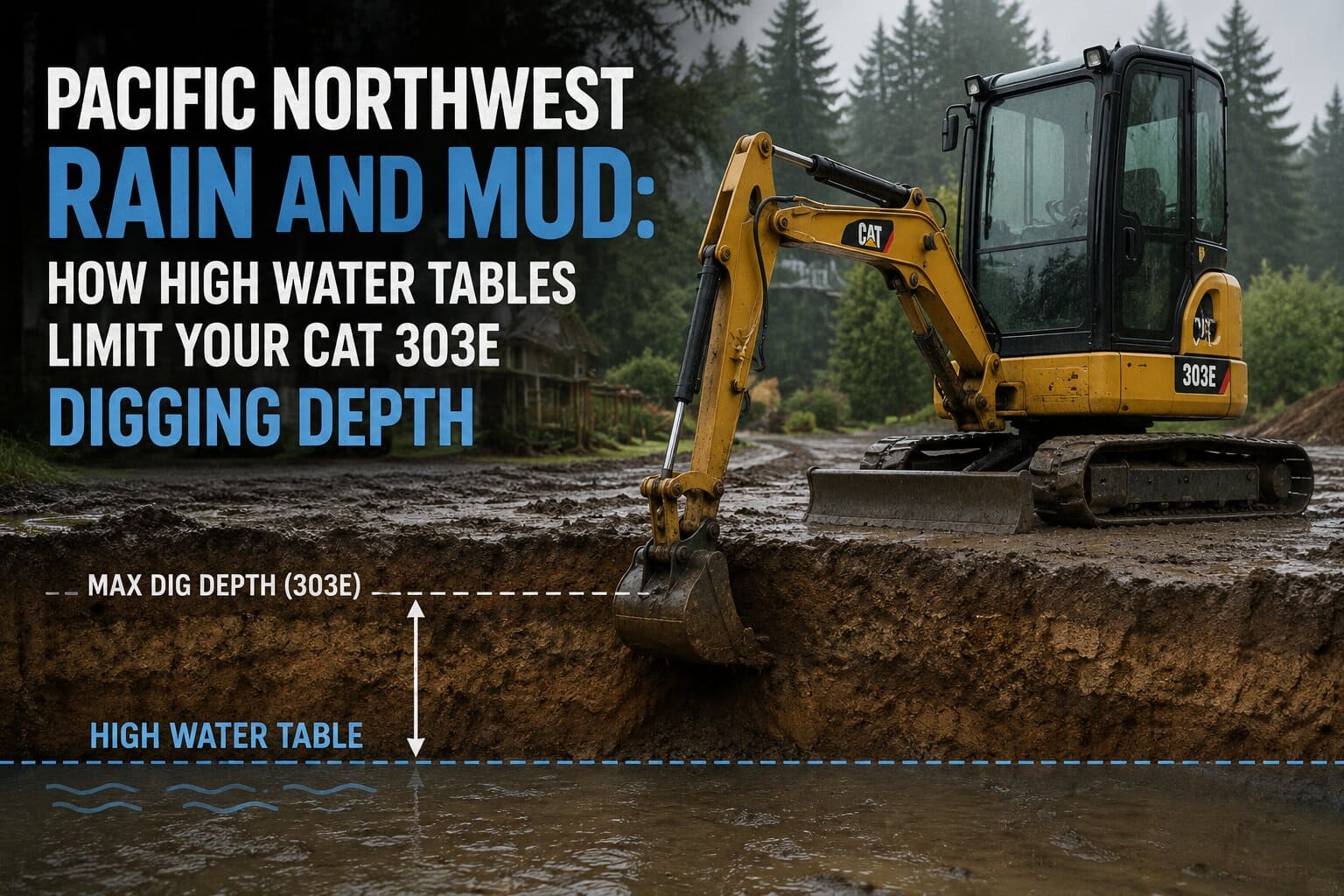
Every inch the tracks sink below grade alters your pivot point. If your machine sinks 6 inches into soft mud, your effective digging reach drops by that exact same distance. A factory-rated cat 303e digging depth in feet of 9 feet quickly becomes a functional depth of only 8.5 feet because the boom’s boom-foot pin sits lower than planned relative to the original ground level.
Trench Wall Sloughing and Safety Bench Requirements
In dry, cohesive clay (Type A soil), operators can dig clean, vertical trench walls down to factory limits. However, when groundwater permeates the trench walls, soil stability drops dramatically, shifting the classification to Type C uncohesive soil.
- Water Intrusion: Hydrostatic pressure behind the trench wall causes wet clay and glacial till to liquefy and slough off into the pit.
- Mandatory Bench Sinking: To prevent cave-ins, OSHA regulations require sloping or benching the sides of any excavation deeper than 5 feet in unstable soil.
- Reach Loss: Creating a 1.5-to-1 slope on a wet trench requires setting the excavator further back from the edge. This added distance consumes horizontal reach, reducing the vertical depth the bucket can achieve at the bottom of the cut.
Spoil Pile Sinking and Mud Migration
When wet, heavy spoil is dumped alongside an excavation, the added weight increases surcharge pressure on the trench lip. On rain-soaked ground, this weight can cause the edge of the pit to shear off. Operators must swing the house further away to place wet spoil at a safe distance, which uses up additional hydraulic reach and cycle time.
Machine Performance in Wet and Cold Weather
Beyond ground conditions, environmental factors directly influence the mechanical systems of compact excavators during Pacific Northwest winters.
Hydraulic Oil Viscosity and Heat Cycles
Cold rain and low ambient temperatures keep hydraulic fluid from reaching optimal operating temperatures quickly. Cold hydraulic fluid causes sluggish valve response, making fine joysticks feel heavy and slow. Allowing the machine to idle and warm up before digging hard in cold rain prevents premature pump wear and restores precise stick control.
Soil Adhesion and Bucket Capacity Loss
Wet Northwest clay is notoriously sticky. As the bucket bites into damp earth, wet clay packs tightly into the back of the bucket and refuses to clear during the dump cycle.
- Reduced Volume: A bucket clogged with packed clay can lose 30% to 50% of its payload capacity per pass.
- Added Dead Weight: Carrying stuck mud on the end of the stick increases dead weight, reducing lifting capacity at full reach and putting extra strain on the hydraulic system.
Reviewing manufacturer documentation regarding cat 303e stick length specifications helps operators choose shorter, high-breakout stick configurations or specialized mud buckets with bucket ejectors to handle sticky soil efficiently.
Practical Trenching Strategies for Muddy Job Sites
Experienced operators use specific techniques to maintain efficiency and safety when high water tables and heavy rain threaten job site productivity.
Wet Weather Excavation Blueprint
Pre-Dig Prep: Lay down timber mats or swamp pads along the track line to distribute weight and prevent track sinkage.
Trench Sump Setup: Dig a shallow sump pit at the lowest end of the excavation site and run a trash pump continuously to lower the local water table.
Spoil Placement: Cast wet spoil at least two bucket-lengths away from the trench lip to avoid surcharge edge collapse.
Track Positioning: Keep the dozer blade lowered firmly in front of the machine to lock the undercarriage in place and stabilize the front end.
When working in soft ground, converting standard factory figures from cat 303e dig depth meters (2.75 m standard / 2.98 m long) into real-world working estimates ensures you bring the right machine configuration to the job site.
Fleet Care and Preventive Maintenance for Wet-Weather Operations
Operating heavy machinery in continuous rain and mud speeds up wear across the undercarriage and hydraulic systems. Water intrusion and gritty mud can shorten the lifespan of critical components if routine service is overlooked.
Undercarriage Washdowns and Tension Checks
Mud packed into track frames hardens like concrete if left overnight. Packed mud increases track tension, putting excessive load on track motors, idlers, and bottom rollers.
- Daily Rinsing: Pressure-wash undercarriages at the end of each shift to flush out sand, gravel, and mud.
- Track Tensioning: Check rubber track sag daily; wet mud acts as an abrasive paste that wears track links and sprockets prematurely.
Grease Barrier Maintenance
Every pivot pin on the boom, stick, and bucket links operates under heavy load. In wet environments, water can wash away grease and introduce fine sediment into pivot bushings. Applying fresh grease daily pushes out trapped water and dirt, creating a protective barrier against internal scoring.
When field issues or mechanical wear occur, having access to experienced roadside diesel mechanics near me ensures that field repairs are handled quickly, minimizing project delays.
FAQs
How does rain impact the digging depth capability of a mini excavator?
Rain saturates topsoil, causing the excavator’s tracks to sink into the ground. Sinking lowers the machine’s pivot point, which directly reduces the maximum vertical depth the bucket can reach relative to the original ground level.
What stick configuration is best for wet soil conditions on the Cat 303E?
The standard stick offers higher bucket and stick breakout forces, making it easier to curl through heavy, sticky clay. However, if you need to set the machine further back from soft trench edges for safety, the long stick provides extra reach.
How quickly can Williams Diesel LLC respond to service requests in Seattle?
Williams Diesel LLC prioritizes fast dispatch for clients in Seattle and surrounding Washington areas. Typical local field response times range between 1 and 2 hours depending on traffic and location.
What areas around Washington does Williams Diesel LLC service?
Service coverage includes greater Seattle, King County, Pierce County, and adjacent highways throughout Western Washington, supporting both mobile field repairs and shop-based maintenance.
Why does wet clay stick inside excavator buckets, and how can I prevent it?
Wet clay creates a vacuum seal against smooth metal bucket walls. Operators can reduce stickiness by using perforated mud buckets, spraying bucket interiors with environmentally safe release agents, or choosing wider tooth options to break up the material.
Conclusion and Final Thoughts
Navigating Pacific Northwest weather requires balancing machine capabilities with real-world ground conditions. While factory specifications provide a solid baseline, high water tables, soft clay, and track sinkage will impact your usable reach in the field. Understanding how soil saturation affects stability allows operators to plan safer, more efficient excavation projects.
For fleet managers, contractors, and equipment operators across the region, maintaining your machinery in peak condition is essential for surviving the rainy season. Williams Diesel LLC remains a trusted provider for mobile support, preventative maintenance, and equipment guidance throughout Seattle, Washington. Whether you need field troubleshooting or guidance on optimizing your cat 303e digging depth, relying on an experienced local partner ensures your fleet stays reliable and productive, rain or shine.


Comments are closed