


Summary
- A compact excavator rental gives contractors access to versatile digging equipment without the expense of purchasing and maintaining a machine.
- Compact excavators are well suited for landscaping, trenching, utility installation, residential construction, and smaller commercial projects.
- Choosing the right machine size, digging depth, attachment, and operating capacity helps prevent delays and unnecessary rental expenses.
- Understanding equipment rental rates, delivery arrangements, site access, and rental periods makes project planning easier.
- Williams Diesel LLC provides equipment rental options for contractors and property owners in Seattle, Washington, and nearby service areas, subject to equipment availability.
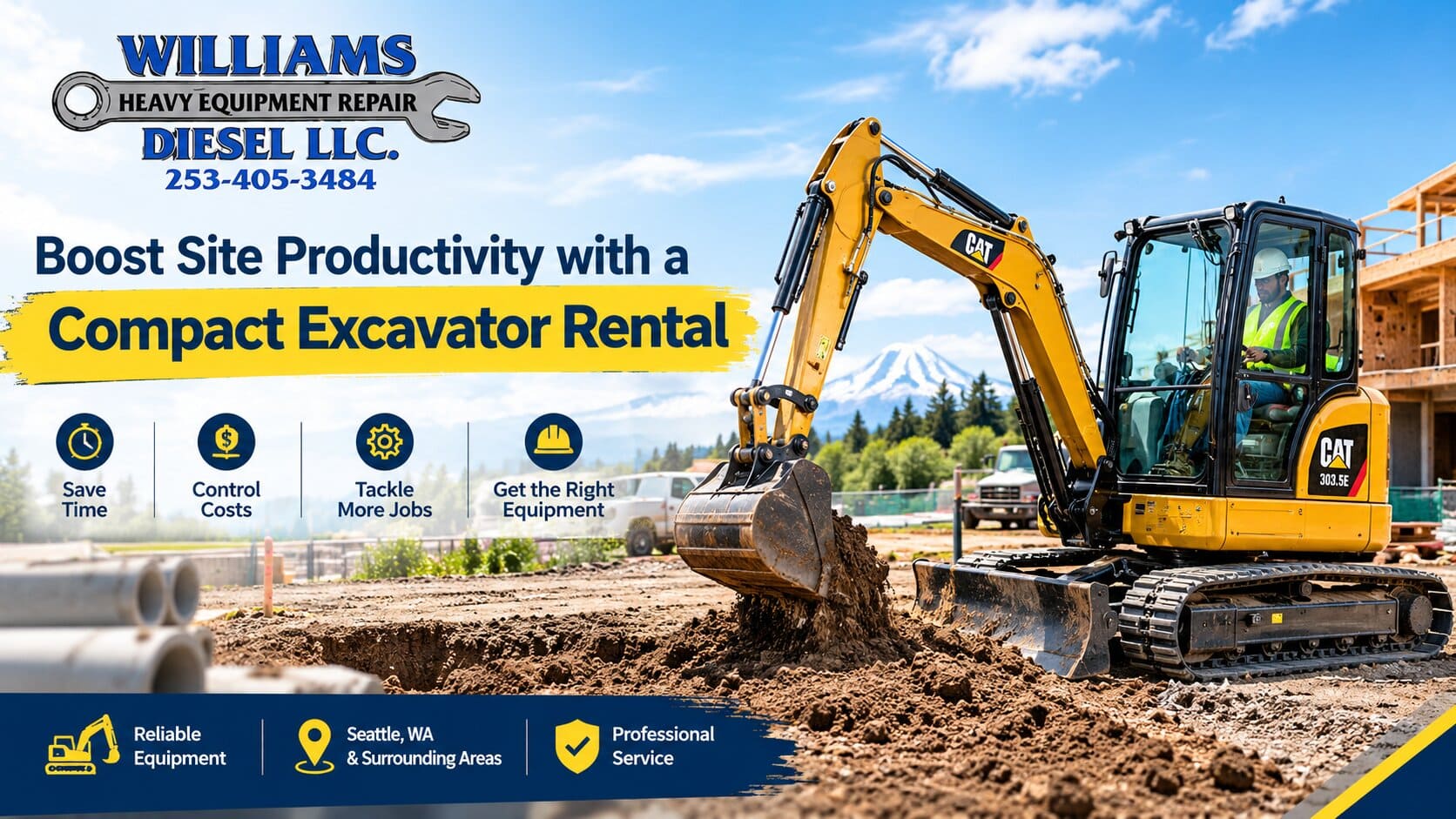
Keeping a construction project on schedule requires more than having enough workers on site. Contractors also need equipment that can handle the workload efficiently without creating unnecessary costs or access problems. For projects involving excavation, trenching, grading, or landscaping, a compact excavator rental can provide a practical solution. Williams Diesel LLC offers equipment rental options for contractors and property owners around Seattle, Washington, who need dependable machinery for different jobsite requirements.
Compact excavators are popular because they combine useful digging power with a smaller operating footprint. Unlike larger machines that may struggle to access residential properties, narrow work areas, or established landscapes, compact models can often maneuver through tighter spaces. They are also easier to transport and can handle a surprisingly broad range of tasks when matched with the right attachments.
However, choosing the right equipment involves more than comparing daily rental prices. Project size, ground conditions, machine specifications, transportation, and the length of the job all influence whether a particular excavator is the right choice. Understanding these factors before booking can help contractors work more efficiently and avoid costly interruptions.
Ready to get your project moving? Chat with Williams Diesel LLC on WhatsApp to check compact excavator availability and get daily or weekly rental rates!
Why Compact Excavators Are Valuable on Construction Sites
Compact excavators are designed to perform excavation work in areas where larger equipment may be difficult to operate. Their smaller dimensions make them particularly useful for residential construction, landscaping, property improvements, and smaller commercial projects.
One major advantage is maneuverability. Construction sites do not always provide wide access routes or large working areas. Fences, buildings, utility lines, trees, and existing landscaping can restrict movement. A smaller excavator can make it easier to reach these locations while reducing the amount of space required for operation.
Another advantage is versatility. Depending on the machine and attachment, operators can use an excavator for digging foundations, removing soil, trenching for water lines, preparing drainage systems, and moving loose materials.
Compact machines can also reduce unnecessary ground disturbance when used appropriately. Their operating weight and track configuration should still be considered carefully, especially on soft soil, finished landscaping, or surfaces that may be damaged by heavy machinery.
Common Projects That Benefit from Mini Excavator Equipment
A mini excavator rental is useful for more than basic digging. Its practical applications make it a valuable option for contractors working on different types of projects.
Residential Landscaping
Landscaping projects often involve limited access, established gardens, fences, and nearby structures. Compact excavators can help remove unwanted soil, prepare planting areas, shape outdoor spaces, and complete small grading tasks.
They are also useful when preparing ground for retaining walls, patios, walkways, and other outdoor improvements. The machine’s smaller footprint can make it easier to work around existing property features.
Utility Trenching and Drainage
Installing underground utilities requires accurate excavation. Contractors may need to dig trenches for water pipes, electrical conduits, irrigation systems, or drainage lines.
A compact excavator can help create controlled trenches without requiring a larger machine for a relatively small excavation area. Before digging, contractors should arrange utility locating services and confirm the location of underground infrastructure. This step is essential for avoiding dangerous and expensive damage.
Foundation and Site Preparation
Small building projects frequently require excavation for footings, foundations, and other structural elements. Compact machines can help remove soil, prepare working areas, and move excavated material.
The required digging depth and bucket capacity should be checked before choosing a machine. A compact model is not automatically suitable for every foundation project, particularly where deep excavation or difficult ground conditions are involved.
Commercial Property Improvements
Commercial contractors may need excavation equipment for parking-area improvements, drainage upgrades, landscaping, and utility work. Compact excavators can be useful when construction activity takes place around existing buildings or occupied properties.
For these projects, selecting equipment that fits the available working space can reduce unnecessary repositioning and help crews maintain a more organized site.
How to Choose the Right Excavator for Your Project
Selecting equipment based only on its size can lead to problems. A machine that is too small may struggle with the workload, while an oversized model can create access and transportation difficulties.
Consider the following factors before making a reservation.
1. Operating Weight and Machine Dimensions
Operating weight affects transportation requirements, ground pressure, and the type of trailer needed. Machine width and overall dimensions are equally important when working through narrow gates, residential driveways, or restricted construction entrances.
Measure the available access route before booking. Include turning space, overhead clearance, and any obstacles that could prevent the equipment from reaching the work area.
2. Digging Depth and Reach
Different excavation projects require different digging capabilities. A shallow landscaping job may not need the same specifications as a foundation excavation or utility installation.
Review maximum digging depth, digging reach, and boom configuration. Make sure the machine can complete the intended work without forcing the operator to work beyond its practical operating limits.
3. Bucket Capacity and Attachments
The bucket influences how much material can be moved during each digging cycle. A suitable bucket can improve efficiency, while an incorrectly sized attachment may slow down the work or place unnecessary strain on the machine.
Other attachments, such as hydraulic breakers, augers, and specialized buckets may be useful for particular applications. Confirm compatibility and availability before assuming an attachment is included.
4. Ground Conditions
Soil type can affect excavation speed and machine performance. Loose soil, clay, gravel, rocky ground, and wet surfaces all present different operating challenges.
If the project involves hard or compacted ground, discuss the conditions with the rental provider. The machine’s hydraulic capacity, available attachments, and operating weight should match the actual work.
Understanding Equipment Rental Costs and Planning Your Budget
Rental expenses can influence the overall profitability of a construction project. Before comparing equipment rental rates, understand what each quoted price includes.
Most equipment rental providers offer daily, weekly, and sometimes monthly rental arrangements. The best option depends on the expected project duration and how consistently the machine will be used.
A daily rental may work well for a short excavation task. Longer projects may benefit from a weekly arrangement, particularly when the equipment will be needed across several consecutive working days.
However, the advertised rental price is only one part of the total cost. Ask about:
- Delivery and pickup charges.
- Fuel requirements and refueling responsibilities.
- Security deposits and payment terms.
- Damage protection or insurance requirements.
- Late-return fees and rental extensions.
- Attachment charges and optional accessories.
- Cleaning requirements and excessive wear policies.
A cheap excavator rental is not necessarily the most economical choice if transportation, additional equipment, or unexpected fees increase the final bill. Comparing the complete rental terms gives contractors a clearer picture of the actual project expense.
Equipment Rental: Plan More Than Just the Machine
Successful equipment rental involves coordinating machinery, transportation, operators, and jobsite preparation.
For contractors managing several activities at once, combining heavy equipment rental with other required resources can help simplify scheduling. For example, a project may need an excavator for digging, a compact track loader rental for material movement, and suitable transportation to move machinery between locations.
A compact track loader may be worth considering when the work involves moving soil, gravel, construction debris, or other materials across the site. While an excavator is designed primarily for digging and lifting, a track loader is better suited to carrying and distributing material.
Similarly, equipment trailer rentals may be necessary when machinery needs to be transported between locations. The trailer must have an appropriate load rating, deck dimensions, and towing compatibility. Contractors should never assume that a standard trailer can safely transport every excavator.
Commercial truck rentals may also be relevant when a project requires additional transportation capacity. Check vehicle specifications, towing limits, licensing requirements, and insurance conditions before arranging transport.
Planning these requirements early can reduce delays caused by missing equipment or unsuitable transportation arrangements.
Jobsite Delivery, Safety, and Equipment Readiness
Arranging jobsite equipment delivery is an important part of the rental process, particularly when the construction site has limited access or a strict working schedule.
Before confirming delivery, provide the rental company with the correct jobsite address and explain any access restrictions. Narrow driveways, steep approaches, overhead cables, soft ground, and limited unloading areas can affect how equipment reaches the site.
It is also helpful to prepare the work area before the machine arrives. Remove unnecessary obstacles, identify underground utilities, establish a safe operating zone, and ensure that workers understand where the equipment will be operating.
Before using the excavator, inspect its general condition. Check the tracks, bucket, hydraulic hoses, visible fluid leaks, safety features, and control functions. Report any existing damage or mechanical concerns to the rental provider before starting work.
Operators should receive appropriate training and understand the manufacturer’s operating instructions. Keep workers clear of the swing radius, avoid working too close to unstable excavation edges, and never allow people to stand beneath suspended loads.
If the project involves trenching, follow applicable excavation safety requirements. Soil stability, protective systems, access arrangements, and inspections should be addressed before workers enter an excavation.
How to Reduce Downtime During an Equipment Rental
Rental equipment is most valuable when it is being used productively. Delays can quickly increase project costs, especially when machinery is booked for a limited period.
A few practical steps can help crews make better use of their rental time.
Prepare the work area in advance. Confirm measurements, mark excavation boundaries, arrange utility locating, and remove obstacles before the machine arrives.
Schedule work in the right order. Complete tasks that require excavation before bringing in equipment that may obstruct access or interfere with digging operations.
Choose suitable attachments. The correct bucket or attachment can reduce unnecessary machine movement and help operators complete tasks more efficiently.
Coordinate workers and machinery. Operators should understand the work plan, while ground personnel should know where the machine will be operating.
Check the machine regularly. Follow inspection and maintenance instructions during the rental period. Report unusual noises, hydraulic problems, or performance changes promptly.
These small steps can help avoid preventable interruptions and make the rental period more productive.
Choosing a Reliable Excavator Rental Provider in Seattle, Washington
A suitable rental provider should offer more than access to machinery. Contractors also need clear rental terms, accurate equipment information, responsive communication, and a practical understanding of construction requirements.
When comparing excavator rental services, ask whether the requested machine is currently available, what specifications it offers, and whether the provider can arrange transportation to the jobsite. Confirm the total rental cost and understand who is responsible for fuel, cleaning, damage, and pickup.
Location also matters. Contractors working around Seattle and nearby communities should confirm that the provider serves their particular jobsite. Williams Diesel LLC is based in Eatonville, Washington, and offers equipment rental options for customers in its service area, including projects around Seattle where availability and delivery arrangements permit.
A straightforward conversation about the project, equipment requirements, and schedule can help determine whether a particular machine is appropriate. It is better to confirm these details before booking than to discover that the equipment cannot access the site or handle the required workload.
Frequently Asked Questions
1. What projects are suitable for compact excavators?
Compact excavators are commonly used for landscaping, drainage installation, utility trenching, small foundation work, residential construction, and commercial property improvements. Their suitability depends on digging depth, ground conditions, access space, and machine specifications.
2. How do I determine the right excavator size for my job?
Start by identifying the required digging depth, excavation area, soil conditions, and available site access. Compare machine dimensions, operating weight, bucket capacity, and reach. If the project involves restricted access or demanding ground conditions, discuss the requirements with the rental provider before booking.
3. Does Williams Diesel LLC offer equipment rental services around Seattle?
Williams Diesel LLC is based in Eatonville, Washington, and offers equipment rental options for customers in its service area. Contractors planning projects around Seattle should contact the company to confirm the requested machine’s availability, delivery options, and whether their specific jobsite is covered.
4. How quickly can rental equipment be delivered to a Seattle-area jobsite?
Delivery timing depends on equipment availability, the jobsite location, transportation arrangements, and the company’s current schedule. Customers should provide their requested delivery date and full jobsite details when enquiring. Confirm the delivery window directly rather than assuming same-day or next-day availability.
5. Should I rent or purchase an excavator for a construction project?
Renting can be practical for occasional projects, short-term requirements, or businesses that want to avoid the ongoing costs of owning machinery. Purchasing may make more sense for contractors who use the same equipment frequently over an extended period. Compare expected usage, financing, maintenance, storage, transportation, and rental expenses before deciding.
Final Thoughts
Choosing the right excavation equipment can make a meaningful difference to construction timelines, labor coordination, and project expenses. Compact machines are particularly useful when a job requires reliable digging performance without the size and transportation demands of larger machinery. Before booking, evaluate site access, machine specifications, attachments, rental terms, and delivery arrangements to avoid unnecessary delays.
Contractors searching for large excavator rental near me or diesel shops near me should also consider the type of support they need, rather than choosing a provider based on location alone. Clear communication and accurate equipment information are essential when planning a successful project. For contractors and property owners in Seattle, Washington, and nearby areas within its service coverage, Williams Diesel LLC offers equipment rental options worth discussing. The right compact excavator rental can help your crew approach the job with greater confidence, better preparation, and a more productive workday.

Comments are closed