


Quick Summary
- Mountain Pass Demands: Moving heavy equipment across steep grades like Snoqualmie or Stevens Pass creates extreme mechanical demands on towing stability, braking control, and engine cooling.
- Dual Rear Wheel Advantages: Choosing to rent f350 dually trucks provides the necessary payload distribution, wider rear stance, and tire blowout safety needed for heavy trailering.
- Powertrain & Braking Muscle: Modern 1-ton Power Stroke diesel platforms combine massive low-end torque with integrated engine exhaust brakes to prevent runaway brake fade on steep descents.
- Flexible Project Scaling: Short-term commercial rentals allow contractors and equipment operators to meet tight seasonal deadlines without taking on permanent fleet debt.
- Trusted Regional Provider: Contractors across Seattle and Western Washington rely on Williams Diesel LLC for reliable, job-ready equipment rental and heavy-duty truck solutions.
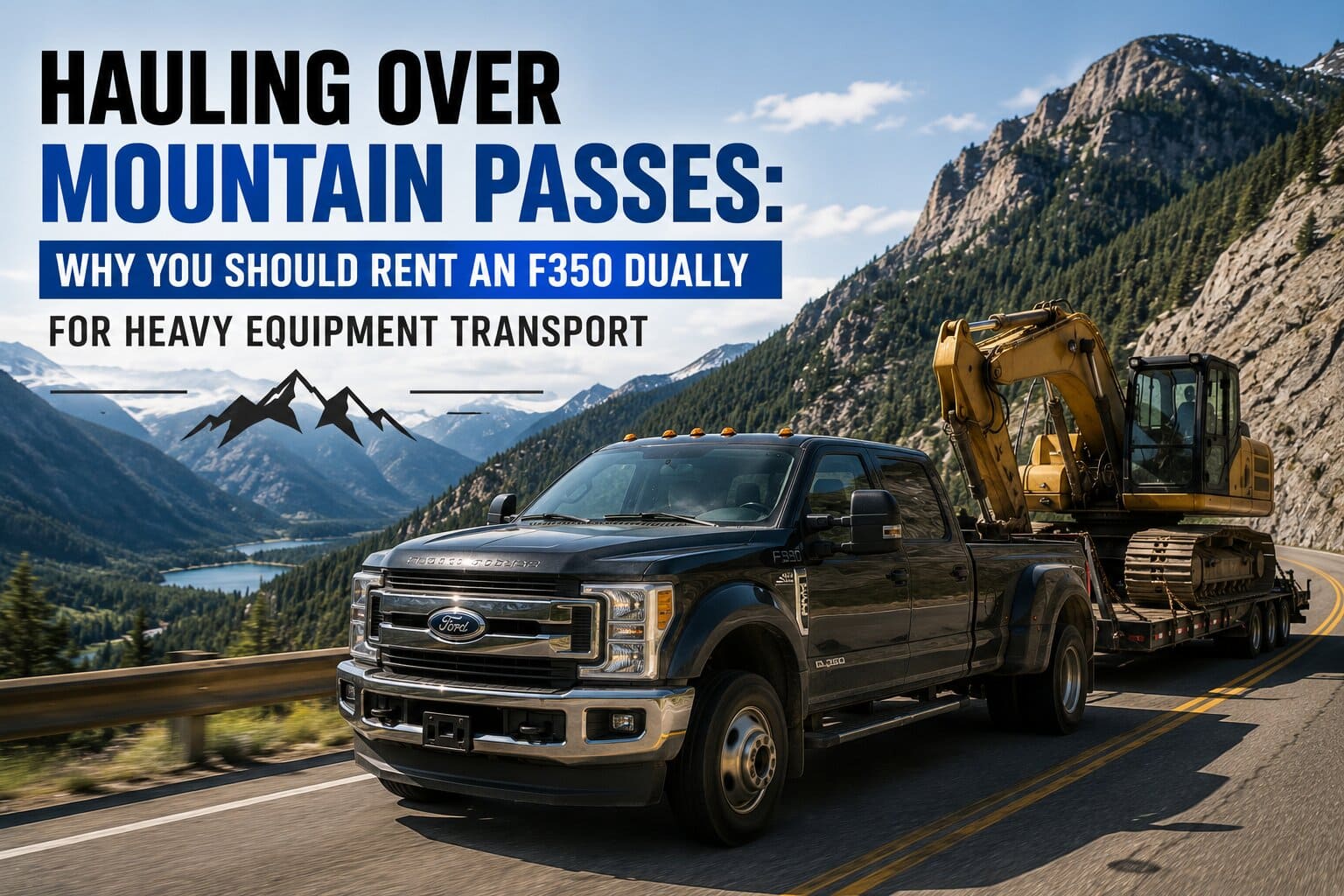
Tackling high-altitude mountain passes in the Pacific Northwest is one of the most demanding tasks a commercial driver or heavy equipment operator can face. Routes like Interstate 90 over Snoqualmie Pass, US-2 across Stevens Pass, and the steep climbs of the Cascade Range combine steep percentage grades, sweeping curves, unpredictable weather, and dense traffic. When you are pulling a heavy gooseneck trailer loaded with a mini excavator, skid steer, or pallets of building materials, standard three-quarter-ton pickups quickly reach their mechanical limits.
Engine oil temperatures climb, transmissions hunt for gears, and single rear wheels struggle to maintain highway stability under heavy tongue weights. For contractors, landscapers, and project managers who need uncompromised hauling capability, choosing to rent f350 dually trucks delivers the stability, braking control, and torque required to conquer high-altitude routes safely.
For commercial operators in Seattle and surrounding Washington communities, Williams Diesel LLC provides dependable equipment rental solutions and heavy-duty truck support designed to keep demanding regional jobs moving on schedule.
Get in touch on WhatsApp and request your free quote :
The Physics of Mountain Hauling: Why Standard Trucks Fall Short
Hauling heavy equipment on flat, open highways is straightforward. However, introduce a continuous six percent uphill grade followed by a winding ten-mile descent, and the physical stresses on your tow vehicle multiply exponentially.
Gravity, Rolling Resistance, and Aerodynamic Drag
When a tow rig climbs a steep mountain corridor, it fights three distinct opposing forces simultaneously: gravity pulling down on the entire combined gross vehicle weight, mechanical friction within the drivetrain, and aerodynamic drag pushing against the tall trailer profile. Single-rear-wheel trucks often experience rear-end squatting under high pin weights. This squatting lifts the front axle slightly, reducing front-wheel tire grip and creating vague, light steering feel precisely when precise steering input is most critical.
A dual rear wheel configuration completely transforms this physical dynamic. By distributing downward tongue weight across four wide rear tires, the rear suspension remains level and stable. The front axle maintains firm contact with the asphalt, ensuring precise steering tracking through tight mountain switchbacks.
The Thermal Stress of Sustained Mountain Climbs
High-altitude towing places immense thermal loads on engine coolant, transmission fluid, and engine oil. As atmospheric pressure drops with elevation, ambient air becomes thinner and less dense. The turbocharger must spin significantly faster to compress enough air into the cylinders to maintain power output.
Lesser gasoline engines or smaller-displacement diesels run hot under these prolonged wide-open-throttle conditions, forcing the engine control module to derate power output to prevent catastrophic component failure. In contrast, securing a dedicated commercial 1 ton diesel rental gives you access to high-capacity dual-cooling loops and large charge-air coolers engineered specifically to shed heat under continuous maximum boost.
Engineering Advantages of the Ford F-350 Super Duty Dually
When moving high-tonnage machinery, the platform you choose underpins your entire operation’s safety margin. The Ford F-350 Super Duty dual-rear-wheel platform has earned its reputation as the benchmark workhorse for severe-duty hauling.
6.7-Liter Power Stroke Diesel Muscle
At the heart of the heavy-duty F-350 platform is the high-output Power Stroke Turbo Diesel engine. Generating massive low-end torque at accessible engine speeds, this powerplant allows drivers to pull heavy equipment trailers from a dead stop on steep inclines without excessive engine revving. The broad torque curve ensures that the transmission holds higher gears longer, reducing unnecessary downshifts and keeping momentum steady as you climb higher into mountain elevations.
When selecting a ford f350 dually rental, you gain the confidence of having ample reserve power for merging into fast-moving highway traffic, passing slow-moving freight on climbing lanes, and maintaining consistent cruising speeds even when pulling near maximum rated capacity.
High-Capacity 10-Speed TorqShift Transmission
Putting high torque to the pavement requires a transmission built for extreme duty. The 10-speed TorqShift automatic transmission features selectable drive modes, including a dedicated Tow/Haul mode. This program changes shift points, holds gears longer on uphill pulls, and initiates aggressive downshifts during braking to assist the vehicle’s service brakes.
The transmission utilizes early torque converter lockup, eliminating internal fluid churning and heat buildup. This keeps transmission fluid temperatures within safe operating thresholds even during prolonged climbs in hot summer weather.
The Stability of Dual Rear Wheels
The physical presence of a dually axle provides unmatched stability when pulling tall, wind-catching trailers.
- Minimizing Trailer Sway: Strong crosswinds funneling through mountain canyons can push single-wheel trucks around their lane. The broad footprint of four rear tires creates a wide anchor that resists lateral trailer movement.
- Tire Redundancy on Remote Passes: If a rear tire suffers a blowout or puncture on a remote mountain pass while carrying a heavy payload, the adjacent tire on that side bears the load temporarily, preventing an immediate rollover emergency and allowing you to reach a safe turnout.
- Higher Payload and Tongue Weight Limits: The dual-wheel axle assembly dramatically increases Gross Axle Weight Ratings (GAWR), allowing operators to carry heavy pin weights without bottoming out suspension bump stops.
Essential Equipment Hitching and Trailer Setups
Matching the correct trailer hitch mechanism to your haul is essential for weight distribution, balance, and maneuverability.
Gooseneck and Fifth-Wheel Connections
While bumper-pull receiver hitches work well for small utility trailers, heavy commercial machinery demands a central bed hitch setup. Opting for an f350 dually fifth wheel rental places the trailer tongue weight directly over or slightly ahead of the truck’s rear axle.
This central mounting point eliminates the lever effect created by bumper-mounted hitches, preventing rear sag and ensuring even weight distribution across all truck tires. Gooseneck and fifth-wheel setups also allow for a much tighter turning radius, making it easier to maneuver long equipment trailers into constrained construction yards or tight residential job sites.
Heavy Payload Capacity
For contractors hauling structural timber, aggregate bags, or concrete forms directly in the truck bed alongside a trailer, choosing a heavy payload truck rental provides the necessary spring pack stiffness and heavy frame crossmembers to carry substantial cargo without compromising ride quality or headlight alignment.
Controlled Descents: Mastering Mountain Downhill Braking
Climbing a mountain pass demands engine power, but descending safely with a fully loaded equipment trailer requires sophisticated braking control. Relying solely on conventional friction foot brakes is a recipe for brake fade, boiling brake fluid, and dangerous stopping distances.
Safe Mountain Descent Protocol
Select Tow/Haul Mode: Engage the electronic transmission Tow/Haul program before beginning your downhill descent.
Activate Exhaust Brake: Set the integrated engine exhaust brake to Auto or Full mode to generate backpressure retarding force.
Match Speed to Grade: Establish your target safe descent speed at the crest of the pass before the decline steepens.
Use Snub Braking: Apply firm, steady service brake pressure for 3 to 5 seconds to drop speed 5 mph below target, then release completely to allow cooling.
Monitor Trailer Gain: Verify the integrated trailer brake controller output setting matches the loaded trailer weight.
Integrated Engine Exhaust Braking
Modern Super Duty diesel trucks come equipped with smart exhaust braking systems. By closing the vanes inside the variable-geometry turbocharger, the engine creates exhaust backpressure that acts as a powerful mechanical retarder. This backpressure slows the vehicle naturally through the drivetrain without wearing down service brake pads.
In Full mode, the exhaust brake engages the instant you lift your foot off the throttle pedal. In Auto mode, the truck monitors vehicle speed and automatically applies exhaust braking force to maintain your desired set speed down steep grades, keeping friction brakes cool and fully responsive for emergency stops.
Equipment Rental Integration: Scaling Operations Without Capital Risk
Running a profitable contracting, excavation, or logistics business requires balancing machinery availability with disciplined cash flow management. Equipment purchases involve large capital down payments, continuous financing interest, commercial insurance premiums, and ongoing depreciation expenses.
Handling Seasonal Surges and Short-Term Demands
Project timelines in the construction industry fluctuate dramatically throughout the year. Taking on a high-value excavation contract that requires mobilizing multiple mini excavators, compact track loaders, and trench rollers across mountain passes may only last a few weeks or months.
Rather than committing to long-term commercial loans to purchase additional 1-ton haul vehicles, utilizing short-term equipment rental solutions allows project managers to expand their logistical footprint on demand. Sourcing a ford f350 for rent ensures you have the exact towing platform required for high-tonnage transport and can return the asset immediately after the project wraps up, converting fixed overhead into predictable operational job costs.
Eliminating Maintenance Liabilities
Fleet vehicles subjected to continuous mountain hauling endure accelerated wear on tires, brake linings, suspension bushings, and fluid systems. When you source commercial trucks from dedicated regional fleets, you receive late-model, fully inspected vehicles that have undergone strict preventive servicing, eliminating unexpected repair bills and minimizing job site downtime.
Whether you need a dedicated fifth wheel truck rental for heavy trailer hauling or a versatile commercial dually pickup rental to transport crews and heavy tooling simultaneously, rental flexibility protects your balance sheet while keeping your job sites productive.
Finding Reliable Regional Rental and Fleet Support
When hauling high-value machinery across Washington, working with an experienced local provider who understands regional terrain, steep grades, and local hauling conditions makes a critical difference.
Finding a reputable f350 dually rental near me ensures that your team receives a properly configured, heavy-duty truck equipped with the right hitches, integrated brake controllers, and robust tires needed to tackle tough terrain safely.
Furthermore, when independent operators manage their own diesel equipment and require emergency shop service or scheduled maintenance between regional runs, knowing where to locate a dependable diesel truck repair near me provides total peace of mind that support is always nearby.
Frequently Asked Questions
Why is a dually truck safer for mountain towing than a single rear wheel truck?
A dually truck features four rear tires that distribute trailer tongue weight across a significantly wider stance. This wider track minimizes trailer sway from canyon crosswinds, prevents rear suspension squatting, maintains front-wheel steering traction, and provides vital tire redundancy if a rear puncture occurs on steep mountain routes.
Do I need a Commercial Driver’s License (CDL) to drive an F-350 dually rental?
For personal use or commercial combinations where the total Gross Combined Weight Rating (GCWR) remains at or below 26,000 pounds, a standard driver’s license is generally sufficient. If your commercial truck and trailer combination exceeds 26,000 pounds GVWR, commercial driver licensing requirements apply.
What is the advantage of using an integrated diesel exhaust brake on mountain descents?
An integrated exhaust brake restricts turbocharger exhaust airflow to create backpressure in the engine cylinders. This backpressure slows the vehicle through the drivetrain, allowing drivers to control downhill descent speeds without overheating or fading the wheel friction brakes.
How quickly can Williams Diesel LLC respond to equipment rental inquiries and deliveries in Seattle?
Williams Diesel LLC provides prompt equipment rental support across the Seattle metropolitan area and surrounding Washington counties. Inquiries and local dispatch arrangements are typically processed swiftly, with delivery and pickup coordination tailored directly to contractor job schedules.
What geographic regions in Washington are covered by Williams Diesel LLC?
Williams Diesel LLC serves contractors, fleet operators, and independent builders throughout Seattle, Tacoma, Eatonville, King County, Pierce County, and major transportation routes connecting Western and Central Washington.
Conclusion and Final Thoughts
Hauling heavy machinery over demanding mountain corridors is a high-stakes task that leaves no room for underpowered equipment or undersized tow vehicles. Steep elevation gains, thin mountain air, sharp curves, and long downhill grades place intense demands on vehicle cooling, engine torque, and braking stamina. Choosing to rent f350 dually trucks gives contractors and haulers the proven engineering muscle of a 6.7-liter Power Stroke diesel, the downhill safety of integrated exhaust braking, and the unyielding sway resistance of a wide dual-rear-wheel stance.
For construction companies, logistics crews, and independent operators throughout the Pacific Northwest, having an experienced, reliable partner for heavy vehicle support makes all the difference. Williams Diesel LLC remains committed to providing professional, affordable, and trustworthy equipment rental solutions and heavy-duty vehicle support across Seattle and Western Washington.
Whether you are gearing up for a multi-stage construction build or need dependable towing muscle for an upcoming haul over the Cascade passes, partnering with trusted local specialists ensures your heavy equipment arrives safely, on schedule, and ready to work.
Equip your team with the towing power and stability needed to conquer any mountain pass with confidence. Contact Williams Diesel LLC today to explore rental availability or request a quote for your next project.


Comments are closed