


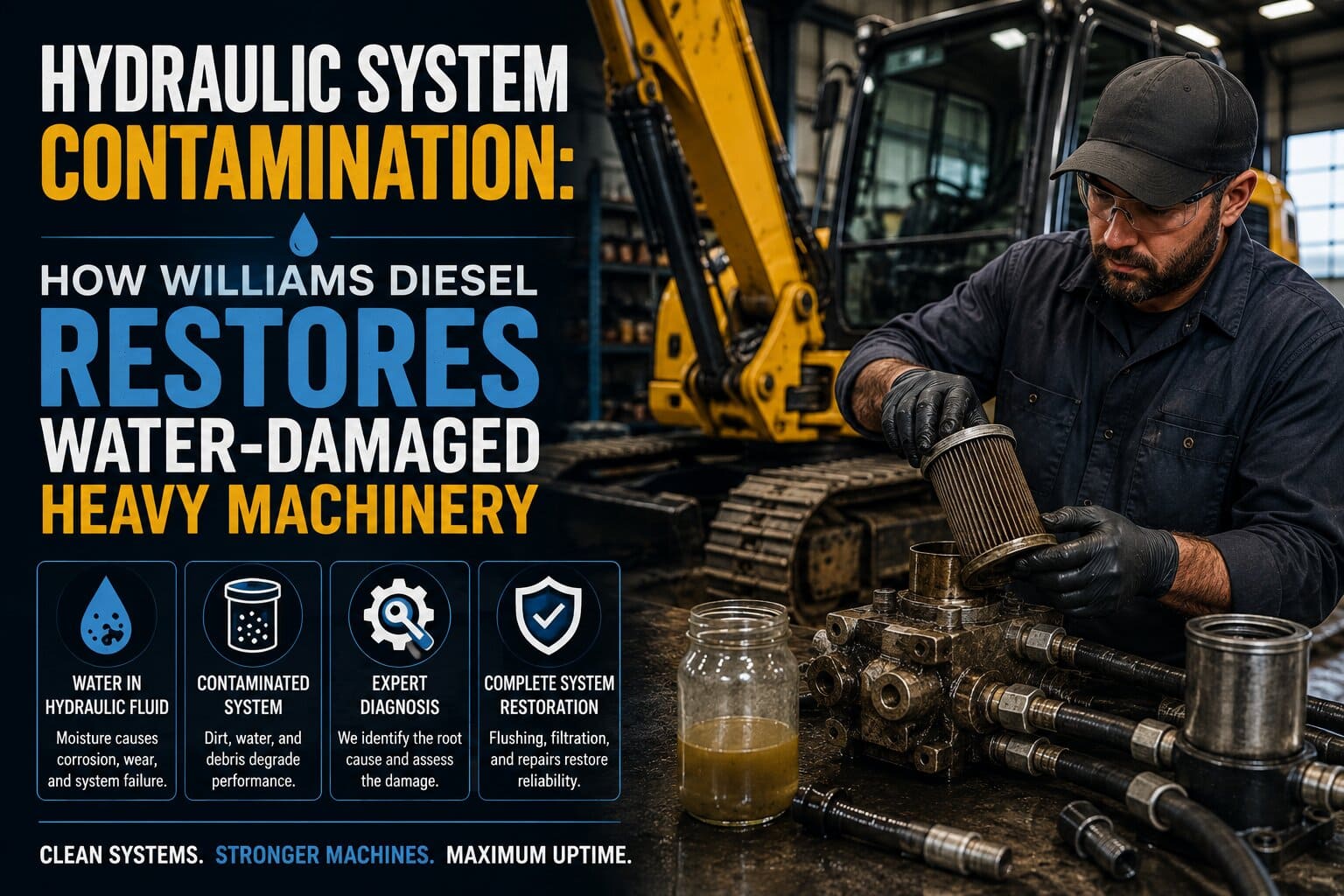
Quick Summary
- Understanding Contamination: Learn how moisture enters heavy machinery hydraulic systems through worn seals, condensation, and rain.
- Destructive Impact: Discover why water causes oil emulsification, cavitation damage, component rusting, and catastrophic pump failures.
- Systematic Restoration: Explore step-by-step diagnostic and flushing techniques used to extract water and restore hydraulic power.
- Expert Support: Learn why fleet owners trust william diesel (Williams Diesel LLC) to recover water-damaged machinery across Washington State.
In the heavy construction and logging industries, hydraulic systems serve as the muscle behind every movement. Whether operating an excavator, track loader, or dump truck, hydraulic fluid under immense pressure drives cylinders, motors, and pumps. However, operating in wet, demanding environments like the Pacific Northwest creates a constant threat: hydraulic fluid contamination. Water is one of the most destructive contaminants that can enter a closed hydraulic system. When moisture invades your fluid reservoirs, it degrades lubrication, triggers chemical breakdown, and damages internal components.
When heavy equipment suffers severe fluid contamination or mechanical failure, partnering with a proven specialist like william diesel (Williams Diesel LLC) ensures your machinery is thoroughly restored and protected against future downtime. From their facility in Eatonville, Washington, to job sites across the greater Seattle area, their certified technicians deliver reliable diagnostic and repair solutions for damaged machinery.
Get your free quote now – connect with us on WhatsApp :
How Water Enters Heavy Machinery Hydraulic Systems
Hydraulic systems are engineered to operate as closed loops under high pressure, but they are not impervious to environmental moisture. Understanding how water enters the system is the first step in preventing severe mechanical failure.
Ambient Condensation and Humidity
In regions with high humidity and fluctuating daily temperatures, atmospheric moisture is constantly drawn into hydraulic reservoirs. As the system warms up during operation and cools down overnight, air expands and contracts inside the reservoir breather cap. Humidity in the trapped air condenses against the cool metal walls of the tank, dropping water directly into the fluid. Over weeks of daily operation, this gradual accumulation creates significant free water at the bottom of the reservoir.
Worn Cylinder Rod Seals and Breathers
Hydraulic cylinder rods extend and retract thousands of times during a single shift. Over time, wiper seals wear out, harden, or become pitted by abrasive dust. When an extended chrome cylinder rod is exposed to rain or mud and then retracts, a thin film of water bypasses the worn wiper seal and enters the hydraulic fluid loop. Defective reservoir breather caps and missing fill neck gaskets also create direct entry points for rainwater.
High-Pressure Washdowns and Submersion
Cleaning heavy machinery with high-pressure power washers is standard maintenance. However, blasting water directly at breather vents, worn reservoir seals, or loose dipstick caps can force water directly into the hydraulic tank. Additionally, equipment operating in flooded trenches, riverbeds, or standing mud faces an elevated risk of water intrusion if fluid lines or seals are compromised.
The Destructive Effects of Water in Hydraulic Fluid
Water exists in hydraulic fluid in three states: dissolved, emulsified, and free water. While a tiny amount of dissolved water is manageable, emulsified and free water cause immediate, severe damage across the entire hydraulic circuit.
Oil Emulsification and Lubrication Breakdown
When water mixes with hydraulic oil under intense pressure and flow, it forms a milky, cloudy emulsion. This process breaks down the oil’s viscosity and film strength. Without a strong lubricating film, metal-to-metal contact occurs between moving parts inside pumps, valves, and cylinders. This leads to rapid frictional wear, elevated operating temperatures, and premature component degradation.
Cavitation and Micro-Dieseling
Water turns into steam at a much lower temperature than hydraulic oil boils. As emulsified water-oil fluid enters the low-pressure suction side of a hydraulic pump, water droplets rapidly vaporize into steam bubbles. When these bubbles are swept into the high-pressure discharge zone of the pump, they collapse violently. This phenomenon, known as cavitation, blasts microscopic pits into pump plates, vanes, and pistons, eventually destroying the pump.
Internal Corrosion and Sludge Formation
Free water settles at the bottom of reservoirs and collects in low points throughout hydraulic lines and valve banks. This standing water causes rapid oxidation and rusting of iron components. Rust particles flaking off internal walls travel through the fluid stream, acting as abrasive grit that scores valve spools and cylinder walls. Furthermore, water reacts with oil additives to form acidic sludge that clogs filters, gums up proportional control valves, and restricts fluid passages.
Step-By-Step Restoration: How Experts Flush and Repair Damaged Systems
Resolving water contamination requires far more than a simple oil drain and refill. Because fluid remains trapped inside cylinders, control valves, oil coolers, and hoses, draining the reservoir alone leaves up to 40% of contaminated fluid behind. Bringing your equipment to a specialized facility like Williams Diesel LLC guarantees a systematic, top-to-bottom restoration process.
Comprehensive System Inspection and Diagnostics
Technicians begin by taking fluid samples from multiple points in the circuit to evaluate the severity of contamination. They perform advanced computer diagnostics to check for sensor fault codes and measure system pressures. Inspecting high-pressure pumps, control valves, and cylinder rods determines whether mechanical components require rebuilding or total replacement.
Draining and Mechanical Reservoir Cleaning
The contaminated fluid is completely drained from the reservoir, control blocks, and low-point drain plugs. Technicians open access covers on the hydraulic tank to physically scrape out settled sludge, rust flakes, and metallic debris. The interior of the tank is flushed with clean solvent and dried using lint-free materials before fresh fluid is introduced.
Fluid Flushing and High-Efficiency Kidney Loop Filtration
To clear fluid trapped in remote cylinders and lines, technicians connect external kidney-loop filtration units equipped with water-absorbing filter elements. The system is systematically flushed while cycling all hydraulic functions—extending and retracting every cylinder multiple times. This circulates trapped fluid through the water-removal filters until fluid clarity and moisture levels return to original manufacturer specifications.
For fleet managers seeking complete regional support, relying on specialized williams diesel repair services guarantees that complex hydraulic restorations are completed accurately, protecting expensive assets from recurring breakdowns.
Equipment Rentals and Mobile Repairs in Washington
When heavy machinery suffers severe hydraulic damage, job site schedules come to an abrupt halt. Modern contractors need fast field service as well as rental machinery to keep projects moving while primary units undergo shop repairs.
Reliable Mobile Field Support
Sending a dead excavator or dump truck to a repair shop is not always feasible. Utilizing a equipped mobile diesel truck mechanic allows technicians to diagnose hydraulic leaks, replace split hoses, and perform fluid sampling directly on your job site. Technicians carrying portable diagnostic gear can perform initial flushing and pressure testing without requiring an expensive heavy-tow transport.
When managing diverse vehicle fleets, having access to specialized heavy duty dump truck repair ensures that both the chassis driveline and hydraulic hoist systems operate safely under heavy payloads.
Keeping Projects Moving with Quality Machinery Rentals
While your primary equipment is being serviced in the shop, rental machinery prevents expensive project delays. Partnering with a provider offering williams diesel equipment rental options gives contractors access to dependable, well-maintained earthmoving machinery on flexible terms.
Whether you need a compact track loader, skid steer, or a cat 303e mini excavator rental for tight residential trenching, utilizing reliable rental fleets ensures your crew stays productive. Choosing local suppliers offering affordable equipment rental washington services keeps operating overhead manageable while your primary fleet undergoes maintenance.
For contractors managing projects across the region, finding a reliable williams diesel eatonville wa facility or seeking trusted williams diesel seattle support provides comprehensive coverage across the entire Pacific Northwest.
Preventative Practices to Guard Against Moisture Intrusion
Preventing hydraulic fluid contamination requires proactive maintenance habits integrated into daily pre-trip inspections and scheduled service routines.
Best Practices Checklist
[Daily & Monthly Moisture Protection Protocol]
Daily Check: Inspect reservoir sight glasses for milkiness or cloudiness; drain settled water from bottom reservoir petcocks before starting the engine.
Monthly Inspection: Check reservoir breather caps, desiccant air dryers, and fill neck gaskets; replace desiccant elements as soon as color-change indicators signal saturation.
Every 500 Hours: Inspect chrome cylinder rods for pitting or scoring; replace worn rod wiper seals immediately to stop water entry.
Fluid Testing: Take oil samples every 250 to 500 operating hours for laboratory Karl Fischer water titration testing to detect hidden moisture buildup early.
If your machinery breaks down away from the shop or requires emergency hydraulic troubleshooting, searching for mobile diesel repair near me or contacting roadside diesel mechanics near me ensures that certified mechanics arrive quickly to evaluate fluid conditions and stabilize your equipment.
FAQs
What does milky hydraulic fluid mean?
Milky or cloudy hydraulic fluid is a clear sign of water contamination. The milky appearance occurs when water becomes emulsified, breaking down into micro-droplets suspended within the hydraulic oil.
Can I run my excavator if there is water in the hydraulic fluid?
No. Operating machinery with water-contaminated hydraulic fluid will cause pump cavitation, severe valve scoring, internal rust, and sudden component failure. The machine should be shut down immediately until the fluid is flushed and filtered.
How fast can Williams Diesel LLC respond to mobile repair requests in Washington?
Williams Diesel LLC prioritizes commercial service requests throughout Seattle, Eatonville, and surrounding Washington regions, striving to dispatch mobile service trucks quickly with typical local arrival times between 1 and 2 hours depending on traffic and location.
What coverage areas does Williams Diesel LLC service for diesel and hydraulic repairs?
Their service area encompasses greater Seattle, King County, Pierce County, Eatonville, and adjacent highway corridors throughout Washington, offering both mobile field service and comprehensive shop repairs.
How is water removed from a heavy equipment hydraulic system?
Water is removed using a combination of complete system draining, reservoir tank cleaning, and running the system through high-efficiency kidney-loop filtration units equipped with water-absorbing filter elements while cycling all hydraulic cylinders.
Conclusion and Final Thoughts
Hydraulic system contamination is a serious threat to heavy machinery, but it does not have to result in permanent mechanical damage or prolonged downtime. By recognizing early signs of water intrusion—such as milky fluid, erratic cylinder movement, or noisy pump operation—and taking immediate action, fleet owners can protect their investments.For contractors and fleet managers throughout the Pacific Northwest, securing reliable williams diesel repair washington support is essential for maintaining equipment health and job site productivity.
Williams Diesel LLC remains dedicated to providing professional, affordable, and trustworthy maintenance in Seattle, Eatonville, and nearby areas. Whether you require mobile troubleshooting, hydraulic flushing, or rental equipment, trust william diesel specialists to keep your machinery running at peak performance.


Comments are closed