


Quick Summary
- Diagnose Power Loss: Understand the root mechanical and electrical causes behind sudden or gradual diesel engine power loss.
- Fuel and Air System Focus: Learn how clogged filters, faulty fuel injectors, and turbocharger lag directly impact engine performance.
- Preventative Maintenance: Discover actionable steps for routine up-keep to avoid major overhauls and expensive downtime.
- Expert Local Solutions: Learn why choosing the right provider for diesel repair washington keeps your commercial or personal truck running at peak efficiency.
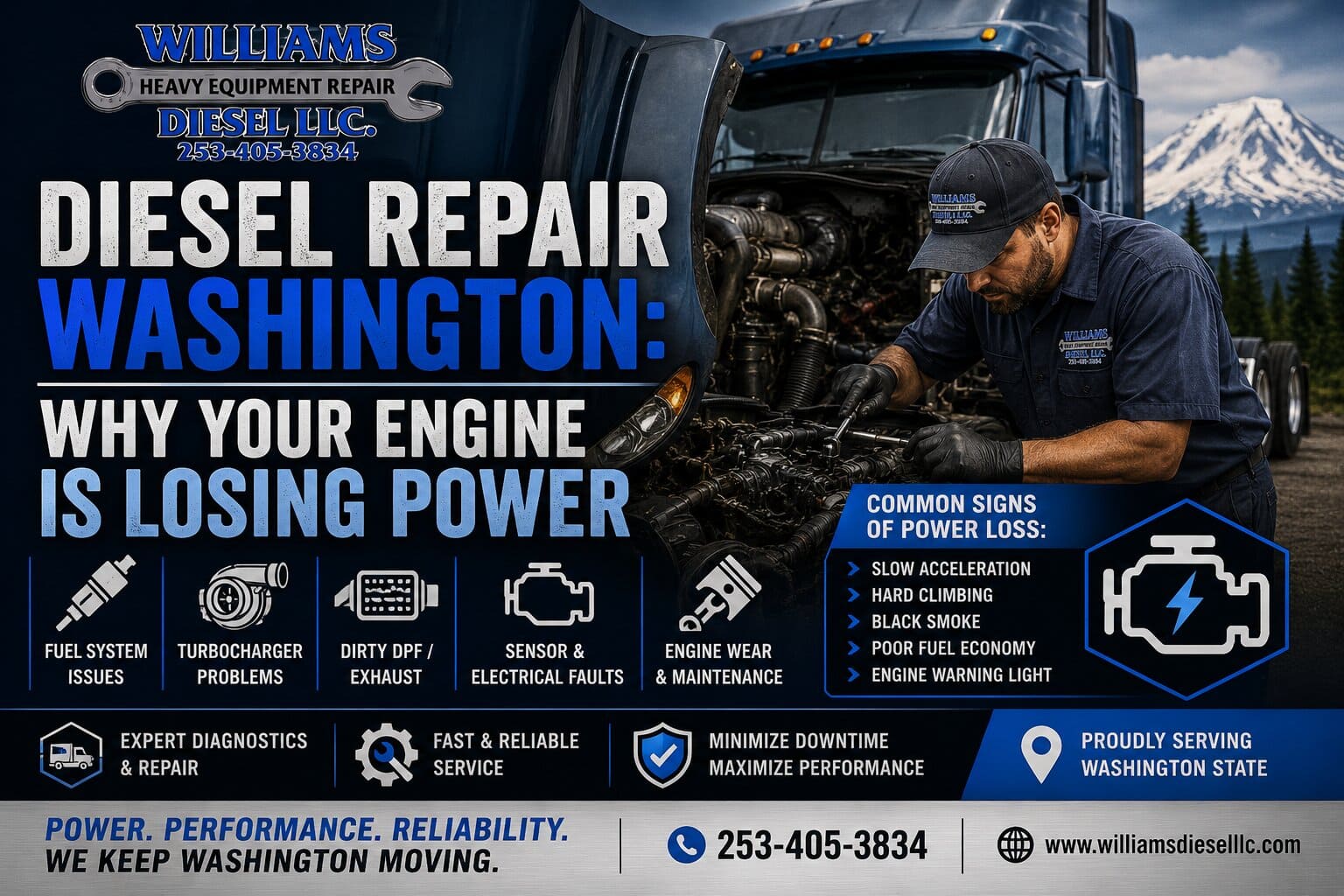
There is nothing quite as frustrating as stepping on the accelerator of your diesel truck, expecting that familiar surge of torque, only to feel the engine bog down and struggle. Whether you are hauling a heavy trailer up a mountain pass or navigating morning traffic, power loss in a diesel vehicle is a clear indicator that something in your powertrain is compromised. Diesel engines are complex workhorses built on high-compression ignition, precise fuel metering, and heavy air induction.
When one component fails, performance drops fast. Drivers looking for reliable diesel repair washington often reach out to Williams Diesel LLC, a trusted local facility in Seattle, Washington, known for diagnosing complex engine performance issues and restoring full power to local fleets and individual truck owners.
Understanding the Anatomy of Diesel Power Loss
Unlike gasoline engines that rely on spark plugs for combustion, diesel engines depend on extreme pressure and heat to ignite fuel. For this process to work efficiently, the engine requires three core elements operating in absolute harmony: clean fuel delivered at ultra-high pressure, unrestricted air flow, and proper exhaust scavenging.
When power loss occurs, it generally falls into two categories: a sudden drop in power accompanied by a check engine light, or a gradual sluggishness that worsens over several weeks. Pinpointing the issue requires looking at the primary systems that govern combustion efficiency.
Fuel System Restrictors: The Silent Power Killers
The fuel system is the lifeblood of your diesel engine. Modern common-rail diesel systems operate at immense pressure, often exceeding 30,000 PSI. If fuel delivery is restricted by even a tiny percentage, power loss is instantaneous.
Clogged Fuel Filters
Your diesel fuel filter works overtime to keep dirt, rust, and moisture out of your delicate high-pressure fuel pump and injectors. Over time, sediment builds up and restricts fuel flow. When you demand extra power, the engine starves for fuel, causing hesitation, misfires, or limp mode. To keep fuel flowing smoothly, scheduling a periodic service to change diesel fuel filter units is one of the simplest, most cost-effective preventative steps you can take.
Faulty Fuel Injectors
Diesel injectors operate under brutal heat and pressure conditions. Over high mileage, internal valves can wear down, or carbon deposits can build up on the nozzle tip. This leads to improper fuel spray patterns, fuel leaking back into the return line, or fuel starvation in specific cylinders. Getting professional diesel injector repair restores proper atomization, ensuring complete combustion and bringing back lost horsepower and torque.
High-Pressure Fuel Pump (HPFP) Failure
If the high-pressure fuel pump begins to fail or suffer from metal contamination, it cannot generate the necessary pressure required by the common-rail system. This results in hard starting, severe loss of power under load, and excessive white or black smoke from the tailpipe.
Air Induction and Turbocharger Issues
A diesel engine is essentially a massive air pump. To produce high torque, it relies heavily on forced induction via a turbocharger to push dense air into the combustion chambers.
Turbocharger Lag and Actuator Failures
If your turbo cannot build boost, your engine will feel sluggish and underpowered. Common causes include worn turbo bearings, sticking variable-geometry turbo (VGT) vanes, or a failing boost control actuator. When these components malfunction, the air-to-fuel ratio becomes unbalanced, leaving you with poor acceleration and high exhaust gas temperatures.
Charge Air Cooler (Intercooler) and Hose Leaks
The charge air cooler cools down hot air coming out of the turbo before it enters the engine, making it denser. If the intercooler develops a hairline crack, or if a rubber boost hose splits under pressure, pressurized air escapes into the atmosphere. This boost leak starves the engine of oxygen, causing excessive black smoke and a noticeable loss of pulling power.
Restricted Air Intake Filters
Operating in dusty construction sites or off-road conditions can quickly pack your air filter with debris. A choked intake starves the turbo, preventing it from pulling in sufficient air volume for clean combustion.
Exhaust and Aftertreatment Restrictions
Modern diesel trucks feature sophisticated emissions systems designed to reduce environmental impact. While effective, these components can restrict exhaust flow if not properly maintained.
Diesel Particulate Filter (DPF) Clogging
The DPF traps soot particles from the exhaust gas. Under normal driving conditions, the engine performs automatic regenerations to burn off accumulated soot. However, frequent short trips or unresolved fuel system issues can prevent passive regeneration, leading to a fully clogged DPF. A choked exhaust system creates high backpressure, forcing the engine into limp mode to prevent structural damage.
Exhaust Gas Recirculation (EGR) Valve Sticking
The EGR valve recirculates a portion of exhaust gas back into the intake manifold to lower combustion temperatures. Over time, sticky carbon deposits cause the EGR valve to stick open or closed. If it sticks open, fresh air is displaced by inert exhaust gas, causing poor combustion, rough idling, and severe acceleration lag.
Engine-Specific Power Loss Scenarios
Different diesel platforms exhibit unique vulnerabilities when it comes to power delivery issues.
- Ford Powerstroke Engines: Often suffer from VGT turbo vane sticking, high-pressure oil system (HPO) leaks on older 6.0L/6.4L platforms, or piezo-injector failures on 6.7L models. Drivers facing these specific engine issues frequently seek specialized powerstroke repair services to resolve complex high-pressure oil and fuel delivery glitches.
- Cummins Engines: Frequently experience lift pump degradation, fuel rail pressure relief valve leaks, and VGT actuator failures that limit boost pressure.
- Duramax Engines: Common issues include fuel filter housing air leaks, CP4 pump failures, and sticky EGR valves restricting intake airflow.
Addressing these issues promptly at a professional diesel repair shop prevents minor mechanical bugs from turning into catastrophic engine overhauls.
The Importance of Routine Diesel Engine Maintenance
Preventative maintenance is the cornerstone of diesel engine longevity and sustained performance. Skipping service intervals exposes sensitive mechanical parts to contaminated fluids and abrasive soot build-up.
Essential Maintenance Checklist
Executing structured maintenance on diesel engines ensures every sub-system performs reliably:
[System Check Guidelines]
Engine Oil & Filter: Change every 5,000 to 7,500 miles using high-grade heavy-duty diesel oil to prevent soot shear.
Fuel Filters: Replace primary and secondary fuel filters every 10,000 to 15,000 miles to safeguard fuel injectors.
Air Filter: Inspect every oil change; replace immediately if operating in high-dust environments.
Cooling System: Flush coolant according to manufacturer specs to prevent cavitation and internal EGR cooler corrosion.
Keeping up with these intervals ensures smooth daily operation, optimizes fuel economy, and preserves resale value. Whether you manage a single utility pickup or rely on commercial haulers, partnering with a dedicated diesel truck repair shop keeps your machinery fully operational and revenue-producing.
Professional Diagnostics vs. DIY Troubleshooting
While simple maintenance tasks like changing an air filter can be done at home, diagnosing power loss on modern electronically controlled diesels requires advanced tooling.
Advanced Computer Diagnostics
Modern trucks utilize dozens of sensors monitoring manifold absolute pressure, fuel rail pressure, exhaust backpressure, and mass airflow. When power drops, professional technicians use advanced diagnostic software to read live sensor data, perform cylinder balance tests, and execute forced DPF regenerations.
Pressure and Leak Testing
Locating subtle boost leaks or low-pressure fuel starvation requires specialized equipment such as smoke machines, boost leak adaptors, and mechanical fuel pressure gauges. Attempting to guess which part is failing often leads to replacing expensive components unnecessarily. Entrusting your vehicle to a certified diesel power truck repair facility ensures the root cause is identified correctly the first time.
When managing fleet vehicles, working with an experienced diesel automotive repair provider saves time and eliminates trial-and-error guesswork. From minor sensor replacements to full driveline service, having a dedicated partner for diesel truck repair is an asset for any truck owner.
Finding Reliable Field and Shop Services
Vehicle breakdowns rarely happen at convenient times. When performance issues strike on the road or at a job site, knowing who to call for immediate assistance prevents lost work hours.
If you are experiencing unexpected performance drops or mechanical glitches while on the road, searching for diesel repair shops near me will connect you with qualified regional mechanics equipped with both shop equipment and mobile response capability.
When looking for a trustworthy local partner, seek out specialists who possess specific expertise in the diesel shop environment, carrying proper diagnostic software, hydraulic presses, and heavy-duty lifts to accommodate large commercial frames safely.
Choosing a comprehensive facility that handles both routine preventative servicing and emergency mechanical overhauls ensures your truck receives expert attention throughout its operational lifespan.
FAQs
Why is my diesel truck blowing black smoke and losing power?
Black smoke indicates an overly rich air-to-fuel ratio, meaning the engine is receiving too much fuel or not enough air. Common causes include a restricted air intake filter, a boost leak in the charge air cooler hoses, a failing turbocharger, or a stuck-open fuel injector.
Can a dirty fuel filter cause my engine to go into limp mode?
Yes. If the fuel filter is restricted, the engine control module (ECM) detects a drop in fuel rail pressure under load. To protect the high-pressure pump and injectors from damage caused by fuel starvation, the ECM limits engine RPM and power output, triggering limp mode.
How fast can Williams Diesel LLC respond to service calls in Seattle?
Williams Diesel LLC prioritizes rapid response times for clients throughout Seattle and surrounding Washington areas. Local dispatch times typically range from 1 to 2 hours depending on current traffic conditions and service locations.
What coverage areas does Williams Diesel LLC service for diesel repairs?
Williams Diesel LLC covers greater Seattle, King County, and neighboring regions throughout Washington, providing both in-shop diagnostics and on-site support for light, medium, and heavy-duty diesel trucks.
How often should diesel fuel injectors be inspected or tested?
Fuel injectors should be monitored through live-data balance tests during major service intervals, or roughly every 50,000 to 75,000 miles. If you notice rough idling, increased fuel consumption, or excessive exhaust smoke, have them tested immediately.
Conclusion and Final Thoughts
Experiencing power loss in your diesel engine is a clear warning sign that should never be ignored. Whether the root cause stems from a clogged fuel filter, a leaking boost hose, or failing injectors, addressing these issues early protects your powertrain from costly, irreversible damage.
For truck owners and fleet operators across the Pacific Northwest, securing reliable diesel repair washington is essential for maintaining job-site productivity and highway safety. Williams Diesel LLC remains committed to providing transparent, professional, and affordable services in Seattle, Washington. Trust their team of experienced technicians to diagnose your engine power loss accurately and get your vehicle back on the road performing at its best.


Comments are closed