


Summary
- Sourcing budget equipment rentals helps commercial builders and trade contractors maintain healthy project cash flow without taking on heavy equipment debt.
- Overlooked line items such as fuel refill penalties, wash bay charges, and hourly overages frequently turn an advertised bargain into an expensive invoice.
- Understanding billing cycles, delivery radii, and hour-meter limits (8/40/160 hours) ensures your estimate matches the final billing slip.
- Inspecting hydraulic fluid, track condition, and electrical interlocks during mobilization stops billing disputes before the machine ever turns a track on site.
- Contractors across Eatonville, Pierce County, and the Puget Sound region rely on Williams Diesel LLC for clear, upfront rental agreements and dependable, mechanic-inspected machinery.
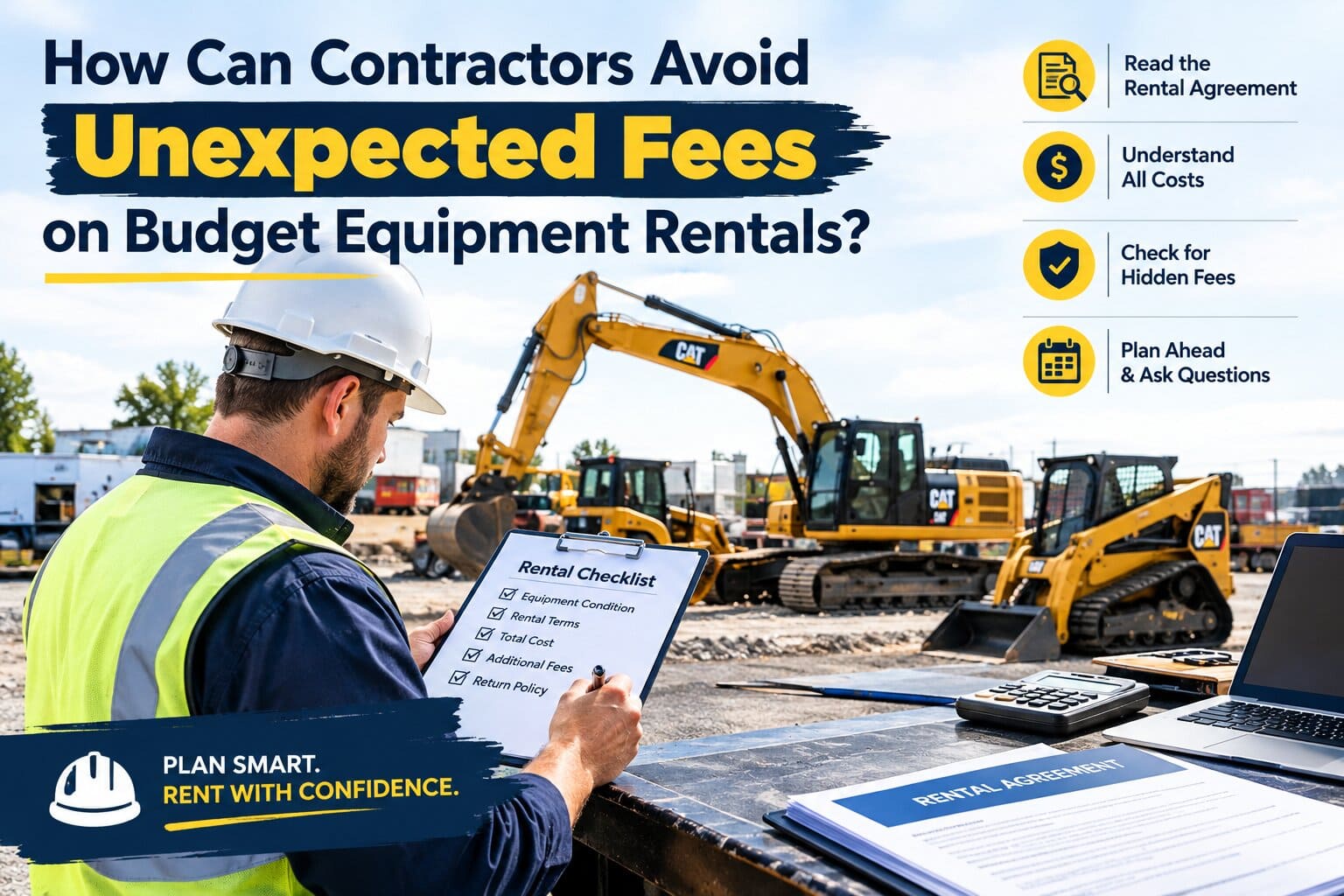
Contractors can avoid unexpected fees on budget equipment rentals by reviewing hour-meter allowances (typically 8 hours per day or 40 hours per week), confirming fuel refill policies, verifying site wash expectations, and clarifying transport mobilization rates before signing the dispatch agreement. Choosing an established, direct-fleet provider like Williams Diesel LLC in Eatonville, Washington, ensures full transparency across daily, weekly, and monthly rates with zero corporate broker markups or surprise line-item fees.
Keeping job site overhead tight is standard practice for general contractors, utility crews, and specialty subcontractors across the Pacific Northwest. When managing multiple project timelines, renting earthmoving and access equipment preserves operational working capital and spares your business the ongoing liabilities of equipment financing, insurance, and depot storage. However, an attractive daily rate on paper can quickly sour if the final invoice includes unplanned surcharges, cleaning fees, and transport penalties. Sourcing machinery from a dependable, customer-focused team like Williams Diesel LLC in Eatonville, Washington, provides local builders with transparent, job-ready access equipment and earthmovers without corporate overhead or administrative surprises.
Start a WhatsApp chat and grab your free quote today :
The Economics of Equipment Sourcing: Quoted Rates vs. Total Cost
In the construction sector, winning competitive bids requires tight cost control. Project estimators regularly search for competitive construction equipment rental rates to build sharp, accurate bids. Yet, an invoice that exceeds the initial budget by twenty or thirty percent can erase the profit margin on a utility installation or site preparation job.
True cost efficiency comes from total cost predictability, not the lowest headline rate advertised on a digital billboard. When rental houses offer unusually low baseline pricing, they often offset their operational margins through administrative charges, strict fuel refill multipliers, and aggressive damage assessments. Learning how these agreements operate protects your cash flow and keeps your project accounting accurate.
Common Hidden Equipment Rental Fees and How to Avoid Them
Uncovering hidden equipment rental fees before a flatbed unloads on your site requires knowing exactly where to look in your contract paperwork. Most billing surprises fall into several distinct operational categories:
Common Contract Surcharges & How to Prevent Them
- Excessive Engine Hours: Standard agreements allow 8 hrs/day (40/wk). Double shifts trigger hourly surcharges.
- Fuel Refill Multipliers: Returning tanks less than 100% full incurs premium off-road diesel pump fees.
- Wash & Decontamination Fees: Heavy Pacific Northwest clay left in tracks or undercarriages triggers shop pressure-washing fees.
- Transport & Standby Drops: Site access delays or blocked drop zones result in driver waiting-time surcharges.
- Environmental & Processing Fees: Vague administrative percentage add-ons tacked onto the baseline daily rate.
Digital Engine Hour Allocations
Rental machinery is billed on calendar availability and operational run time tracked by digital hour meters:
- Daily Rentals: Standard allowance is 8 operating engine hours within a 24-hour period.
- Weekly Rentals: Includes 40 operating hours over a 7-day period.
- Monthly Rentals: Capped at 160 to 176 hours per 28-day billing cycle.
If your crew runs a mini excavator or skid steer on a double-shift schedule totaling 14 hours in a single day, the rental yard will bill those additional six hours at an overtime hourly rate. Track your dashboard meters daily to prevent billing surprises.
Premium Fuel Refill Penalties
Machines arrive on the job site with full fuel and fluid reservoirs. If a unit is returned with the fuel gauge reading three-quarters full, rental yards rarely bill standard retail pump rates. Instead, contracts specify premium shop refueling charges that often exceed two to three times local commercial diesel rates, plus an administrative labor fee. To avoid this cost, top off the diesel tank and DEF reservoir from your on-site fuel transfer tank before the hauler arrives.
Track Cleaning and Job Site Washout Fees
Western Washington’s dense glacial till and wet clay stick tenaciously to excavator tracks, sprockets, and undercarriage rollers. If machinery is returned with fifty pounds of cured mud packed into the track frames, rental yards must assign a technician to spend hours pressure washing the unit before it can be serviced. Spend fifteen minutes with an excavator clean-out shovel or a site hose at the end of the shift to clear out tracks and avoid automatic shop cleanup fees.
Regional Logistics: Delivery, Staging, and Site Access
For project managers sourcing affordable equipment rental Seattle crews count on, transportation costs can represent a significant percentage of the total rental expenditure. Moving mini excavators, track loaders, or heavy scissor lifts through urban corridors like I-5, SR-167, and tight suburban residential access roads requires careful logistical planning.
Arranging professional equipment delivery and pickup prevents costly field delays, but it requires clear communication regarding site readiness:
- Site Drop Verification: Ensure the designated unloading pad is level, compacted, and free of parked tradesmen vehicles or overhead utility drops. If a transport trailer cannot safely lower its ramps, standby driver fees begin accruing immediately.
- Delivery Window Confirmation: Clarify whether delivery is set for a firm morning time or an open dispatch window. Staging labor on site while waiting for an unconfirmed trailer arrival wastes payroll hours.
- Demobilization Call-Off Notices: Machines do not automatically stop billing when your project wraps up. Most yards require a formal phone call, text, or email confirmation to issue an “off-rent” number, officially stopping the billing clock and scheduling transport.
Comprehensive Fleet Sourcing Across the Pacific Northwest
Large-scale site developments rarely use just one piece of equipment throughout their life cycle. A project often begins with earthmoving and trenching, shifts into backfilling and grading, and finishes with high-bay ceiling installs, MEP rough-ins, and facility maintenance.
Managing diverse equipment needs through a unified provider simplifies project coordination. Rather than managing three different supplier accounts, sourcing your fleet through heavy equipment rental Washington specialists gives you single-invoice accounting and coordinated delivery windows.
Working with established fleet specialists like williams equipment rental ensures that machines arrive with verified mechanical histories and consistent maintenance records, eliminating the performance variability of third-party broker networks.
The Essential Equipment Rental Agreement Checklist
Before an operator turns the ignition key, complete a documented walk-around alongside the transport driver. Use this equipment rental agreement checklist to ensure both parties agree on the machine’s initial baseline condition:
Pre-Operation Delivery Check Sequence
Physical Inspection: Check track rubber, cutting edges, body panels, and mirrors for pre-existing scuffs or damage.
Fluid Baseline: Verify engine oil, hydraulic sight glass, coolant reservoirs, and fuel levels are topped off.
Safety Devices: Test travel alarms, horn, seatbelt interlocks, and emergency stop pushbuttons.
Attachment Fit: Confirm hydraulic flat-face quick couplers seal without weeping under operating pressure.
Documentation: Photograph the machine on the transport deck, record the hour meter, and sign the delivery receipt.
If you notice a cracked mirror, a gouged rubber track, or an active hydraulic weep, photograph it immediately and ensure the delivery driver notes it directly on the bill of lading. That simple digital photo prevents disputes over wear and tear when the machine returns to the yard.
Mechanical Upkeep: In-House Standards vs. Low-Cost Repairs
A primary reason rental machines break down on site is poor maintenance between rental cycles. Low-cost equipment yards often skip scheduled hydraulic fluid sampling, air filter changes, and track tension adjustments to keep prices down. When machinery fails in the field, projects stall, leading to costly labor delays.
Some operators try to cut costs by hiring cheap diesel mechanics near me when a breakdown happens. However, choosing unvetted, cut-rate mechanics often results in misdiagnosed electrical faults, stripped fittings, and invalid machine warranties.
Partnering with professional, factory-grade diagnostic operations—such as the technical field division at williams equipment rental—guarantees that every piece of machinery undergoes complete multi-point maintenance between contracts. Experienced diesel technicians verify hydraulic relief settings, test safety interlocks, and sample fluids, ensuring your crew receives reliable, productive equipment ready for hard shifts.
Finding Reliable Commercial Equipment Locally
When unexpected site conditions demand an additional digger or high-reach platform, you need immediate answers. Searching for commercial equipment rental near me connects you with regional yards that manage live inventory and make decisions without navigating corporate red tape.
Local yards can adjust dispatch schedules, offer flexible weekend pick-up windows, and provide direct access to the team maintaining the machines. When you have direct contact with the yard manager and the technicians prepping your equipment, you avoid hidden broker fees and gain a dependable equipment partner for the duration of your build.
Frequently Asked Questions
What constitutes normal wear and tear versus billable equipment damage?
Normal wear and tear includes routine dulling of bucket cutting teeth, cosmetic paint scuffs from brush clearing, and natural tire tread wear. Billable damage involves bent hydraulic cylinder rods, torn rubber tracks from driving over jagged rebar, cracked structural welds caused by overloading, or deeply dented sheet metal from impacts.
Can I operate rental equipment on weekends without extra charges?
Weekend billing depends entirely on your contract terms and accumulated engine hours. If you rent a machine on a single-day rate from Friday afternoon to Monday morning, you are typically billed for one day of possession provided the digital hour meter does not exceed the standard 8-hour operating limit.
What is the typical delivery response time for Williams Diesel LLC?
Williams Diesel LLC coordinates rapid equipment mobilization throughout Eatonville, Pierce County, and neighboring Puget Sound communities. Job-site deliveries are routinely scheduled with direct 24-hour turnaround windows, matching your crew’s start times.
What areas are included in your regional service footprint?
Williams Diesel LLC provides equipment rentals, site transport, and mobile fleet support across Eatonville, Tacoma, Puyallup, Seattle, Olympia, Pierce County, King County, and Thurston County.
What happens if a rented machine experiences a mechanical issue on site?
If a machine triggers a warning code or develops an issue, turn it off and contact Williams Diesel LLC immediately. Mobile service trucks carrying diagnostic equipment and replacement parts dispatch promptly to evaluate and repair the unit on site, keeping downtime to a minimum.
Conclusion and Final Thoughts
Protecting your project margins requires vigilance, clear communication, and an understanding of rental contracts. By verifying hour-meter allowances, refueling equipment prior to pickup, cleaning undercarriages, and documenting pre-existing wear on delivery, you can secure dependable budget equipment rentals that keep your projects running smoothly and cost-effectively.
When your upcoming commercial, utility, or site prep work demands dependable equipment backed by clear, transparent terms, partner with a regional team dedicated to your operational success. Williams Diesel LLC remains committed to providing reliable, affordable, and fully inspected heavy machinery and aerial lifts to general contractors, utility crews, and property owners throughout Eatonville, Washington, and the surrounding Western Washington communities. Plan ahead, review your rental agreements carefully, and work with an equipment partner who respects your schedule and your budget.
Keep your projects moving on schedule without unexpected equipment fees. Connect with Williams Diesel LLC today to verify machine availability, get clear rental rates, or schedule your next job-site delivery.

Comments are closed