


Summary
- Spatial Mastery: Learn how managing the precise caterpillar 303 weight allows home builders and landscapers to drive through narrow side-yard walkways without removing perimeter fencing.
- Property Preservation: Discover why a sub-8,000-pound operating mass protects structural residential concrete, driveways, and buried sewage utilities from expensive compaction failures.
- Towing Made Simple: Explore how staying within this lighter weight category eliminates specialized heavy freight trailer mandates and simplifies local site-to-site machinery transportation.
- Uncompromising Hydraulics: See how advanced industrial systems provide commercial grading and deep utility trenching strength within a highly agile frame layout.
- Dependable Regional Fleets: Find out how local mechanical professionals maintain these versatile units to ensure flawless field uptime on residential jobs throughout the Pacific Northwest.
Executing a flawless excavation project in a modern residential or suburban setting requires an operator to balance machinery power with severe spatial constraints. Unlike vast, wide-open industrial developments where a massive tracked earthmover has endless room to swing its boom, neighborhood job sites are tightly restricted by property boundaries, pristine landscaping, mature overhead tree structures, and close-quarter foundations. Whether you are installing secondary utility lines, cutting a path for a structural retaining wall, or digging out a backyard swimming pool, using an oversized machine can quickly result in devastating property damage.
On the other hand, an underpowered alternative will stall your project timeline, forcing your crew to rely on exhausting, manual labor. Maximizing site efficiency depends entirely on bringing in equipment that matches your exact spatial limits while retaining enough hydraulic force to shear through heavily compacted subsoil. In the highly competitive mini excavator market, the Cat 303 CR stands as a clear industry favorite. Analyzing the structural design and the true operational impact of the caterpillar 303 weight reveals why this specific configuration remains the absolute premier choice for modern neighborhood projects.
For independent general contractors, landscapes architects, and property owners in the Pacific Northwest, securing access to these perfectly balanced systems from a reliable regional expert like Williams Diesel LLC ensures your field operations stay productive, highly precise, and completely on budget.
Reach us via WhatsApp for a no-obligation free quote :
The Fine Line of Operating Mass in Residential Construction Engineering
In the design of modern earthmoving machinery, operational weight is a core specification that directly dictates every single variable of field performance. It governs everything from long-distance transport logistics and structural stability to pure hydraulic lifting capabilities and track-induced ground pressure. If a machine lacks appropriate mass, its tracks will slip, slide, and bounce violently when the bucket attempts to slice through stubborn clay or dense glacial till. Conversely, if a machine brings too much heavy mass to the site, it will gouge deep ruts into finished lawns, crush underlying drainage networks, or cause structural fractures along residential concrete surfaces.
The standard operating weight of the Cat 303 CR hits an exceptionally strategic engineering sweet spot, typically settling at roughly 7,817 pounds when equipped with a full operator cab setup. This deliberate mid-range configuration gives the excavator plenty of low-center-of-gravity stability to manage high hydraulic pressures without tipping, while remaining light enough to protect the delicate underground and surface infrastructure common to residential properties.
Protecting Property and Eliminating Post-Project Lawn Restoration Costs
One of the most frequent hidden financial drains on a residential job site is the cost of restoring the property once the digging phases are complete. When an unoptimized 12-ton or 15-ton tracked machine is brought onto a suburban property, its steel tracks grind away at the topsoil, compress organic root structures, and easily crush subterranean landscaping lines. By the time the excavation is finished, the contractor is left with an angry property owner and a multi-thousand-dollar landscaping repair bill.
The design of this compact excavator completely avoids these unnecessary property liabilities by distributing its total weight across wide, high-flotation rubber tracks. This specific engineering design drops the unit’s minimum ground bearing pressure down to a remarkable 4.0 to 4.7 pounds per square inch (psi) depending on the track setup and stick options. Because this pressure is lower than what a typical adult exerts while walking, you can drive the machine across manicured lawns and decorative pavers without running the risk of structural sinking, tearing, or long-term soil compaction.
Mastering Zero-Tail-Swing Geometries in Dense Neighborhoods
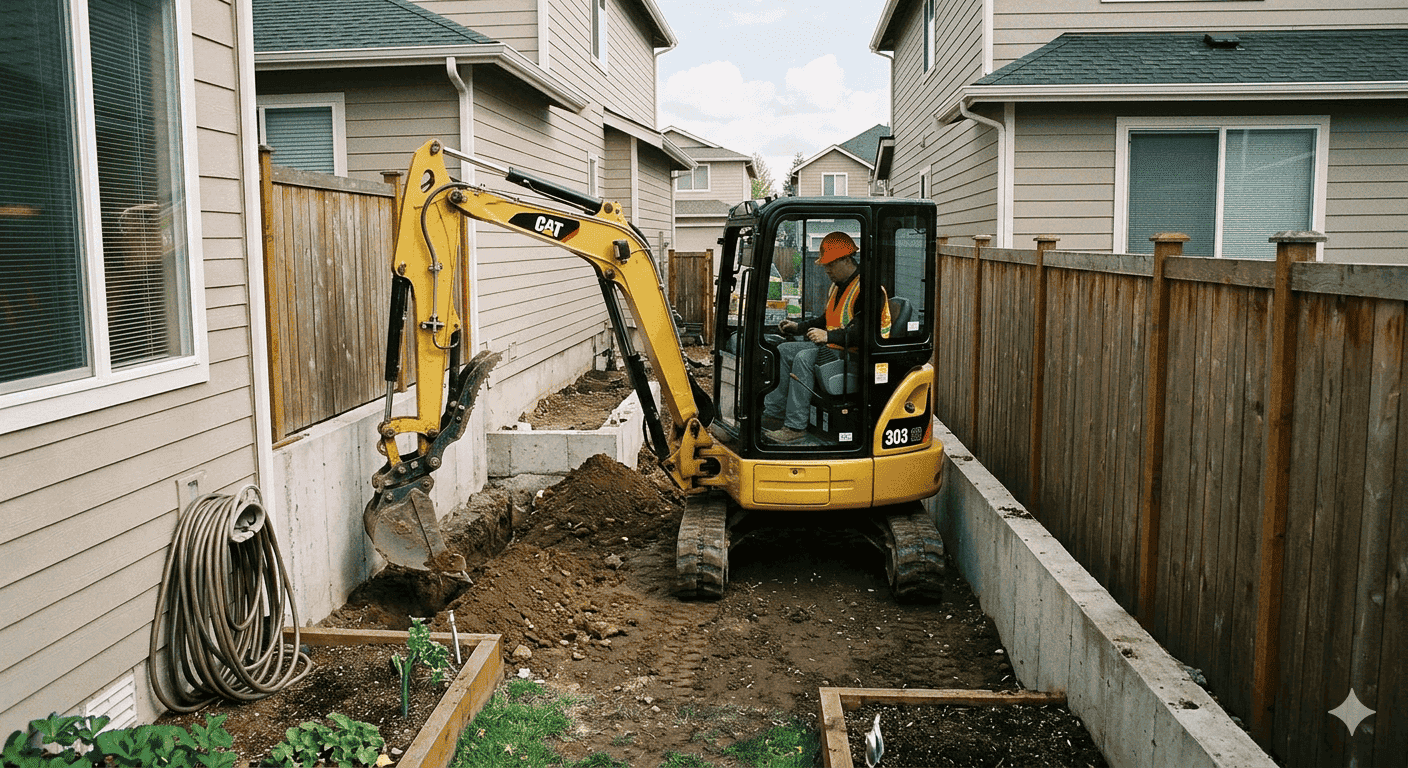
Physical machine width is just as critical as overall mass when attempting to maneuver heavy machinery between existing structures. Modern master-planned communities are frequently designed with very narrow side yards, leaving minimal clearance between the side of a house and a secure boundary fence. Forcing an unoptimized piece of equipment through these tight pathways often requires taking down entire fence lines or removing valuable perimeter trees.
With an overall track width of just five feet and one inch (61.0 inches), this compact excavator slips cleanly through narrow access points that would completely block traditional industrial assets. Once the machine has entered the backyard workspace, its real genius is showcased through its zero-tail-swing (CR) counterweight geometry. When the operator spins the upper housing 360 degrees to cast soil into a dump truck, the rear counterweight extends only 30.5 inches out from the centerline, remaining safely within the overall width profile of the tracks. This means an operator can work at peak speeds directly alongside home foundations, pool enclosures, and wooden fences without worrying about swinging the back of the machine into an active structural wall.
Evaluating Power Metrics: Balancing Frame Mass with Hydraulic Breakout Force
A common misconception among some site supervisors is that prioritizing a compact machine profile means sacrificing real digging power. However, advances in load-sensing hydraulic networks and variable-displacement piston pump designs have completely transformed the performance capabilities of modern mini excavators.
When reviewing the official cat 303 cr excavator specs, you quickly see a machine built to perform demanding heavy-duty tasks. Powered by a robust, field-tested diesel engine, the machine generates a massive bucket digging force of up to 6,385 lbf. This exceptional force ensures that despite its modest footprint, the machine can easily tear through tough tree roots, pop out old boulders, and excavate through highly compacted sub-base road mixtures with absolute ease.
When choosing between machines, contractors often look at larger alternatives like the 303.5 cat excavator weight, which steps up the operational mass scale to roughly 9,239 pounds. While that extra weight provides a bit more digging depth for massive deep-trench commercial lines, the standard cat 303 excavator weight remains the top choice for operators who want the perfect balance of serious hydraulic breakout force and maximum turf-friendly protection on fragile, space-restricted residential lots.
Trailer Logistics and the Elimination of Commercial Transport Costs
Moving high-tonnage heavy machinery through busy metropolitan traffic corridors is a complex and expensive logistical challenge. Hauling large industrial excavators demands heavy-duty commercial transport trucks, specialized lowboy trailers, and experienced drivers holding commercial driver’s licenses (CDLs). Navigating these oversized rigs through tight neighborhood roundabouts, narrow residential cul-de-sacs, and low-clearance residential streets can create a massive logistical bottleneck.
The compact engineering profile of the Cat 303 completely redefines site-to-site machinery transportation. Because the overall caterpillar 303 weight sits comfortably below the critical 10,000-pound regulatory threshold, it can be driven onto standard dual-axle utility trailers and towed legally behind a standard three-quarter-ton or one-ton commercial pickup truck. This logistical flexibility allows independent landscape crews, local plumbers, and utility specialists to easily haul their own equipment from job to job. By bypassing expensive third-party commercial freight brokers, you can keep your overall operational overhead to an absolute minimum.
Preserving Underground Infrastructure and Navigating Sub-Surface Utilities
Digging in a residential backyard requires extreme caution because of the intricate web of buried public utilities. Below the manicured surface of a typical neighborhood lawn lies a complex network of active infrastructure, including high-pressure gas mains, live electrical conduits, delicate fiber-optic communication lines, water supply pipes, and fragile PVC sewer hookups.
Operating a high-tonnage commercial earthmover over these critical zones increases the risk of crushing these buried lines from severe soil compaction alone, long before the bucket teeth ever breach the dirt. The low ground pressure of a compact model mitigates this risk dramatically. Furthermore, the highly responsive, pilot-operated hydraulic joysticks of the Cat 303 give the operator incredible tactile feedback. This exceptional level of control makes it much easier to carefully shave away layers of dirt, allowing crews to safely expose marked utility lines without causing a catastrophic utility rupture.
Versatility in Action: Utilizing Multi-Functional Hydraulic Attachments
Modern residential excavation involves far more than simply scooping dirt out of a hole. A typical backyard project might require tearing out an old concrete patio walkway, drilling deep pier holes for a structural deck foundation, clearing out heavy overgrowth, and placing heavy landscape stones all in a single afternoon.
The Cat 303 handles these multi-stage project demands effortlessly thanks to its high-flow auxiliary hydraulic lines and precise quick-coupler attachment mechanisms. Operators can swap out standard trenching buckets for a wide variety of specialized tools right in the field:
- Hydraulic Breakers: Perfect for cleanly breaking up thick concrete patios, driveway approaches, and masonry retaining walls without disrupting the surrounding landscape.
- Continuous Flight Augers: Designed for drilling precise, plumb holes for structural deck pillars, perimeter fencing posts, and deep tree plantings.
- Hydraulic Thumbs: Providing incredible clamping pressure to grab, sort, and load heavy boulders, old logs, concrete debris, and demolition waste.
- Wide Grading Buckets: Essential for smoothing topsoil, clearing out loose surface debris, and executing precise final grading before laying down new turf.
By utilizing a single, agile machine body to handle multiple attachment tasks, you drastically cut down the total number of machines required on site, keeping the workspace clear, safe, and highly organized.
Securing Elite Fleet Solutions from a Trusted Local Partner
For residential contractors and home renovators preparing to break ground on their next project, finding a reliable, perfectly maintained machine shouldn’t involve dealing with the frustrating phone menus of a national corporate rental warehouse. When putting together competitive bids for local projects, look for clear, upfront options by checking out a trusted caterpillar 303 weight rental near me service provider. Working with a dedicated regional provider ensures that your mini excavator arrives completely fueled, thoroughly cleaned, and mechanically certified to perform flawlessly on your property.
Choosing a local supplier that understands the distinct soil profiles, variable weather patterns, and specific municipal codes of the Pacific Northwest makes a world of difference in your project’s overall success. This is exactly where the professional team at Williams Diesel LLC excels. By combining deep, expert-level heavy diesel maintenance knowledge with a highly curated compact rental fleet, they deliver premium machinery solutions that allow regional contractors to complete residential digs safely, quickly, and with total peace of mind.
FAQs Section
- Can a Cat 303 mini excavator be towed legally without a commercial driver’s license (CDL)?
Yes, in the vast majority of standard operating scenarios. Because the machine’s base weight is under 8,000 pounds, when it is paired with a properly rated utility trailer, the combined Gross Vehicle Weight Rating (GVWR) typically falls well below the 26,001-pound mark that triggers federal and state CDL requirements. You should, however, always verify the specific towing capacities listed in your truck and trailer manuals before hitting the road.
- What is the maximum standard digging depth of the Caterpillar 303?
When configured with a standard stick setup, the Cat 303 CR delivers a maximum digging depth of 104.3 inches (approximately 8.7 feet). If your project calls for deeper excavation, configuring the machine with an extended long stick setup pushes the maximum digging depth down to 116.1 inches (approximately 9.7 feet), which is perfect for deeper sewer lines and structural foundations.
- Does Williams Diesel LLC offer on-site machinery delivery services in the greater Seattle area?
Yes. We recognize that many independent landscapers and residential property owners do not own heavy-duty pickup trucks or heavy-duty utility trailers. We provide prompt, highly dependable transport delivery and pickup services directly to your residential or commercial job site, ensuring your machine is dropped off exactly when your crew is scheduled to break ground.
- What is your standard on-site response time if a machine needs maintenance during a project?
Because we are based right here locally and operate fully equipped mobile diesel service units, our field response times across our regional coverage area are incredibly fast. If an unexpected mechanical issue or sensor alert pops up, we quickly dispatch a certified diesel mechanic directly to your site to handle the repair, keeping your downtime to an absolute minimum.
- Can the Cat 303 easily handle high-impact attachments like concrete hammers and augers?
Absolutely. The machine is engineered with high-pressure, primary auxiliary hydraulic lines that feed continuous fluid flow to demanding attachments. This allows you to run high-impact hydraulic breakers, high-torque earth augers, and thumbs effortlessly, transforming the excavator into a multi-functional construction solution.
Conclusion: Smart Machine Choices for Superior Field Results
Achieving top-tier productivity on a residential job site comes down to making smart, calculated equipment selections. While high-tonnage heavy machinery is perfect for moving massive volumes of dirt on wide-open commercial developments, neighborhood projects demand a far more strategic approach that prioritizes precision control, maneuvering agility, and surface protection. Choosing a mini excavator engineered specifically to navigate tight spaces allows your crew to tackle demanding earthmoving tasks without risking property damage or taking on massive transportation fees.
Williams Diesel LLC remains deeply committed to providing our regional workforce with elite heavy equipment rentals and professional mechanical support. We treat your project goals as our own, ensuring that every asset we deploy is thoroughly inspected, perfectly tuned, and ready to work under real-world conditions. Take the stress out of your next residential cleanup, landscape renovation, or utility project by leveraging the incredible balance of the caterpillar 303 weight. Reach out to our local office today to check current fleet availability, review our flexible contract terms, and secure an affordable equipment solution that keeps your project moving forward smoothly and successfully.


Comments are closed