


Summary
- Maximizing Project Efficiency: Learn how sourcing high-performance excavating equipment eliminates construction delays and keeps site prep on a precise schedule.
- On-Demand Flexibility: Discover the economic and logistical advantages of choosing rental solutions over the long-term debt and maintenance liabilities of ownership.
- Overcoming Local Terrain: Understand how properly maintained machinery overcomes the unique soil, moisture, and tight spatial constraints of the Pacific Northwest.
- The Maintenance Advantage: Explore why choosing shop-tested, mechanic-vetted machinery prevents costly unexpected field breakdowns.
- Trusted Local Support: See how partnering with a reliable regional specialist like Williams Diesel LLC ensures your site stays productive from groundbreaking to final grading.
In the commercial construction and earthmoving industries, productivity is a direct reflection of machine capability. When you are managing a modern development, a public utility installation, or a complex residential grading project, your timeline is entirely dependent on how much dirt, rock, and debris your team can move in a single shift. When machines sit idle due to mechanical failures, or when a project relies on underpowered assets, your profit margins quickly evaporate. For contractors and project managers throughout the Pacific Northwest, maintaining a highly responsive workflow requires strategic equipment sourcing.
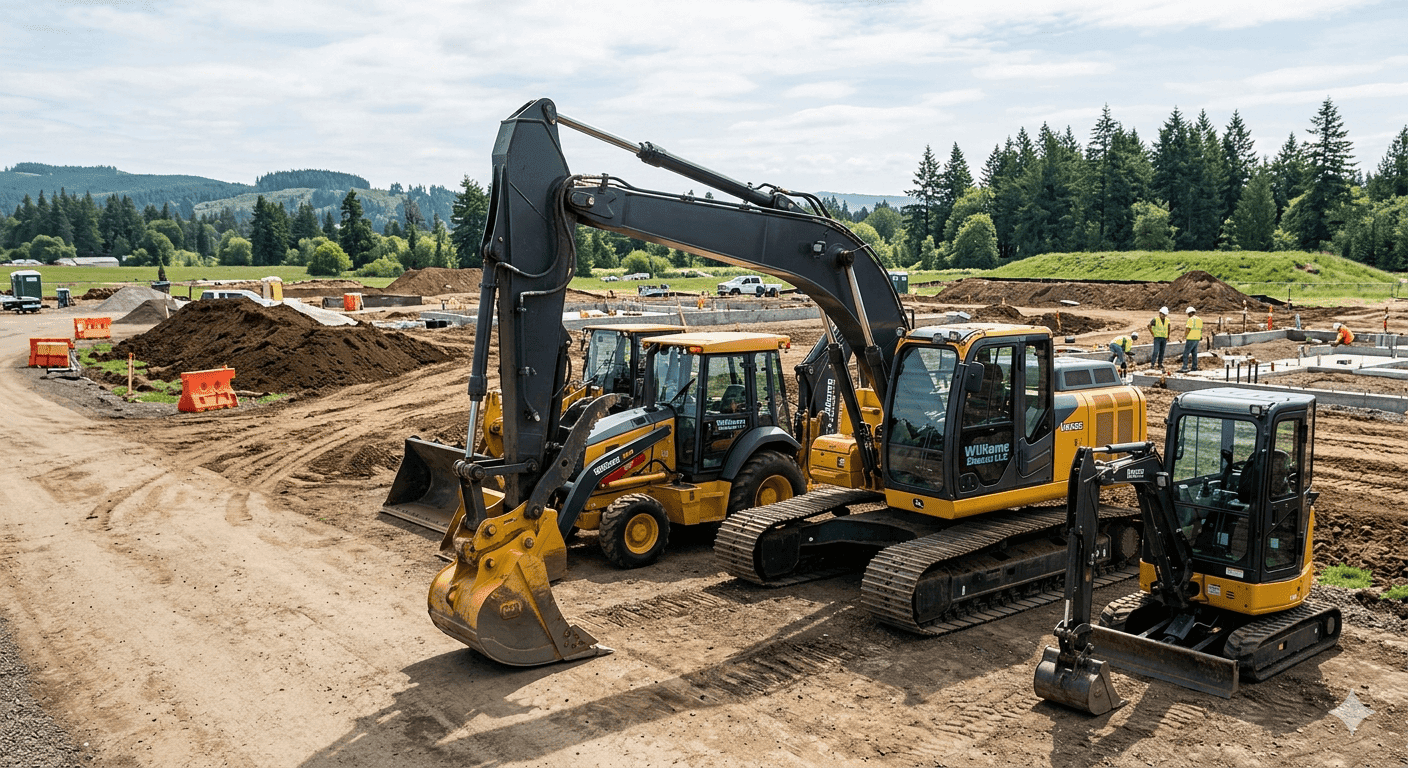
Buying and managing a permanent fleet of heavy machinery carries a high financial burden, forcing many forward-thinking businesses to look toward smarter asset deployment. Utilizing a premium rental program allows your operation to scale up or down based on specific project phases without locking up valuable working capital. For companies looking for top-tier excavating equipment in Seattle, Washington, and the surrounding areas, partnering with a professional, mechanic-backed provider like Williams Diesel LLC ensures that your job site remains efficient, compliant, and completely on schedule.
Reach us via WhatsApp for a no-obligation free quote :
The Operational Shift from Asset Ownership to Agile Logistics
For decades, owning a massive yard full of yellow iron was considered a primary status symbol for successful contracting firms. However, fluctuating fuel costs, rising interest rates, and the sheer complexity of modern electronic engines have fundamentally rewritten the asset management rulebook. Today, true operational success is measured by financial flexibility and high machine utilization rates.
When a construction company purchases an earthmover outright, they are absorbing a long list of hidden structural liabilities. Beyond the steep initial capital expenditure, an owner must take responsibility for secure off-site storage, continuous transport logistics across state lines, regulatory compliance updates, and specialized mechanical upkeep. If a purchased machine sits idle for three weeks between grading phases, it becomes a financial drain.
Choosing a dynamic rental model transforms these fixed, unpredictable liabilities into highly predictable, project-specific operating expenses. You source the precise weight class needed for the exact duration of the job, passing all the headaches of depreciation, storage, and long-term mechanical maintenance back to the supplier.
Navigating the Technical Specs: Finding the Right Tool for the Dirt
Selecting the right earthmoving asset requires a deep understanding of your job site’s unique physical constraints. A common mistake is selecting a machine based solely on its bucket size, without considering total hydraulic flow, tail-swing geometry, or track configuration. For instance, high-density urban infill projects in regional city centers require zero-tail-swing mini excavators that can rotate completely within the width of their tracks without striking adjacent structural walls or active traffic barriers.
Conversely, major commercial developments demand heavy-duty tracked machines with immense breakout force to cut through compacted glacial till and rocky subsoil. In specialized industrial procurement, buyers often browse listings from a global machinery trader excavators platform to expand their company assets, but localized projects require immediate, on-the-ground equipment availability. By matching your specific trenching depths and lifting capacities to a highly curated local fleet, you ensure your operators have the exact hydraulic performance required to maximize daily production cycles.
Advanced Civil Engineering and Niche Applications
While standard hydraulic machines handle the vast majority of terrestrial earthmoving, complex civil engineering projects often call for highly specialized sub-surface equipment configurations. In marine construction, bridge piling placement, and deep waterway dredging operations, standard earthmovers are completely inadequate for the harsh operating environments. Contractors in these environments rely on an engineered underwater excavator platform built with specialized waterproof seals, treated hydraulic circuits, and extended boom geometries capable of operating reliably beneath the water line.
On terrestrial job sites, machinery selection focuses on balancing structural weight with ground bearing pressure. Heavy-duty construction demands a rugged cat steel excavator framework to provide the maximum structural rigidity and stability required for deep trenching, heavy pipe placement, and rock breaking. Understanding these mechanical variations ensures that whether your crew is tackling an eco-sensitive shoreline restoration or a massive deep-foundation commercial dig, your equipment is fully optimized for safety and durability.
Overcoming Environmental Challenges in the Pacific Northwest
Operating heavy iron in Washington requires equipment that can withstand a variety of demanding environmental conditions. Our regional geology features everything from loose, wet coastal sands to dense clay and rocky volcanic soils. Additionally, consistent seasonal rainfall frequently turns stable job sites into deep, heavy mud within a matter of hours.
Operating under these punishing conditions places immense strain on undercarriage components, final drives, and hydraulic cylinders. A machine that has not been properly serviced for damp climates will quickly develop electrical corrosion, track binding, and hydraulic fluid contamination. Working with a local supplier that understands these specific regional realities means your machines are delivered with appropriate track configurations, fresh high-grade lubricants, and heavy-duty weather sealing, allowing your crew to maintain peak digging efficiency even during our wet winter months.
The Premium Maintenance Core: Why Shop Upkeep Dictates Field Success
The commercial equipment rental industry features a clear divide between massive corporate consolidators and focused, local mechanical providers. While nationwide corporations boast large fleets, their fast-paced turnover model often leaves little time for deep structural inspections between rentals. Machines are frequently washed down and quickly sent back to the field, leading to unexpected hydraulic hose ruptures, clogged fuel filters, or hidden electrical glitches that fail on your job site.
The absolute key to maximizing field uptime is choosing a provider whose core business is rooted in professional mechanical repair. When your equipment supplier is run by industrial maintenance professionals, every single engine, hydraulic valve bank, and track assembly undergoes rigorous multi-point stress testing before it ever leaves the yard. This technical oversight means relief valves are calibrated to precise factory pressures, electronic sensors are updated, and structural welds are carefully verified. For contractors, this meticulous preparation significantly reduces on-site breakdown risks and ensures maximum fuel efficiency under heavy loads.
Streamlining Site Logistics and Eliminating Towing Hassles
Moving high-tonnage machinery through busy metropolitan traffic corridors is a major logistical headache. It requires heavy-duty commercial transport trucks, specialized lowboy trailers, experienced CDL drivers, and careful planning to navigate around peak traffic hours and strict municipal weight limits on local roads.
A professional, full-service equipment provider removes this logistical burden from your team completely. Your requested machinery arrives directly at your site, fully fueled, deeply inspected, and ready to go to work immediately. Furthermore, a local provider offers immense value if an unpredictable field issue does arise. Instead of dealing with a distant corporate customer service center, a dedicated local team can dispatch a mobile service truck directly to your job site. This rapid response ensures that minor sensor issues or hose swaps are handled right in the field, keeping your project moving forward without costly multi-day delays.
Smart Budgeting with Transparent Local Rates
Maintaining profitability in the commercial contracting landscape requires strict control over your cash flow. When compiling competitive bids for municipal or private development projects, your estimated equipment costs must be highly accurate and transparent. Unexpected equipment expenses or sudden rental price spikes can quickly turn a profitable contract into a financial loss.
To help project managers maintain tight control over their budgets, look for clear, structured fleet options when researching excavator rental prices near me. Partnering with a local specialist that offers transparent daily, weekly, or monthly contract structures allows you to align your equipment costs precisely with your projected milestones. This clear financial planning enables small and mid-sized contractors to confidently bid on larger public works or commercial developments, secure in the knowledge that they can access premium machinery without taking on high-interest corporate debt.
FAQs Section
- What size machine does my project actually require?
Machine selection depends on your maximum required digging depth, lifting capacity, and site spatial limits. Small residential jobs with narrow gates usually require tight mini excavators (1-to-3-ton class), while large-scale utility trenching and commercial foundations require high-capacity tracked excavators (14-to-30-ton class) to handle the volume efficiently. - Is Williams Diesel LLC’s machinery fleet fully compliant with local Washington environmental codes?
Yes. Our equipment lineup is carefully selected, regularly serviced, and strictly updated to meet all regional emissions standards and site safety regulations. We ensure our diesel engines operate with maximum combustion efficiency, reducing both tailpipe emissions and fuel consumption on your job site. - What is your standard response time if an machine requires field service in Seattle? Because we are based locally and operate fully equipped mobile diesel service units, our field response times are exceptionally fast. We prioritize active job site emergencies throughout the greater Seattle metro area, dispatching a skilled field technician with advanced diagnostics directly to your dirt to minimize downtime.
- Can I modify or extend my equipment rental contract if my project scope expands? Absolutely. We understand that variable weather, permitting delays, and unexpected sub-surface conditions can change your construction timeline. We offer highly flexible contract adjustments, allowing project managers to easily extend their durations so the tools stay on site until the work is fully complete.
- Do I need a commercial driver’s license (CDL) to tow a mini excavator to my job site?
It depends entirely on the combined Gross Vehicle Weight Rating (GVWR) of your truck, trailer, and the machine. Many compact mini excavators fall comfortably under the weight limit that requires a CDL, but to eliminate transport hassles entirely, we highly recommend utilizing our direct on-site delivery and pickup services.
Conclusion: Empowering Regional Infrastructure
Succeeding in the modern construction sector requires a smart balance between heavy-duty physical power and lean, flexible business logistics. While old-school business practices focused heavily on the continuous capital expenses of machinery ownership, today’s most profitable contractors utilize on-demand fleet logistics to stay lean, competitive, and highly responsive to market changes. Sourcing high-performance machinery allows your business to take on complex jobs with total confidence, free from the financial burdens of long-term equipment debt.
Williams Diesel LLC remains deeply committed to supporting the hard-working contractors, builders, and developers who are actively shaping the infrastructure of our local Washington communities. We bridge the gap between heavy industrial capability and personalized customer care, ensuring that every asset we deploy is mechanically sound and ready for maximum productivity. The next time you prepare to break ground on a challenging development, protect your capital and optimize your timeline by choosing our premium excavating equipment. Reach out to our local office today to review our current fleet inventory, confirm local availability, and secure a transparent quote tailored specifically to your upcoming project milestones.


Comments are closed